Closing summary
Ukraine claims to have severely damaged and sunk a Russian landing ship in its latest drone attack against Moscow’s Black Sea fleet. Ukrainian military intelligence released video on Wednesday that it said showed several naval drones approaching the Ropucha-class large landing ship Cesar Kunikov off the coast of Crimea.
Rustem Umerov, the Ukrainian defence minister, has outlined Kyiv’s priorities for today’s contact group meeting with partners. “We will focus on increasing defence production, drones, and technologies, as well as preparing for both long-term challenges and solving urgent needs,” he said.
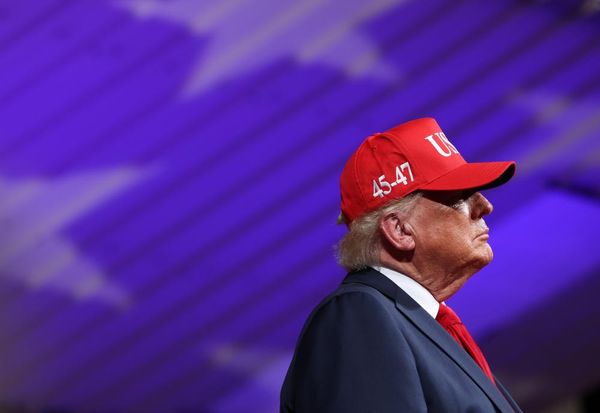
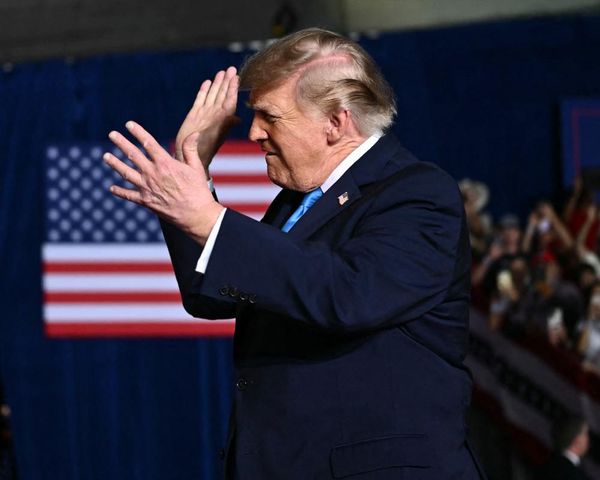
Nato said on Wednesday that Europe was meeting an alliance spending target and the United States needed allies, days after former US president Donald Trump suggested that Washington might not protect countries that did not spend enough. Nato chief Jens Stoltenberg also urged the Republican-controlled US House of Representatives to pass a “vital” multi-billion dollar military aid package for Ukraine, warning lawmakers that China would be emboldened if Russia wins its war.
The Netherlands is joining a military coalition with allies including Britain that will supply Ukraine with advanced drone technology and bolster its offensive capabilities in the war against Russia, the Dutch defence minister said. The pledge from the Netherlands comes in addition to F-16 fighter jets, artillery, ammunition and air defence systems provided by the Dutch to Kyiv, Reuters reports.
The Kremlin on Wednesday denied a Reuters report that Russian president Vladimir Putin proposed a ceasefire in Ukraine to the United States via intermediaries. Asked if the Reuters report that Russia had made peace proposals was true, Kremlin spokesperson Dmitry Peskov said: “No. It is not true.”
The government of neutral Switzerland said on Wednesday it would be ramping up military spending over the coming years, the latest European country to do so in the wake of Russia’s invasion of Ukraine two years ago. President Viola Amherd said that as of 2035, some 20 billion Swiss francs ($22.58 billion) in additional funding would be available, compared to planning before the Ukraine war. Switzerland allocated 1.9 billion francs for defence in 2023, Reuters reported.
Russia’s parliament will vote on 21 February on suspending the country’s participation in the Parliamentary Assembly of the Organization for Security and cooperation (OSCE), Duma speaker Vyacheslav Volodin said on Tuesday. The OSCE, which counts Ukraine, the US and Russia among its 57 members, is the successor to a cold war-era organisation for Soviet and western powers to engage, Reuters reports.
Russia’s air defence systems destroyed nine Ukraine-launched drones over Russia’s Belgorod and Voronezh regions, as well as over the Black Sea, RIA state news agency reported on Wednesday. It cited the Russian defence ministry.
British foreign secretary David Cameron on Wednesday urged US lawmakers to vote for a $95bn security aid package for Ukraine and other allies. “Britain has announced its support package for the next year. The European Union has announced their package for the next year. And I urge members of Congress in the United States who will be looking at this today to vote for the package,” Cameron told reporters during a visit to Bulgaria.
Russian president Vladimir Putin signed a law Wednesday that will allow authorities to confiscate money, valuables and other assets from people convicted of spreading “deliberately false information” about the country’s military, AP reported. The bill sailed through the lower and upper houses of the Russian parliament, and was unanimously endorsed by the upper house last week.
Ukraine will need $9bn over 10 years for its culture and tourism sectors to recover, the United Nations’ cultural agency said on Tuesday, adding that the two-year war had so far cost the country over $19.6bn in tourism revenue. Russia’s full-scale invasion of Ukraine triggered the deadliest conflict in Europe since the second world war, with no sign of an end to the war in sight, Reuters reports.
The EU is proposing to sanction companies in mainland China for the first time as part of its latest measures aimed at shutting down loopholes that allow Russia to route military technology via third countries to its weapons factories. Three companies in mainland China, as well as four in Hong Kong and one in India, are on a 91-page document of companies and individuals who EU member states want to add to a growing sanctions list before the second anniversary of Russia’s invasion of Ukraine.
Germany has met a Nato alliance target to spend 2% of its gross domestic product on defence for the first time since 1992, the dpa news agency reported on Wednesday, as spending ramped up after Russia’s invasion of Ukraine two years ago. The German government is allocating the equivalent of $73.41bn for defence spending in the current year, dpa reported. This is a record figure for Germany in absolute terms and would be 2.01% of GDP.
That’s it from me, Tom Ambrose, and indeed the Ukraine live blog for today. Thanks for following along.
The government of neutral Switzerland said on Wednesday it would be ramping up military spending over the coming years, the latest European country to do so in the wake of Russia’s invasion of Ukraine two years ago.
President Viola Amherd said that as of 2035, some 20 billion Swiss francs ($22.58 billion) in additional funding would be available, compared to planning before the Ukraine war. Switzerland allocated 1.9 billion francs for defence in 2023, Reuters reported.
“The security policy situation is obviously difficult given the current instability, with a war on the European continent, armed conflicts in the Middle East and other flashpoints in the world,” Amherd told a press conference.
Amherd, who is also defence minister, said there were “so many crises” currently, and the plan was partly taking into account lessons drawn from the Ukraine war.