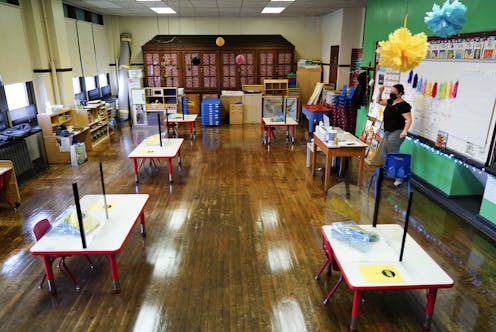
When the pandemic first closed schools in March 2020, it was an emergency response that upended the typical priorities of public education. Schools suddenly needed to distribute laptops and tablets, set up Wi-Fi hot spots, check on families and distribute food previously served in cafeterias – all while continuing to teach children.
Even before the pandemic, rural schools had less funding, older technology and more limited access to high-speed internet than their suburban and urban counterparts. Districts were already facing teacher shortages and were regularly seeking more bus drivers, custodians and cafeteria workers.