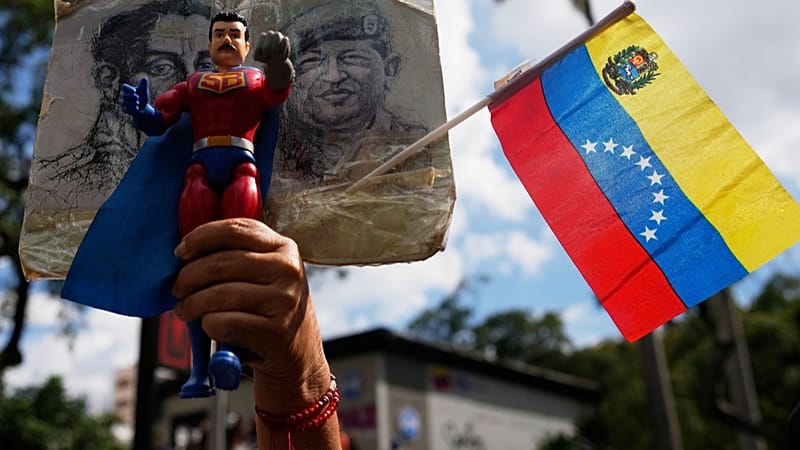
US Secretary of State Marco Rubio suggested on Sunday that Washington would not govern Venezuela day-to-day, other than enforcing an existing “oil quarantine” following an operation which saw them oust and capture Nicolás Maduro.
Rubio’s statement seems like an attempt to temper concerns that Saturday’s assertive action to achieve regime change in Venezuela would plunge the country into another prolonged foreign intervention or failed attempt at nation-building.
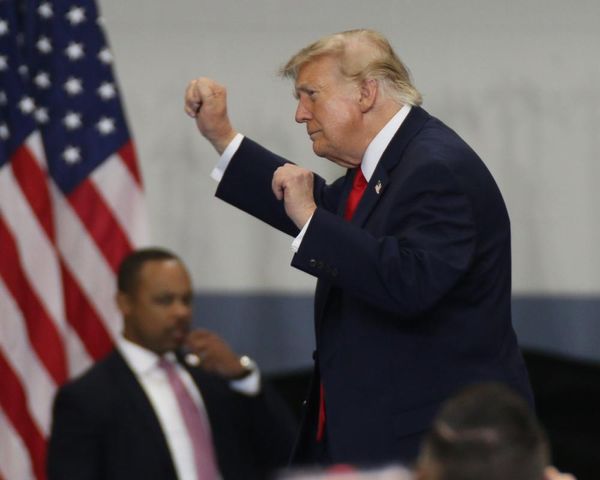
Rubio's words signal a shift from the initial remarks made by US President Donald Trump, in which he said that Washington would be “running” the country in an interim capacity until a long-term democratic resolution to the crisis is found.

Trump’s broad but vague claims that the US would at least temporarily “run” the oil-rich nation suggested a governing structure under which Washington would have the final say over how Venezuela was governed.
Rubio offered a more nuanced approach, saying the US would continue to enforce an oil quarantine that was already in place on sanctioned tankers before Maduro was removed from power and use that leverage as a means to press policy changes in Venezuela.
“And so that’s the sort of control the president is pointing to when he says that," Rubio said in an interview.
"We continue with that quarantine, and we expect to see that there will be changes, not just in the way the oil industry is run for the benefit of the people, but also so that they stop the drug trafficking.”

The blockade on sanctioned oil tankers, some of which have been seized by the US, “remains in place, and that’s a tremendous amount of leverage that will continue to be in place until we see changes that not just further the national interest of the United States, which is number one, but also that lead to a better future for the people of Venezuela,” he added.
Hours later, interim Venezuelan leader Delcy Rodríguez invited Trump “to collaborate” and said she seeks “respectful relations,” striking a notably more conciliatory tone than in her previous positions.
“We invite the US government to collaborate with us on an agenda of cooperation oriented towards shared development within the framework of international law to strengthen lasting community coexistence,” Rodriguez wrote in an online post.

She had delivered speeches projecting defiance to the Trump administration earlier in the weekend and called on Washington to immediately release Maduro. But her statement in English on her Instagram account marked a dramatic shift in tone.
Cuba on Sunday night announced that 32 of its security officers were killed in the US operation in Caracas, which Trump acknowledged: “You know, a lot of Cubans were killed yesterday.”
“There was a lot of death on the other side," Trump said aboard Air Force One as he flew back to Washington from his Mar-a-Lago estate in Florida. "No death on our side.”
Cuba is a close ally of Venezuela’s government and has sent military and police forces to assist in operations for years.