
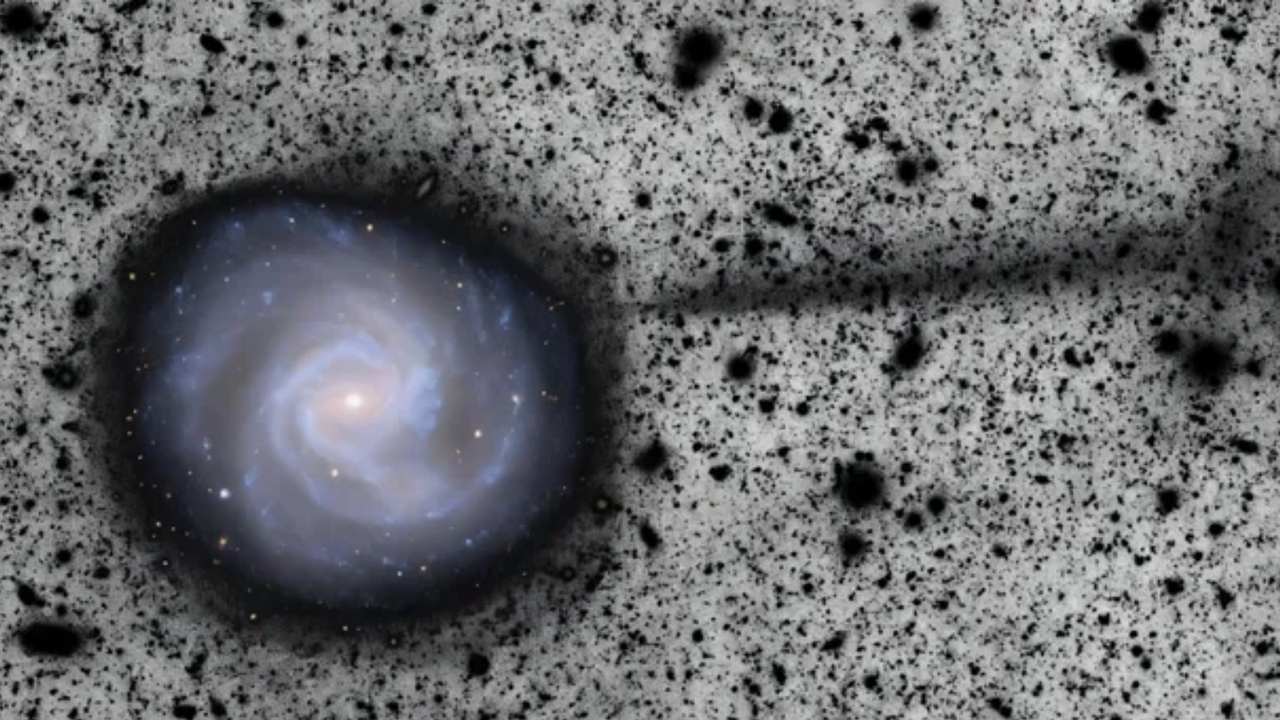
Despite still not being fully operational, the Vera C. Rubin Observatory is already making waves. The observatory, which features the world's biggest and most sensitive digital camera, the 3.2-gigapixel LSSTCam, recently allowed astronomers to discover a stream of stars wrapped around the distant galaxy Messier 61 (M61).
This stream is 10,000 light-years wide and around 170,000 light-years long, exceeding the width of the visible Milky Way, which is estimated to be about 100,000 light-years wide. The team behind the discovery believes that the stream is what remains of a dwarf galaxy once cannibalized by M61 that is now getting a measure of revenge by causing turbulence at the heart of this spiral galaxy. The sheer size of this stellar stream and the fact that M61, also known as NGC 4303 and located around 55 million light-years away, is well studied, make it extraordinary that this stellar stream or "tidal tail" hasn't been discovered before.