Get all your news in one place.
100's of premium titles.
One app.
Start reading
The Economic Times
The Economic Times
Neelanjit Das

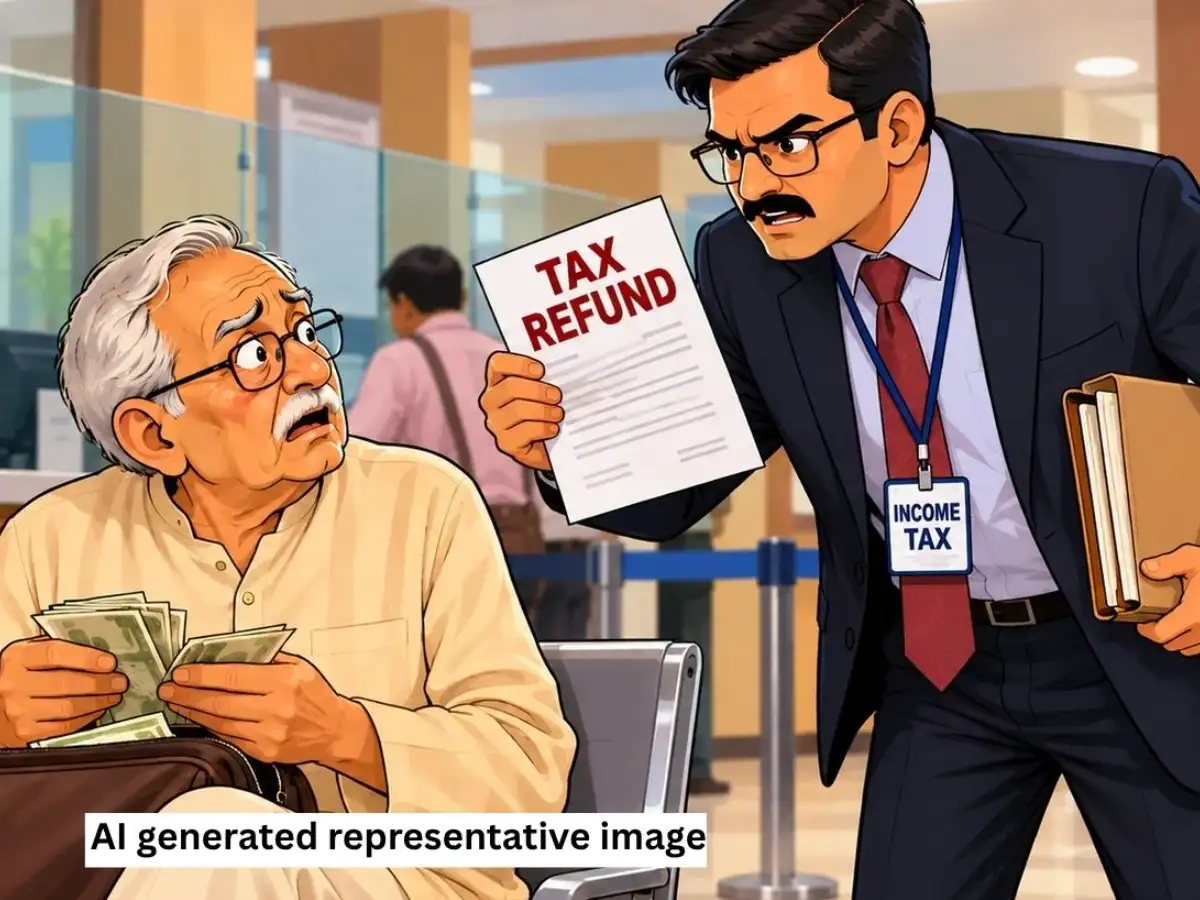
Rs 9.91 lakh income tax refund for senior citizen after proving that he mistakenly paid income tax on tax-free bonds; ITAT Delhi order explained

Ajay Kumar Bakaya, a senior citizen from Gurugram’s Sushant Lok 1, invested Rs 3 crore in buying two government tax-free bonds in 2013. He puts the interest income from these bonds in the ‘exempt income’ column every year in his income tax return (ITR).

For AY 2022-23, Bakaya, however, declared Rs 25.42 lakh interest income earned (Rs 16.96 lakh from IFCL bonds and Rs 8.46 lakh from REC bonds) as income from other sources. He also paid the income tax on this amount, which resulted in an extra income tax payment of Rs 9.91 lakh.

By the time Bakaya noticed his mistake, the due date to file revised ITR was already over. So, he filed a rectification application under Section 154 before the jurisdictional assessing officer (JAO) on January 19, 2024. However, the JAO rejected Bakaya’s application on the ground that, as a JAO, he cannot entertain a claim for deduction other than by filing a revised ITR, placing reliance on the decision of the Hon’ble Supreme Court in Goetze (India) Ltd. v. CIT.

The Commissioner of Appeals (CIT A) upheld the appeal, thus Bakaya filed an appeal with the Income Tax Appellate Tribunal (ITAT) Delhi. Chartered Accountant Tanpreet Kholi represented Bakaya before the ITAT Delhi’s Bench C, which consisted of S. Rifaur Rahman (accountant member) and Raj Kumar Chauhan (judicial member).

How did Bakaya win the case?

Chartered Accountant Ashish Niraj, Partner, A S N & Company, said to ET Wealth Online that Section 10(15)(iv)(h) of the Income-tax Act, 1961, gives full income tax exemption on interest income earned on tax-free bonds and debentures issued by specified public sector companies (such as NHAI, REC, IIFCL, IRFC, etc.) from total income.

So even though this interest is fully tax-free in the hands of taxpayers without any limit, Bakaya mistakenly paid Rs 9.91 lakh extra income tax by including this tax exempt income in his ITR.

Niraj says that in Mr Bakaya's case AO has himself in his order dated April 7, 2025 wrote that the income from the bonds "was erroneously added as taxable income while filing the income tax return. ITAT Delhi noted the AO's report and also the fact that income from IIFCL and REC tax-free bonds are tax exempt under section 10(15)(iv)(h) of the income tax act, and so it cannot be taxed as per Article 265 of the Constitution of India.

Niraj says that mere clerical error cannot make someone liable for tax when income itself is exempt. The Honourable ITAT has correctly allowed Mr Bakaya's appeal and ordered for tax refund. The taxpayer’s faith in ITAT has been rightly ensured.

Also read: No new tax-free bonds issued since 2016. Here’s how to tap existing ones for tax-free income

ITAT Delhi discussion

The ITAT Delhi said that the rectification sought by Bakaya is a correction of a mistake apparent from the record and not a fresh claim.

The ITAT Delhi ruled that the decision of Goetze (India) Ltd., which was relied upon by the AO while rejecting the rectification application, is not applicable herein, and this issue is dealt with by the coordinate Bench in the case of Kapil Dev Nikhanj, wherein the ITAT held that the decision of Goetze India referred to (supra) only restricts the power of an assessing authority from not entertaining any fresh claim unless otherwise claimed in the valid return. It does not restrict the powers of the appellate authorities, which is clearly mentioned in the last paragraph of the said decision.

Thus, in the present case, ITAT Delhi, by following the earlier decision of the ITAT, decided in Bakaya’s favour. The ITAT Delhi directed the AO to treat the interest income of Rs 25.42 lakh earned on the IIFCL and REC tax-free bonds as tax-exempt under Section 10(15)(iv)(h).

The ITAT Delhi said that once the interest income from these bonds is held as tax-exempt, then the assessing officer has to give a refund of the consequential amount of Rs 9.91 lakh to Bakaya, along with interest as admissible under law.

Thus, Bakaya won the case. He will now get a Rs 9.91 lakh tax refund.

Sign up to read this article
Read news from 100's of titles, curated specifically for you.
Already a member? Sign in here
Related Stories
Top stories on inkl right now
One subscription that gives you access to news from hundreds of sites
Already a member? Sign in here
Our Picks
Fourteen days free
Download the app
One app. One membership.
100+ trusted global sources.