Get all your news in one place.
100's of premium titles.
One app.
Start reading
International Business Times UK
Entertainment
Nobelle Borines

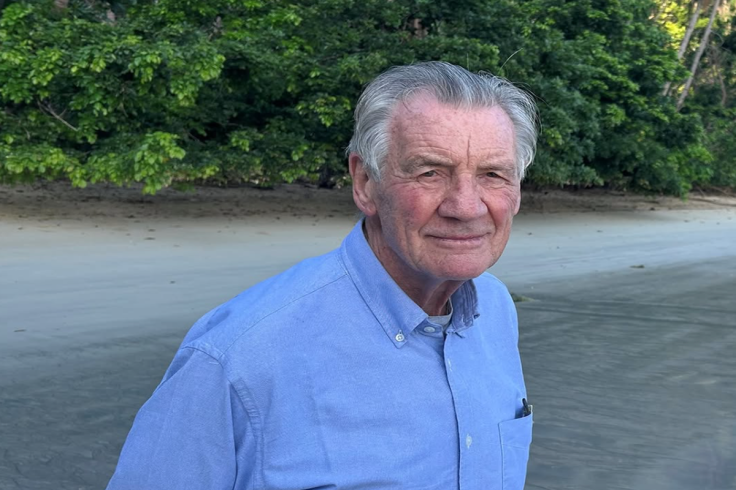
Michael Palin Refuses 'Recycled' Food in Philippines, Marking First in 40-Year TV Travel Career

In a career first, Michael Palin turned down an offer to taste a local dish that can only be found in the Philippines (Credit: Instagram/@channel5_tv)

Michael Palin has refused to eat a dish on camera for the first time in more than 40 years of TV travel, turning down a plate of 'recycled' chicken made from discarded fast-food leftovers in the Philippines.

The 83-year-old former 'Monty Python' star encountered 'pagpag' while filming in Manila for his new Channel 5 series 'Michael Palin in the Philippines'. The dish consists of leftover food collected from rubbish, cleaned and cooked again before being sold on.
Despite his long-standing willingness to try unfamiliar dishes around the world, Palin decided this one was a step too far.

Michael Palin Refuses 'Recycled Chicken'

Palin came across 'pagpag' in Tondo, an impoverished area of Manila, during filming for the documentary. He was shown how vendors and their associates collect discarded chicken from fast-food outlets, strip any remaining meat from the bones and cook it again for sale the following day.

View this post on Instagram

The experience left a strong impression on Palin, who said he had never seen anything that illustrated poverty so clearly. However, despite his willingness to sample unusual food throughout his travels, the chicken was something he decided not to taste.

'I've eaten everything on my journeys, but I couldn't eat recycled food, I'm afraid, at that time of the day,' he said. Palin also stressed that he did not view the woman selling the food as a criminal or someone attempting to deceive customers.

Why Palin Wouldn't Try 'Pagpag'

For Palin, the significance of 'pagpag' went beyond whether the food itself was appetising. The practice offered a stark illustration of the economic hardship experienced by some people in the Philippines.

'I've never seen anything that illustrates poverty quite as clearly as half-eaten fried chicken, which has been taken from the bins of fast food restaurants and then re-cooked,' he said. 'So this is ultimate food recycling. Food that's already been on someone's plate has been left behind, and this nice lady goes and collects it.'

Palin added, 'Seeing this, I'm starting to understand why so many people are angry about the inequalities here.'

His encounter became less about trying an unusual local dish and more about understanding why the practice exists. The vendor he met was described as a trusted member of her community, and Palin noted that she had been recycling food for years.

The documentary uses the encounter to explore poverty in Manila while also examining very different sides of life across the Philippines.

Palin Explores More of the Philippines

The 'pagpag' encounter is only one part of Palin's latest travel series. During the programme, he explores the country's landscapes, travels through different communities and visits locations far beyond Manila.

He journeys to Palawan and the beaches of El Nido before heading to the remote island of Pag-asa in the South China Sea. There, he encounters the geopolitical tensions surrounding the disputed waters and observes Chinese vessels from the island.

Palin also visits Marawi, where he looks at the aftermath of the city's destruction, and travels to Jolo. The journey combines the natural environment of the Philippines with an examination of poverty, politics, conflict and inequality.

A First for the Veteran Traveller

Palin's refusal is notable because trying local food has long been part of his travel-documentary style. His career has taken him across the world, with his willingness to immerse himself in unfamiliar cultures becoming one of the defining features of his television work.

Yet 'pagpag' proved to be his limit. The programme was filmed while Palin was 82, although he is now 83. He later described the Philippines trip as rejuvenating despite the physical demands of travelling, saying the journey itself left him feeling surprisingly energetic.

For a traveller who has spent decades embracing unfamiliar experiences, Palin's decision not to eat pagpag is therefore an unusual moment in his career. His encounter also highlights the economic pressures behind a practice that might otherwise simply be viewed as a local food custom.

'Michael Palin in the Philippines' began airing on Channel 5 on September 28, with the series following the veteran broadcaster as he explores the country's culture, history, politics and communities.

Sign up to read this article
Read news from 100's of titles, curated specifically for you.
Already a member? Sign in here
Related Stories
Top stories on inkl right now
One subscription that gives you access to news from hundreds of sites
Already a member? Sign in here
Our Picks
Fourteen days free
Download the app
One app. One membership.
100+ trusted global sources.