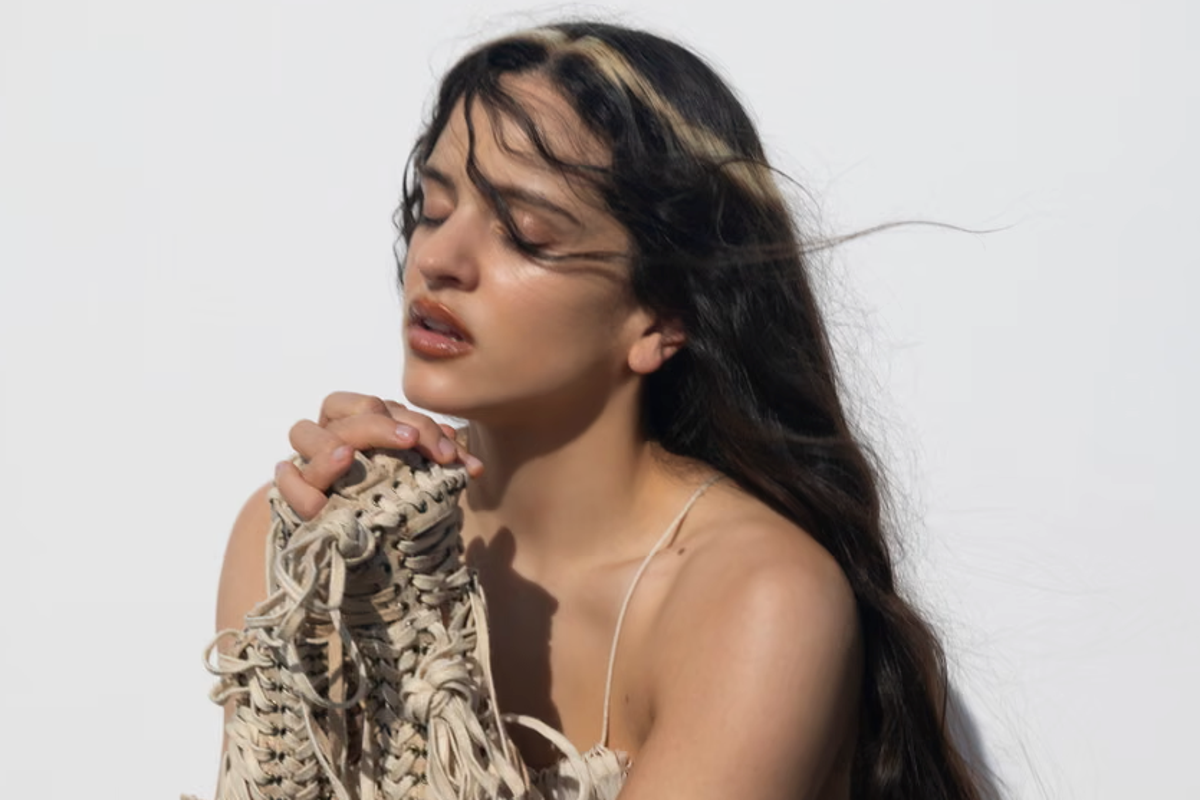
In a recent Instagram post, Spanish singer Rosalía shared a selfie from New York’s Metropolitan Museum of Art, a painting behind her. Those paying attention will have spotted that the work in question was Saint Rosalie Interceding for the Plague-stricken of Palermo by Anthony van Dyck (1624). It depicts Saint Rosalia intervening during a plague that struck the city shortly after the Flemish artist arrived. The epidemic killed much of the population. When her purported remains were discovered, they were paraded through town as the plague abated, and she became Palermo’s patron saint. Grateful to be alive, Van Dyck repurposed a self-portrait sketch into the extraordinary work that hangs in the Met today.
Rosalía’s fourth album, Lux, is a masterpiece evoking its own themes of sainthood, faith, mortality and (love)sickness, with a self-portrait hiding underneath. Split into four movements, it is an epic work in which the 33-year-old sings in 13 different languages, accompanied by traditional fada singers and the resplendent London Symphony Orchestra. Her innate curiosity in bringing different sounds together is more palpable than ever, as she told Billboard: “I think that in order to fully enjoy music, you have to have a tolerant, open way of understanding it. Because music is the ‘4’33”’ of John Cage, as much as the birds in the trees for the Kaluli of New Guinea, as much as the fugues of Bach, as much as the songs of Chencho Corleone. All of it is music. And if you understand that, then you can enjoy in a much fuller, profound way.”