
Whether you're a true city slicker or live out of town — but prefer interior design that leans less country and more minimalist — creating an urban look successfully is a tall order. Apartments with cookie-cutter layouts, open-plan properties, and period townhouses each present different challenges. How do you make a new build feel lived in? Or on the other end of the spectrum, mix and match original features with interior trends that have a distinctly modern feel?
The overall effect should be sleek and sophisticated, without feeling cold or sparse. As Caroline Olah, interior architect and founder of bespoke furniture brand Reddie, explains: "Urban sophistication isn't ornamentation or chasing Instagrammable trends — it's designing spaces that respond to their site and maximize wellbeing and feeling."

If you're planning on renovating or reinvigorating a room that you want to shout 'big city energy', we've asked six of the best designers specialising in metropolitan homes for inspiration. Here's what they recommend you do.
1. Rewrite History With Vintage Finds
For Lishan Tham, founder of Studio Shan, elevating an architecturally simple space is all about adding texture and warmth through storied accent pieces. It's a method that shines through in this penthouse project in central London.
"We mixed antique and vintage pieces with contemporary furniture in the living and dining area; a vintage accessory here, a strongly grained wood veneer there, so the space feels collected over time rather than decorated in one go," she explains.
"We also kept the palette in warm neutrals, which grounds the room and lets those layered, characterful pieces do the talking. Together it creates a scheme that feels sophisticated and lived in, rather than cold or overly polished," Lishan adds.

The Tramp Art-inspired wall mirror is the perfect blend of new and old.
2. Repeat Materials not Patterns
When working with a period property in an urban location that she wants to read as having a grown-up, city feel, creative director Riley Uggla says that confident use of materials is a must.
In this project, she's repeated the use of brass hardware and natural limestone, for example, and it works to particularly strong effect in the bar and dining area of the home. "I matched the travertine from the living room fireplace to a bespoke bar table and stone-topped bar," she shares. "Threading a handful of considered materials through several rooms makes the whole house read as one confident, cosmopolitan scheme."
Rattan chairs and linen curtains soften this room's scheme, but Riley thinks that "harder, more urban materials against a backdrop of natural textures are what give a home its big city energy."
3. Get in the Zone
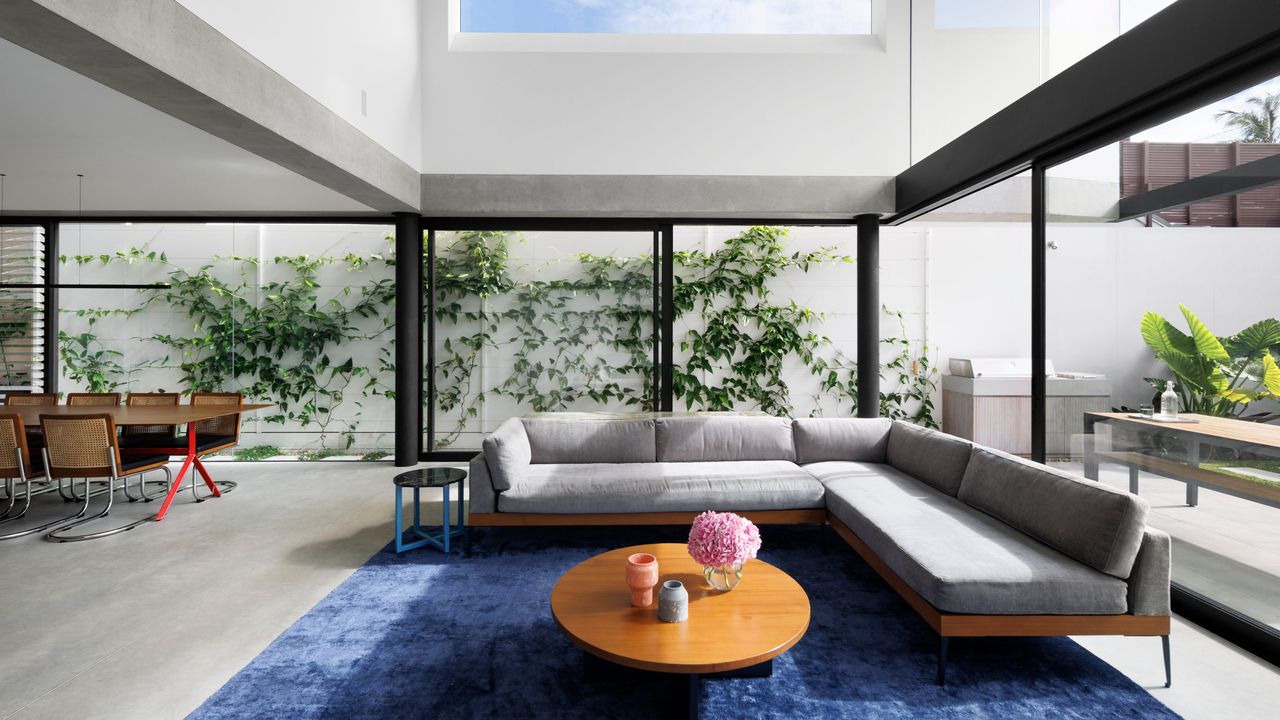
Caroline Olah interior-designed her home in collaboration with her partner and co-founder of Reddie, Andrew Olah. They share a passion for stripped-back schemes, but have succeeded in creating something homey, even in an open-plan space.
While the bones of their Balinese-inspired villa are distinctly minimalist — the Brutalist shell was crafted in concrete and timber — pops of color are cleverly utilized to inject differing personalities into each space. "Distinct zones for living, working, and entertaining are balanced by rich blue and purple rugs or vibrant artwork, furniture legs, and upholstery," she explains. "They add warmth and contrast to an otherwise restrained palette."
The couple has focused on function-first design by using pieces from their own line, Reddie. "It's custom-made to suit each room," she explains, though when laid on top of the colorful rugs, which match the furniture legs, each area's purpose feels clearly defined.

Every one of these teak chairs with rattan-insert arm rests is made from unique reclaimed wood, so they will add instant character to a modern home.
4. Let Textures Do the Talking
This penthouse project in West London relies on rich natural materials and a minimal palette to allow carefully chosen accent pieces to do the talking. "Rather than filling the home with statement pieces, we let beautiful craftsmanship and considered proportions do the talking," Louise McGarry, creative director of Studio Braw, explains. "Texture is the focal point instead of excessive color or pattern. Statement pieces will always feel more sophisticated than filling a room with lots of smaller items."
A good example of this is the chrome coffee table paired with the wool rug in the penthouse's living room. The use of furnishings with clean lines in tactile materials allows "each element to breathe", she adds.
Louise's final word on urban sophistication? "It's about creating a space that feels quietly confident rather than overtly luxurious."

Art Deco inspired with a contemporary twist, this rug is a beautiful statement piece to build a room around.
5. Let There Be Light
Of course, not all urban buildings feel sterile, and when there is character in a home, Zoë Bailey, associate director at MoreySmith, emphasizes the importance of introducing complementary materials that don't limit natural light.
At this project with exposed masonry, her team added finely detailed steel-framed, glazed doors. "It's a wonderful way to define spaces without compromising natural light," says Zoë. "It creates visual connections throughout the home while subtly referencing the industrial heritage often found in urban buildings."
"Combined with a palette of natural materials and carefully considered lighting, it adds a sense of refinement," she adds. "When the architecture is allowed to lead, the result is an interior that feels confident, effortless and intrinsically connected to the city around it."
6. Pick a Natural Palette
Urban shouldn't equal clinical. Even if you're working with a boxy canvas, the use of color and texture can transform a space. To make the rooms of this city pied-à-terre "comfortable but chic", as per the owners' brief, Anna Burles, co-founder and creative director of Run For The Hills, chose muted, natural tones of green and stone. The idea was to "complement the planting on the deck, and to create a sense of calm," she says.
The feeling is of an urban oasis, as fabrics in different weights of linen and cotton in the same palette are layered to add warmth and texture.

Pure linen bedding adds tactility to even the simplest of bedroom schemes; and this M&S version comes in the perfect calming shade of moss-green.
Want more inspiration for your urban design scheme? There are plenty of small space trends that designers like to lean on, from what's on the walls to ways to draw the eye up.
And be sure to subscribe to Livingetc’s newsletter for more expert tips.