
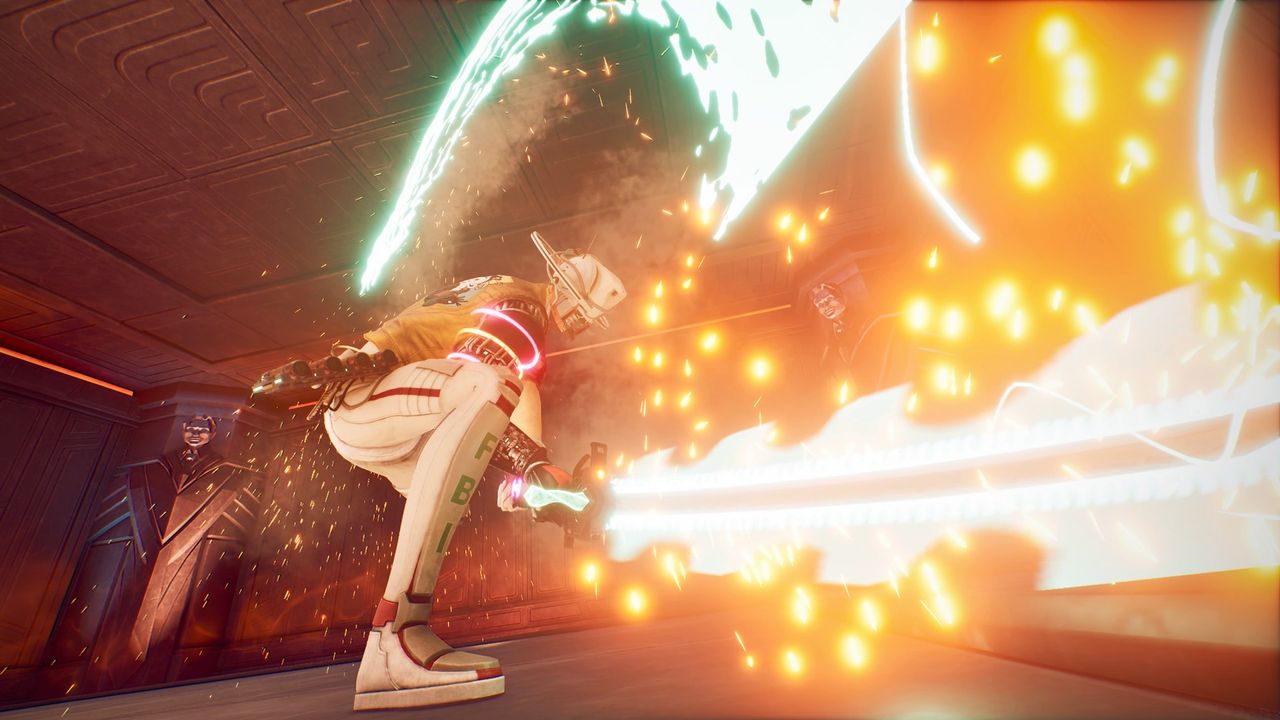
Somewhere in the later stages of Romeo Is a Dead Man, the latest game from Japanese auteur Suda51, I started thinking about post-structural critical theory. That's not something my mind tends to explore all that often while gaming, but I kept thinking back to Roland Barthes' Death of the Author. At Romeo's hands, such a death would be a gory affair, assembling meaning from text out of mulchy scraps – but beneath the punk edge I can't help but feel how much the game feels like one of Suda51's most personal works, wearing its beating, bleeding heart on its sleeve. Romeo is a Dead Man's climatic hours are permeated by a kind of melancholy that brings to mind Neon Genesis Evangelion, where sadness is not the overriding emotion but certainly present, and imbues all else around it with a touch of blue.
It had been a long journey to get to this point. The introduction to Romeo Is a Dead Man sees a young cop with a head full of conspiracy theories, Romeo Stargazer, getting killed by a monster after he and his partner pull over to help someone in distress. He's then wince-inducingly injected in the eye by his Doc Brown-inflected scientist granddad, and resurrected. (If that's the treatment I ever need, just let me die, I'm just saying.)













