
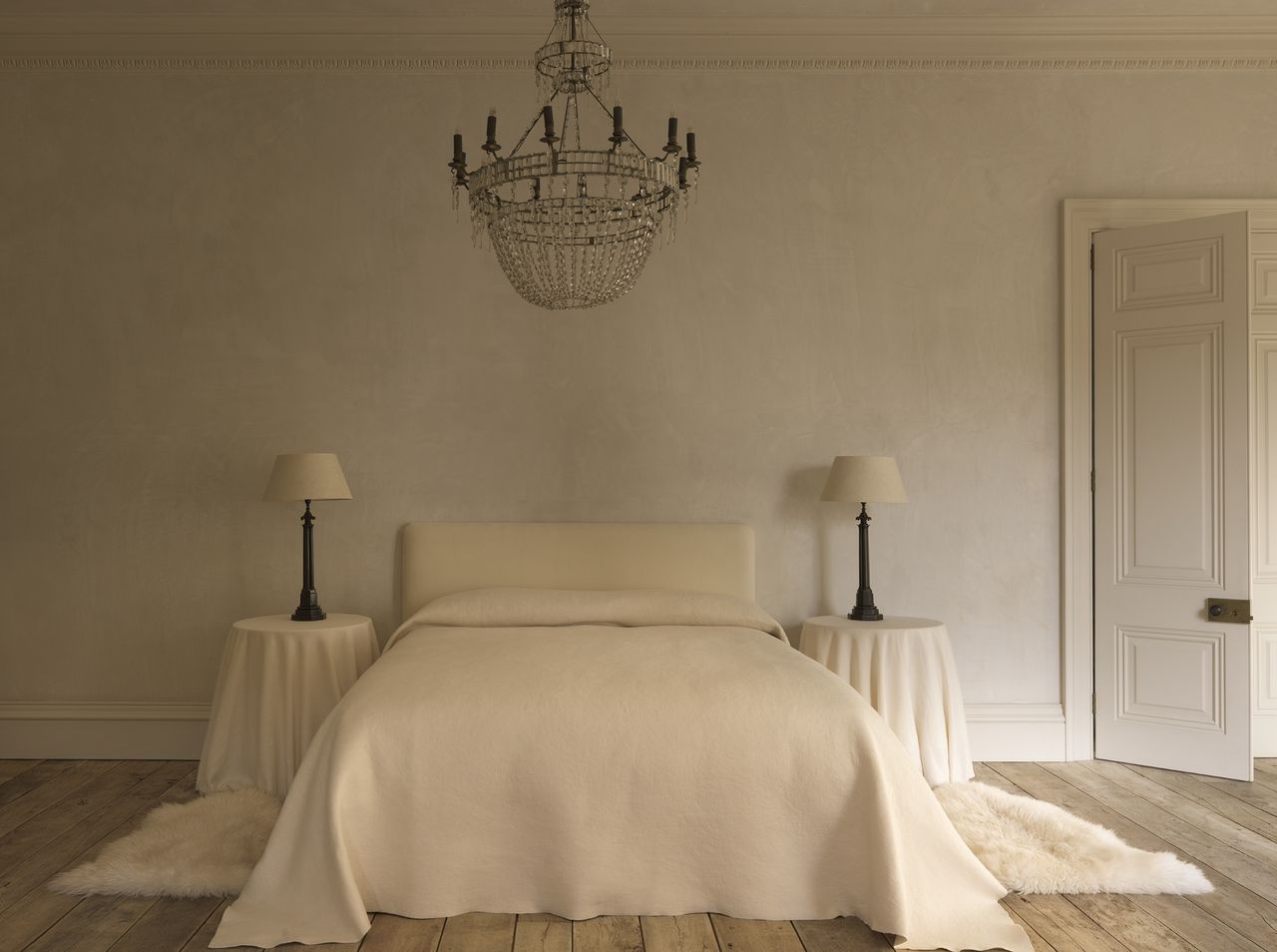
Minimalism is the Madonna of trends, in that it's always reinventing itself. In each era of design, there's a version of minimalism that encapsulates the mood of the moment — some reflection of the wider world and what we want our homes to feel like.
In recent years, we've often referred to the idea of 'minimaluxe'. Think of it as the quiet luxury of minimalist interior design, where the pared-back nature of the style was coupled with luxurious materials for schemes that whispered the wealth aesthetic. It's a style that's easy to become cynical of, even if you're a minimalist enjoyer. Quiet luxury isn't necessarily celebratory, and it doesn't take joy in either the minimalist playbook or those who love to live in the lap of luxury, and it doesn't lend itself to those little personal flourishes that have become a guiding interior design trend.

What's replacing it, then? Well, let me make the case for something I'm calling 'romantic minimalism'.

The romantic minimalist aesthetic channels the considered, stripped-back nature of minimalist design, while softening its stark edges with poetic twists. Where an idea like so-called 'cozy minimalism' tries to make the negative space of a minimalist room feel more palatable by introducing warmth to combat coldness, romantic minimalism seeks to introduce emotion.
There are a few ways that this romanticism is expressed in a room, but perhaps the most effective is through the use of fabric. Theatrical design elements remain a burgeoning design trend, and the flourish of a dramatic textile is enough to give the most minimalist of spaces a dreamy outlook.
Think four-poster beds with voluptuous drapes; window dressings in soft, wabi-sabi linens, but with unexpectedly classical pleats; or a left-field textile choice. Where boucle and leather were the calling card of the minimaluxe interior, deep, rich velvets and light lace strike a more romantic contrast. Even a frill, or a pleated skirt, on a sofa or armchair brings a sculptural softness that brings layers to the simplicity of a white-walled room.

I'd describe romantic minimalism as a type of minimalism that's more about atmosphere than absence and that relies on making considered choices for decor that bring a story to life. Where pure minimalism might put function over form, romantic minimalism dots its i's with hearts and finishes the sentence with a pretty curlicue.
The beauty comes in the contrast, and making a choice that feels directly at odds with the minimalist worldview. Embrace the tropes of the romantic movie — a floral motif, for example, or a moment of jewelry-like glitz in a decorative chandelier. A minimalist backdrop reframes these choices, showing them in a new light, so that they still retain their emotion, but they don't feel overwrought.
This is a trend that thrives in contrast and balance. Minimalism's aloofness is a counterbalance to the prettiness of the romantic details, meaning they never become too saccharine.

In that quest to bring story to minimalism, antiques are an ideal companion for the romantic minimalist aesthetic, too. Even if their forms are more streamlined, they bring a history that projects into the room, softening the starkness of a minimalist space. And sometimes, just sometimes, that traditional ornamentation of an antique piece might just be exactly what a minimalist space needs to feel more layered, more lived-in, and less like a pastiche of what minimalism should be.

Ultimately, romantic minimalism feels like a natural next chapter in the story. It addresses the idea that minimalism is cold not just in warmth, but in feeling, too, and proves that restraint in design doesn't have to come at the expense of personality.