
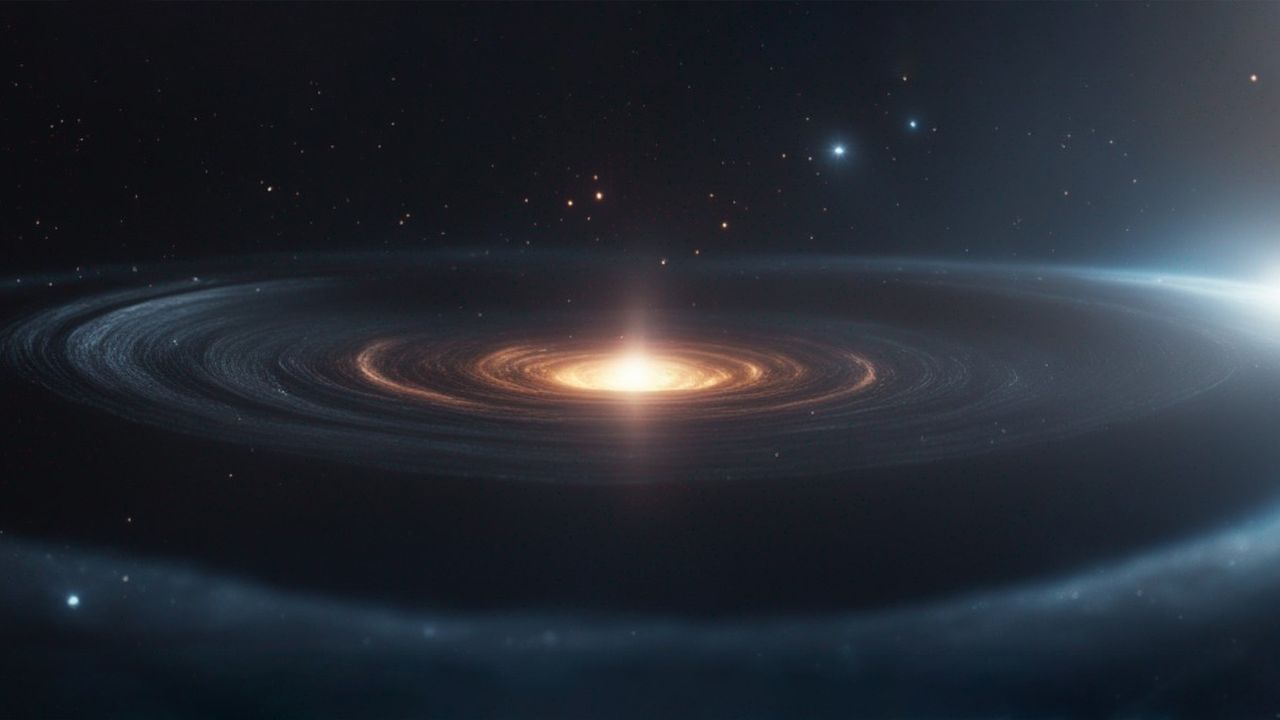
Deep in the first moments of the Big Bang, the entire cosmos shook and rumbled. Those quakes still reverberate to the present day. It will take the most sensitive instruments ever imagined to reveal those ripples, but if they are discovered, they will change our understanding of the entire universe.
In 1916, Albert Einstein discovered that his theory of general relativity predicted the existence of gravitational waves — ripples in the fabric of space-time caused by anything with mass that accelerates. But gravity is by far the weakest of the known forces, and gravitational waves are weaker still. So, although the idea of gravitational waves was interesting, Einstein believed they could never be detected.














