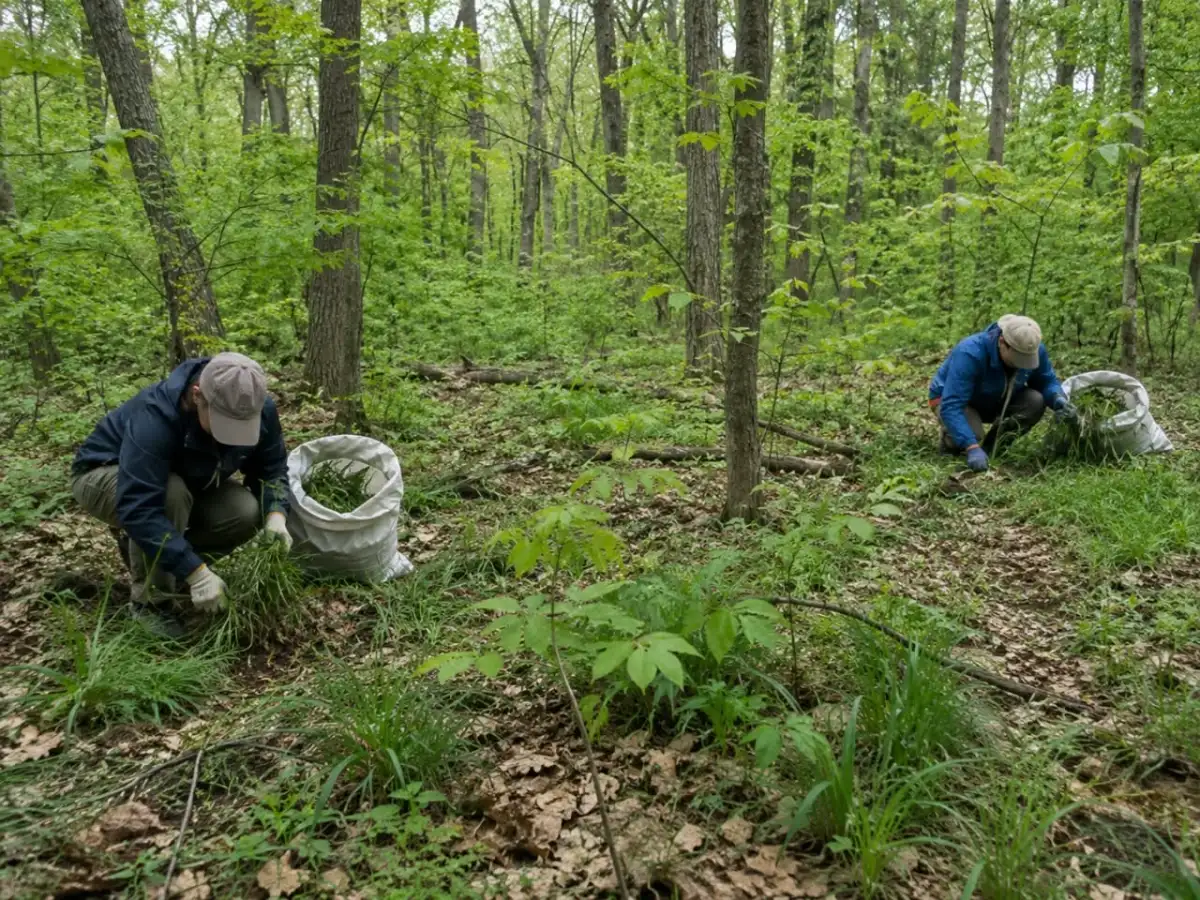
There's a reason why the forest floor on most eastern hikes in the United States seems to be growing suspiciously less wildflower-y and more uniformly green; it's due in part to the proliferation of an innocuous-looking ankle-high annual, Japanese stiltgrass, which most people walk right over without thinking twice. Ecologists have been warning about its effects for two decades, but as a 2009 peer-reviewed study titled “Invasive plant removal method determines native plant community responses,” in the Journal of Applied Ecology by ecologists S. Luke Flory and Keith Clay demonstrates, removing this grass can have more impact than one might expect.
A grass most people have never even heard of is quietly taking over eastern U.S. forests