
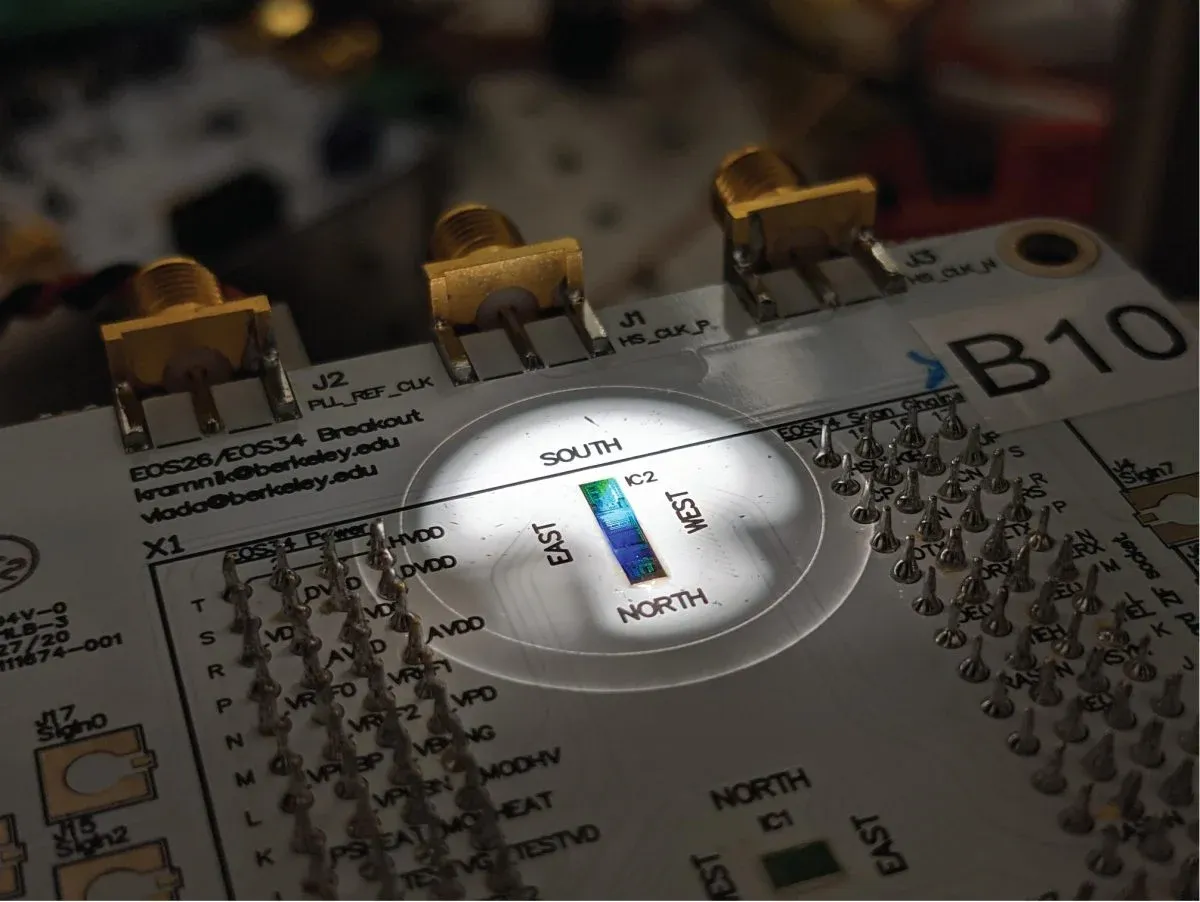
Researchers from Boston University, UC Berkeley, and Northwestern University have created something that sounds straight out of a sci-fi movie: a “quantum light factory” squeezed onto a 1 mm² silicon chip. Built using a standard 45 nm CMOS manufacturing process—the same kind used for standard x86 and ARM processors—this breakthrough brings quantum hardware a step closer to the world of mass production. The work, published in Nature Electronic, could pave the way for scalable quantum computing that doesn't require exotic setups, instead relying on mass production techniques that we already employ today.
Think of this chip as a prototype for a future quantum factory line. It packs 12 tiny silicon loops, called "microring resonators," each acting as a generator of photon pairs with special quantum properties. These photon pairs are the lifeblood of many quantum technologies, but producing them usually requires fragile lab setups. Here, they’re generated directly on a chip no bigger than a fingernail.