
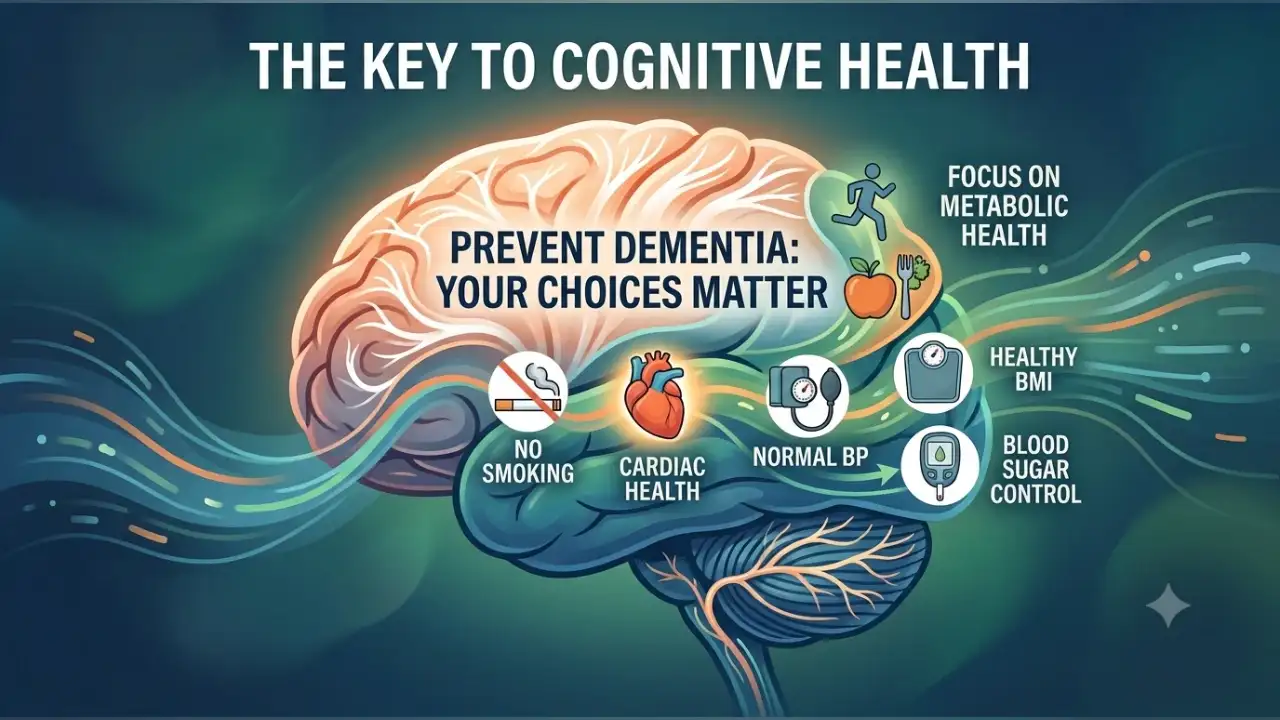
A new study from Lund University suggests that not all dementia risk factors affect the brain in the same way. While several common health risks were linked to changes associated with vascular dementia, others showed possible connections to the biological processes involved in Alzheimer's disease.
The findings also reinforce that dementia is not a single disease but a collection of symptoms caused by different underlying disorders. Researchers say the study could improve understanding of how individual risk factors contribute to different forms of dementia, as per a report.

Researchers tracked brain health over four years
The study followed nearly 500 adults with an average age of 65 who had no signs of cognitive impairment when the research began.
Over four years, researchers monitored changes in the brain's white matter, the network of nerve fibers often damaged in vascular dementia. They also measured levels of amyloid β and tau, two proteins closely linked to Alzheimer's disease.
The team then examined how both modifiable and nonmodifiable risk factors were associated with these brain changes over time.
READ ALSO: A hidden black hole stayed invisible until it destroyed a passing star, revealing a cosmic mystery
Common vascular risk factors were linked to white matter damage
The researchers found that several modifiable risk factors, including smoking, cardiovascular disease, high blood pressure and high blood lipids, were associated with damage to blood vessels in the brain. These participants also showed a faster buildup of white matter changes, which are commonly seen in vascular dementia.
Isabelle Glans, a doctoral student at Lund University and resident in neurology at Skåne University Hospital, said, "We saw that most modifiable risk factors -- smoking, cardiovascular disease, high blood lipids and high blood pressure, among others -- were linked to damage to the brain's blood vessels and a faster accumulation of so-called white matter changes," as quoted by ScienceDaily.
According to the researchers, this type of damage can eventually contribute to vascular dementia.
READ ALSO: A rare Greenland shark found in Ireland gave scientists new clues about how it lives for centuries
Diabetes and lower BMI showed different patterns
The study also found possible links between certain risk factors and the proteins associated with Alzheimer's disease.
Participants with diabetes showed greater accumulation of amyloid β, while those with a lower BMI experienced faster accumulation of tau. The researchers stressed that these findings need to be investigated further and confirmed in future studies.
Dementia has more than one cause
The researchers say the findings highlight why it is important to study different forms of dementia separately.
Sebastian Palmqvist, senior lecturer in neurology at Lund University and senior physician at the Memory Clinic at Skåne University Hospital, said earlier research has often failed to distinguish between the different causes of dementia when examining modifiable risk factors.
Palmqvist said, "Much of the research available on the risk factors that we ourselves can influence does not take into account the different causes of dementia. This means that we have had limited knowledge of how individual risk factors affect the underlying disease mechanisms in the brain," as quoted by ScienceDaily.
Healthy habits may protect the brain in more than one way
The researchers noted that many people with dementia have both vascular damage and Alzheimer's-related changes occurring in the brain at the same time.
Palmqvist said focusing on vascular and metabolic health may help reduce the combined effects of these multiple brain changes, even for people at risk of Alzheimer's disease.







