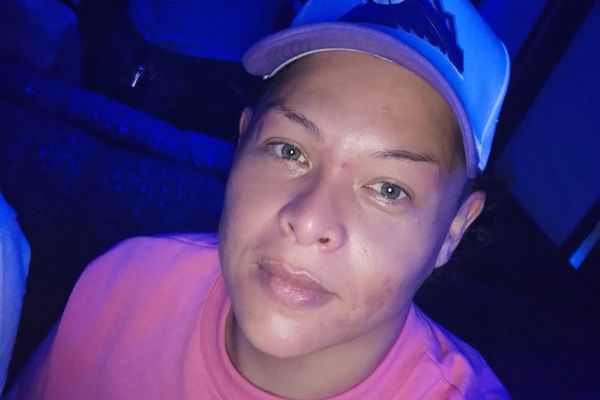
A new campaign advertisement featuring an artificial intelligence deepfake of Texas Democratic Senate candidate James Talarico is intensifying debate about the use of synthetic media in the 2026 US midterm elections.
The 85-second video, released online by the National Republican Senatorial Committee (NRSC), shows a realistic but computer-generated version of Talarico appearing to read and comment on past social media posts. While the advertisement includes an on-screen label stating that it is 'AI GENERATED,' critics say the disclosure is easy to miss and raises questions about whether voters could be misled.
Experts say the ad demonstrates how rapidly artificial intelligence technology is transforming political campaigning, particularly as deepfake videos become easier to produce and increasingly convincing.
What the AI Ad Shows
The advertisement features a lifelike AI recreation of Talarico speaking directly to viewers. In the video, the simulated candidate reads excerpts from tweets posted in 2021 in which the real Talarico discussed issues including transgender rights, race and religion.
It also references a 2013 tweet in which Talarico recalled attending an event hosted by Planned Parenthood when he was a teenager, according to CNN.
The AI version then appears to add commentary praising the posts, including statements suggesting approval or admiration for them. There is no evidence that the real Talarico made those remarks.
The ad opens and closes with a narrator describing the segment as a 'dramatic reading.' However, the centrepiece of the video is the deepfake depiction of the candidate speaking directly to the camera.
Disclosure Raises Transparency Questions
Although the advertisement includes the words 'AI GENERATED,' the label appears in small text in the bottom corner of the screen for most of the video.
Hany Farid, a digital forensics specialist at the University of California, Berkeley, said the synthetic video is highly convincing despite minor technical flaws.
In an email, Farid said: 'The face and voice are very good. There is a slight misalignment between audio and video, but otherwise this is hyper-realistic and I don't think that most people would immediately know it is fake.'
Farid also questioned whether the small disclosure text was sufficient for viewers scrolling through social media feeds.
Republicans Defend Use of AI Campaign Ad
The NRSC has defended the advertisement, arguing that the video simply highlights statements made by Talarico.
Joanna Rodriguez said Democrats were reacting to the ad because it repeats the candidate's own words.
A source familiar with the committee's thinking said the use of artificial intelligence was intended to visualise existing public statements for voters using modern technology.
The source said the tweets shown in the video were authentic, though the organisation did not address questions about the additional commentary attributed to the AI version of Talarico.
Talarico Campaign Criticises Deepfake Tactic
Talarico's campaign condemned the advertisement and accused Republicans of attempting to mislead voters ahead of the November election.
Campaign spokesperson JT Ennis said Republican candidates were 'scared of James Talarico.'
Ennis said in a text message that while opponents were creating AI deepfake videos, the campaign was focusing on building support across Texas.
Calls for Tighter Rules on Political Deepfakes
The controversy has prompted renewed calls for stronger regulation of artificial intelligence in political campaigns.
Democratic Senator Andy Kim warned that synthetic media could pose risks not only for elections but also for the wider public.
Posting on X, Kim wrote: 'These deepfakes are dangerous and wrong. We need protections not just for politics, but for all Americans that could be targeted.'
These deepfakes are dangerous and wrong. We need protections not just for politics, but for all Americans that could be targeted. pic.twitter.com/QnLGqwsqfQ
— Andy Kim (@AndyKimNJ) March 12, 2026
Texas Law and the Rise of AI in the 2026 Midterms
Texas already has one of the strictest state laws governing political deepfakes. A law passed in 2019 makes it a criminal offence to distribute deceptive deepfake videos within 30 days of an election if they are intended to harm a candidate or influence the outcome.
However, the current advertisement falls outside that 30-day window and is therefore not prohibited under existing rules.
Researchers say the episode reflects a broader pattern in the 2026 midterm cycle, with campaigns from both parties experimenting with AI-generated images, videos and satire as political messaging tools.
Sarah Kreps, director of the Tech Policy Institute at Cornell University, said synthetic media could soon become a routine part of campaign strategy.
In an email, Kreps said campaigns increasingly appear willing to use AI openly rather than covertly, as long as some form of disclosure is included.