Get all your news in one place.
100's of premium titles.
One app.
Start reading
AAP
AAP
Politics
Lucinda Garbutt-Young

Renewables, batteries shield Australia from oil crisis

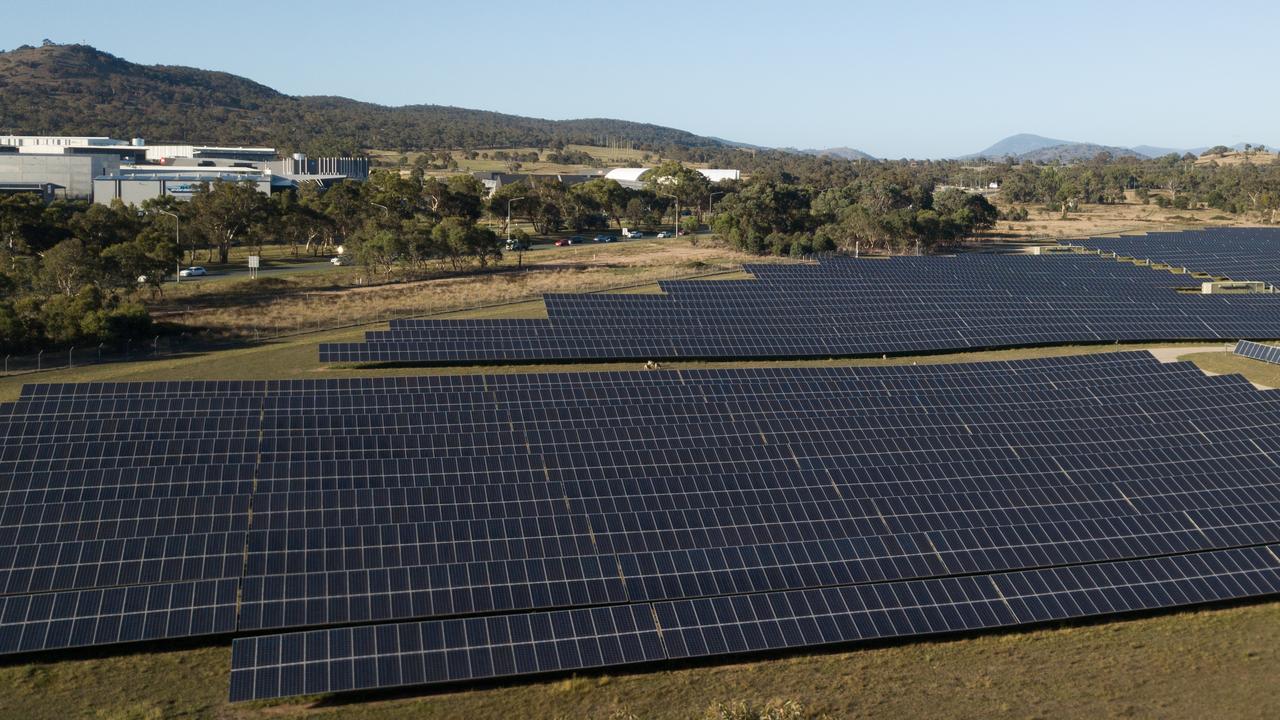
Solar farms have played their part in cutting Australia's wholesale energy prices. (Mick Tsikas/AAP PHOTOS)

Australia's rapid build-out of renewable energy and batteries has spared it from surging energy prices, as war in the Middle East continues to wreak havoc on global supply.

The country's wholesale energy prices fell by about 30 per cent year-on-year in the first half of 2026, compared to price surges of an equivalent percentage in the European Union and Japan, the International Energy Agency said in its mid-year report on Thursday.

Disruptions to shipments through the Strait of Hormuz since February have put pressure on global energy supply, particularly in countries where renewables do not yet have a high uptake.

But Australia's wholesale prices are predicted to be some of the lowest in the world for the rest of 2026 and into 2027, despite the Middle East conflict continuing to roil markets.

battery
Energy Minister Chris Bowen and the government have been backers of home battery systems. (Lukas Coch/AAP PHOTOS)

A decline of five per cent is predicted in the back half of 2026.

The United States is the only country due to have a steeper decline, at 10 per cent.

Australia's strong uptake of renewables and "rapidly expanding battery storage" were responsible for keeping costs down, the agency's report said.

Many Australian households have stepped up their charging of batteries during the daytime, minimising the amount of coal and gas needed at peak evening times.

That has also allowed residents to make money off selling their solar energy back to the grid, particularly in South Australia, where demand has at times been tight.

Globally, energy generated from renewables is likely to overtake coal-fired output by the end of the year.

Parity was almost reached between the two methods in 2025 and is set to grow by more than eight per cent in 2026.

ai
Australia has emerged as the world's second-largest destination for data centre investment. (Jono Searle/AAP PHOTOS)

Renewables' share in the electricity generation mix was likely to rise from 33 per cent in 2025, to 37 per cent by 2026.

The rapid build-out of data centres to power the AI boom is set to keep pushing up global energy demand through 2027, the report said.

Australia has emerged as the world's second-largest destination for data centre investment, prompting Prime Minister Anthony Albanese to announce requirements for developers to underwrite more renewable energy generation than their data centres plan to use.

Sign up to read this article
Read news from 100's of titles, curated specifically for you.
Already a member? Sign in here
Related Stories
Top stories on inkl right now
Our Picks
Fourteen days free
Download the app
One app. One membership.
100+ trusted global sources.