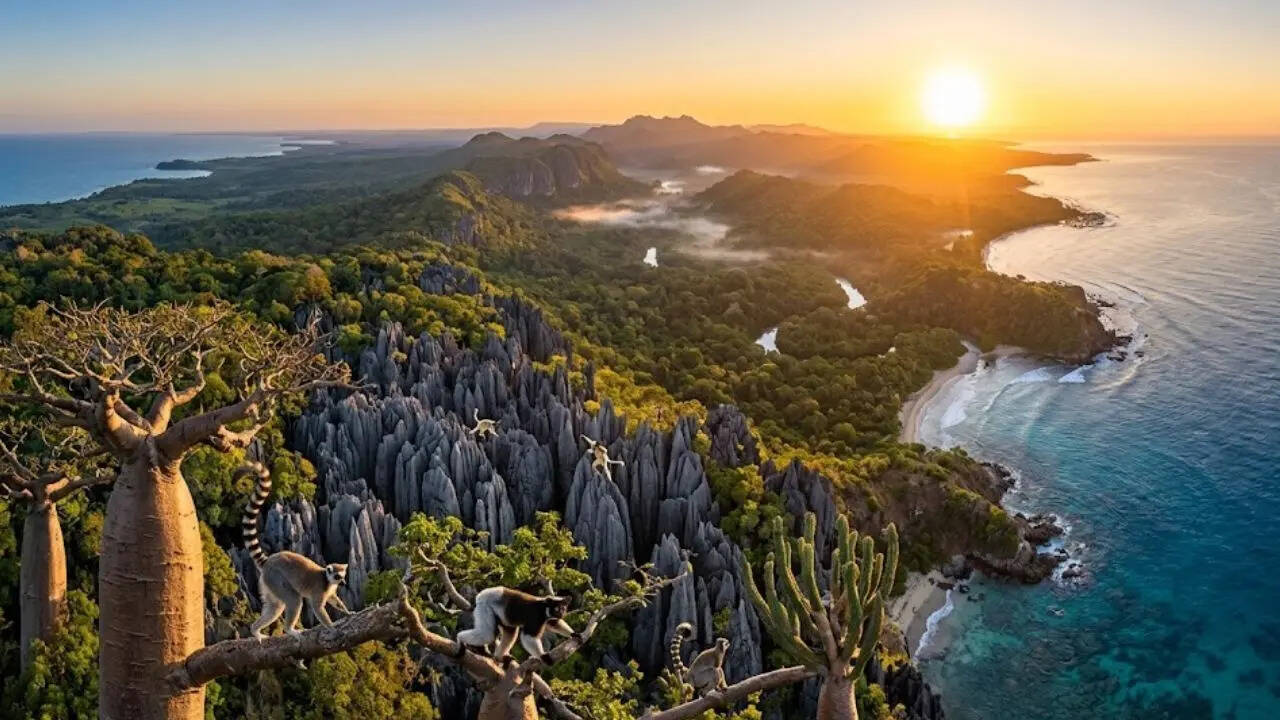
The biological narrative of Madagascar is a 180-million-year history of isolation and evolutionary divergence. Once a part of the Gondwana supercontinent, it broke away from Africa and later split from the Indian subcontinent around 88 million years ago. This separation turned it into a secluded natural lab. With no competition from mainland species, Madagascar's plants and animals evolved in remarkable ways. Today, more than 90 per cent of its species exist nowhere else on Earth. The island stands out as a global hotspot for biodiversity, featuring everything from ancient primates to specialised plants. It offers a fascinating view into Earth's deep evolutionary past and highlights how geological changes can drastically affect life.