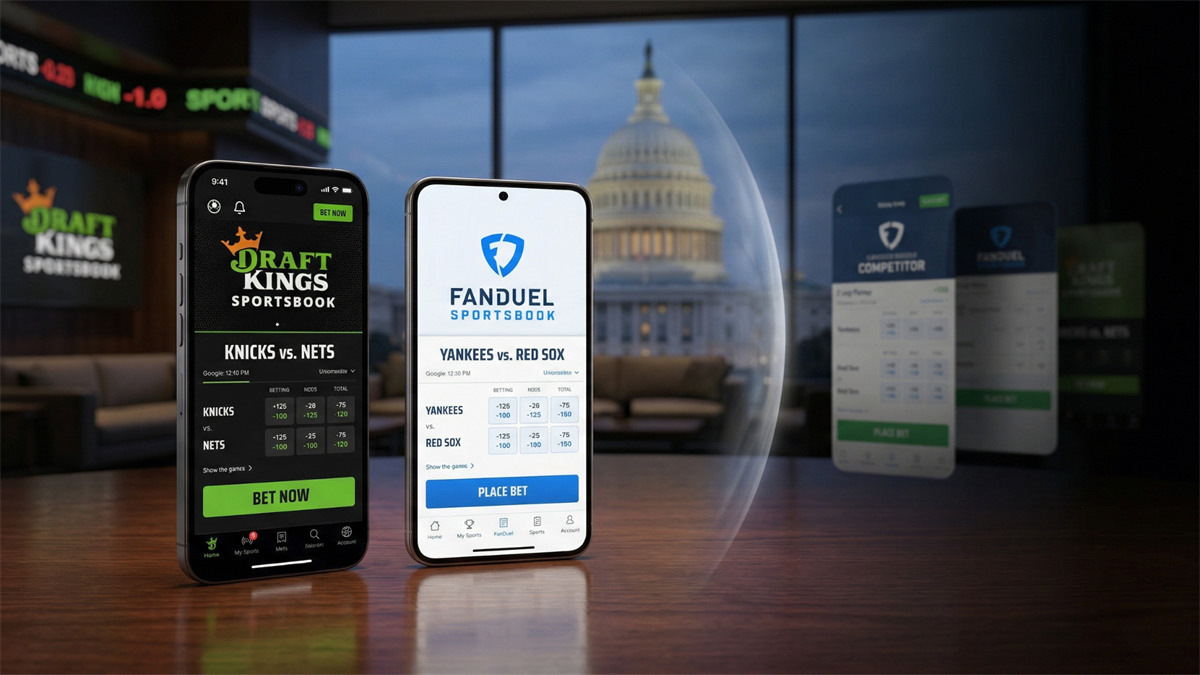
A sudden jolt of activity from Washington, D.C., sent shockwaves through the U.S. gaming and entertainment sector on March 23, 2026.
Shares of industry leaders DraftKings Inc. (NASDAQ: DKNG) and Flutter Entertainment plc (NYSE: FLUT) surged in heavy trading, marking a significant deviation from recent trends. This sharp upward movement was not tied to an earnings report or a market-wide rally, but to a powerful and direct legislative catalyst.

The introduction of a new bipartisan Senate bill, the Prediction Markets Are Gambling Act, immediately altered the competitive landscape. The bill targets a new and disruptive class of rivals that have operated in a regulatory gray area. For established players like DraftKings and Flutter, this development signals a fundamental shift in the rules of the game that could be highly profitable.
The Catalyst and the Moat: A Rival Threat Neutralized
To understand the market’s enthusiastic reaction, investors must first understand the competitive threat that was just neutralized.
In recent years, prediction markets such as Kalshi and Polymarket have emerged as disruptive forces. These platforms allow users to buy and sell contracts based on the outcome of future events, and they have increasingly encroached upon the core territory of traditional sportsbooks.
The primary threat posed by these platforms was their unique operating structure. By obtaining regulatory approval from the Commodity Futures Trading Commission (CFTC), they were able to offer services nationwide. This allowed them to bypass the complex, expensive, and time-consuming state-by-state licensing process that licensed operators like DraftKings and Flutter’s FanDuel must undertake. This structural advantage created an uneven playing field.
The new Senate bill aims to level that field by banning sports-related contracts on these platforms. This legislative action creates what is known in business as a regulatory moat, a powerful competitive barrier built by government rules that favors established, compliant companies.
By pushing unregulated competition out of the sports vertical, the bill effectively builds a protective wall around the businesses of DraftKings and Flutter. This moat solidifies their existing market share, reduces long-term pressure to compete on price with unregulated entities, and validates their methodical, state-licensed business models as the industry standard.
Why Investors Are Rushing Into DraftKings
The legislative news boosted DraftKings' stock price, with the market sending several clear bullish signals.
The stock’s immediate price spike on high trading volume showed strong investor approval. From a technical standpoint, this rally is significant as it pushed the stock price up to test its descending 40-day moving average. For chart-focused investors, a sustained break above this key level often signals a reversal of a downtrend and can trigger further buying.
Investor sentiment was also on clear display in the options market. Call options, which are bets that a stock’s price will rise, saw a massive surge in volume. On the day of the news, the volume of calls traded outpaced that of puts, bets the price will fall, by more than four to one. This heavy skew suggests that sophisticated traders are positioning for continued upside in the near term.
Beyond the immediate market reaction, the development strengthens DraftKings’ fundamental outlook. The removal of a competitor class means DraftKings' path to sustained profitability is now clearer. Marketing dollars may become more efficient as they target a less crowded field, potentially accelerating margin improvement and enhancing the return on DraftKings's significant brand-building investments.
This positive momentum is supported by Wall Street analysts. The majority of firms covering DraftKings rate the stock as a Buy or Outperform. The median price target of $37.09 suggests solid potential upside from its current trading price, reinforcing the view that DraftKings's growth story is far from over.
Why Flutter Stands to Gain the Most
As the parent company of FanDuel, the definitive market leader in U.S. online sports betting, Flutter Entertainment is uniquely positioned to benefit from a more consolidated and rational competitive environment. A less crowded market allows FanDuel to further leverage its powerful brand recognition and operational scale, reinforcing its leadership and creating a clearer path for growth in its most important market.
Confidence from company leadership provides another key indicator. While recent filings showed some executives selling shares, this is often part of pre-arranged financial planning. A far more powerful and direct signal is the board's recent authorization of a substantial share buyback program. This action uses company capital to repurchase its own stock, signaling a clear belief from the top that the stock is undervalued.
Furthermore, Flutter’s extensive and profitable operations worldwide, including in the UK and Australia, provide a stable financial foundation. This global strength allows Flutter to continue its aggressive, highly successful investment in the U.S. market from a position of security, a key advantage over competitors focused solely on the U.S. market.
This strong position is endorsed by Flutter’s analyst community. Like its primary competitor, Flutter enjoys strong consensus among Wall Street firms. The average price target of $234.65 points to over 100% upside, underscoring broad confidence in Flutter’s strategy and its ability to continue executing on the massive U.S. market opportunity.
Betting on a Favorable Future
The introduction of the Prediction Markets Are Gambling Act represents more than just a daily headline; it signals a fundamental and positive shift for the U.S. sports betting industry. The legislative action is decisively favoring the established, licensed operators who have invested billions in building compliant businesses.
For DraftKings and Flutter, the creation of this regulatory moat provides a durable competitive advantage, strengthening the long-term investment case for both companies. It removes a layer of uncertainty and validates their strategic approach. This event serves as a clear example for investors of how legislative news flow can be a powerful catalyst. Identifying the well-positioned incumbents who stand to benefit when regulators finally draw clear lines in the sand can be a key to unlocking significant shareholder value.
Where Should You Invest $1,000 Right Now?
Before you make your next trade, you'll want to hear this.
MarketBeat keeps track of Wall Street's top-rated and best performing research analysts and the stocks they recommend to their clients on a daily basis.
Our team has identified the five stocks that top analysts are quietly whispering to their clients to buy now before the broader market catches on... and none of the big name stocks were on the list.
They believe these five stocks are the five best companies for investors to buy now...
The article "Regulatory Jackpot: Gaming Stocks Surge on a Surprise Bill" first appeared on MarketBeat.