
Get all your news in one place.
100's of premium titles.
One app.
Start reading
The Conversation
The Conversation
Politics
Joseph K. Nwankpa, Associate Professor of Information Systems & Analytics, Miami University

Registering refugees using personal information has become the norm – but cybersecurity breaches pose risks to people giving sensitive biometric data

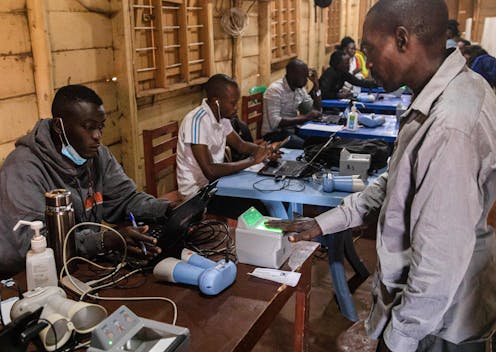
A refugee from the Democratic Republic of Congo registers his fingerprints on a biometric machine in Uganda in 2022. Badru Katumba/AFP via Getty Images

The number of refugees worldwide reached record high levels in 2022. More than 108.4 million people have been forced to flee their homes because of violence or persecution. Meanwhile, governments and aid agencies are increasingly using a controversial method of effectively identifying and tracking many refugees.

This method, known as biometrics, involves collecting someone’s physical or behavioral characteristics, ranging from fingerprints to voice. Organizations that collect the personal physical data can store it to instantly recognize someone after scanning their fingerprints or irises, for example.

Sign up to read this article
Read news from 100's of titles, curated specifically for you.
Already a member? Sign in here
Related Stories
Top stories on inkl right now
One subscription that gives you access to news from hundreds of sites
Already a member? Sign in here
Our Picks
Fourteen days free
Download the app
One app. One membership.
100+ trusted global sources.







