Get all your news in one place.
100's of premium titles.
One app.
Start reading
The Conversation
The Conversation
Jo Adetunji, Executive Editor – Partnerships, The Conversation

Register to vote for the winner of the Vitae Three Minute Thesis competition 2026 – supported by The Conversation

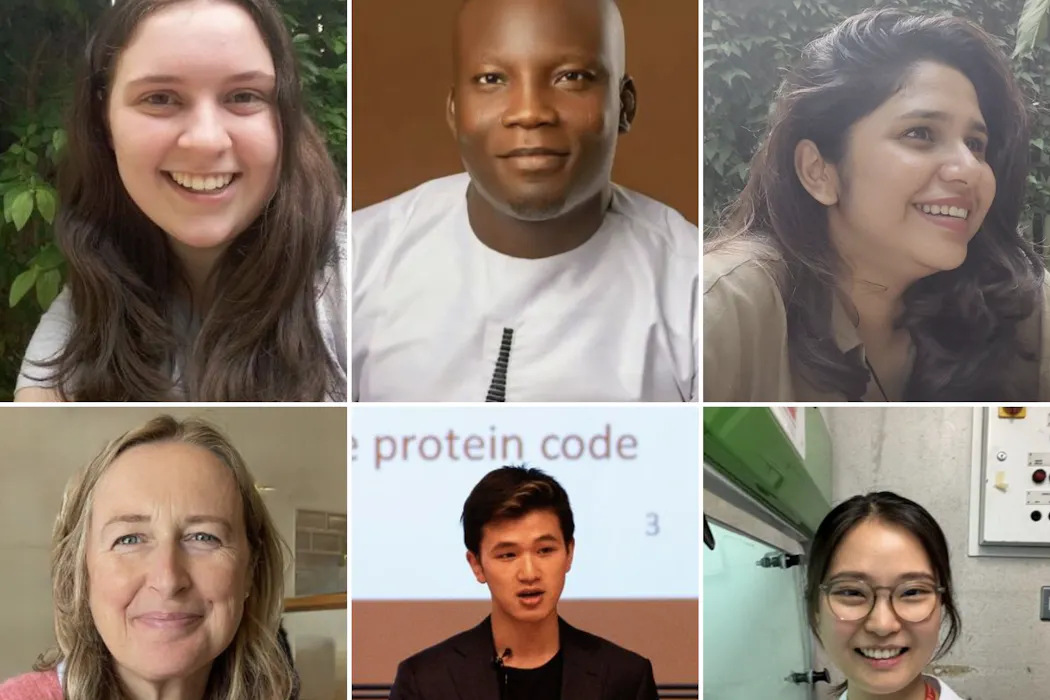
The 2026 Vitae 3MT finalists, clockwise L-R: Rachel Bernasconi, Peter Akor, Akma Nazar, Yuri Jang, Jonathan Chan, Helen Norris. Vitae3MT, CC BY-ND

Three minutes. One big research idea. And a chance to persuade you that they should win.

That’s the challenge facing six finalists in the 2026 Vitae Three Minute Thesis (3MT®) competition, sponsored by The Conversation.


In just three minutes, the six doctoral researchers must explain their research in a compelling and engaging spoken presentation — making complex ideas accessible to an audience beyond their field. There’s no room for jargon or lengthy explanations – the challenge is to capture attention, communicate the significance of their work and leave the audience wanting to know more. So who will you vote for?

There are three prizes up for grabs: the Judges Choice, selected by a panel of judges; the Editor’s Choice, selected by The Conversation; and the People’s Choice – chosen by you.

Register to watch the online final on Thursday, October 1, at 12 noon (GMT+1) and vote afterward until Monday, October 5, at 10am (GMT+1).

The winner will be announced on Monday 5 October at 12 noon (GMT+1).

The six finalists are:

Akma Nazar, University of Westminster. Akma is a PhD researcher in the Architectural Humanities Research Group. Her doctoral research explores the manifestation of gender in Mappila Muslim homes. Her research interests include gendered domesticities and spatial agency gender and agency in domestic settings?, and contemporary architectural historiography in India, specifically post-colonial modernist housing. She works with critical feminist research methodologies, including oral history research and feminine writing.

Peter Akor, Glasgow Caledonian University. Peter is a PhD researcher in the School of Science and Engineering. His research focuses on developing artificial intelligence and wearable EEG technologies to provide early warning of epileptic seizures, helping people live more safely and independently. Before joining GCU, Peter spent nine years as a university lecturer in engineering in Nigeria. He is passionate about translating research into technologies that improve lives.

Rachel Bernasconi, University of Surrey. Rachel’s PhD thesis explored how mathematical models can be used to help people sleep better. This work drew upon Rachel’s passion for interdisciplinary research, and follows her studies in biomedical science, mathematics and French at the University of Queensland, Australia. Rachel is currently continuing her research at the interface of mathematics and sleep, contributing to innovative projects at both Surrey and the University of Oxford.

Helen Norris, University of Reading. Helen is a final-year interdisciplinary PhD researcher at the Institute of Education, University of Reading. Following a 15-year marketing career and a role as a research assistant in Oxford University’s Department of Experimental Psychology, Helen channelled her interest in language, cognitive development and mental health into doctoral research, using a blend of corpus linguistics and psychology. Her thesis investigates how adolescent fiction acts as a socio-emotional training ground using a 2.4-million-word corpus curated from fiction titles read by 684 teenagers.

Jonathan Chan, University of Oxford. From New Zealand, Jonathan graduated with a first-class degree (MBiochem) in molecular and cellular biochemistry from the University of Oxford as Proxime Accessit (2nd) of his 2022 cohort. His Master’s research identified potential therapeutic targets in a paediatric brain cancer. He then pivoted to bioinformatics and now builds multifactorial, predictive models of inherited heart disease.

Yuri Jang, King’s College London. Yuri is a PhD student in immunology. Her research focuses on understanding the fundamental mechanisms in Urticaria, a skin disease that causes painful itching and swelling. By uncovering the underlying biology of the condition, her goal is to identify new therapeutic targets and improve patient experience. Prior to her PhD, Yuri earned a first-class honours BSc in biochemistry from the University of Glasgow and an MSc in immunology with distinction from King’s College London.


To find out more about the finalists, the semi-finalists and the competition click here.

Vitae and its non-profit membership programme are managed by the Careers Research and Advisory Centre (CRAC) Limited, an independent registered charity.

This article was originally published on The Conversation. Read the original article.

Sign up to read this article
Read news from 100's of titles, curated specifically for you.
Already a member? Sign in here
Related Stories
Top stories on inkl right now
One subscription that gives you access to news from hundreds of sites
Already a member? Sign in here
Our Picks
Fourteen days free
Download the app
One app. One membership.
100+ trusted global sources.