Get all your news in one place.
100's of premium titles.
One app.
Start reading
Bangkok Post
Bangkok Post
Comment

Refugee management needs more work

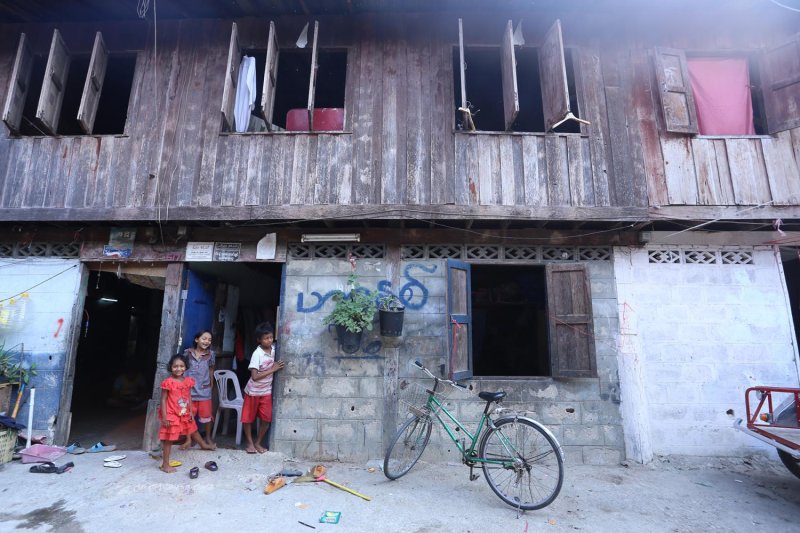
A photo dated April 6 shows children of Muslim Myanmar migrants at their home in Mae Sot. (Photo: Paritta Wangkiat)

Thailand has provided a safe haven to large numbers of refugees since World War II, offering refuge to people fleeing persecution or war across borders. However, until recently, it was hesitant to adopt more comprehensive refugee policies and practices.

One example is the 80,000 Myanmar refugees, mostly from ethnic minority groups, living in nearly 10 camps along the western border. Many have been there for about four decades, and around 40,000 are of working age.

The authorities are now introducing more inclusive measures, marking a shift towards a more cohesive and humanitarian response. This is a welcome development amid a decline in international aid.

The breakthrough has come with a new policy allowing refugees from the camps to work outside them. The policy is now being implemented, with nearly 10,000 people being processed in the first phase for employment at more than 40 locations across Thailand. Work permits are valid for one year.

The move promotes greater self-reliance among refugees while helping to ease labour shortages. It also departs from the previous "sedentary vacuum", in which refugees spent decades confined to camps without access to employment or meaningful opportunities.

Another innovation is the recent issuance of "pink cards" to refugees as identification cards for non-Thais. These should enable beneficiaries to open bank accounts and buy SIM cards.

More importantly, the cards will help protect them from arrest as undocumented migrants. They also recognise their status as people entitled to respectful treatment and protection.

Also in the offing is the possible introduction of the Thai language as part of the education inside the camps. To date, the educational process has been based on the Burmese language. This about-turn will enable the camp population to feel more attuned to the opportunities that are emerging beyond the camps.

The next step should be to align the curriculum in the camps to the Thai curriculum outside the camps as part of the needed synchronisation. A cautionary note is that a number of the children are now going to school outside the camps. They should be allowed to continue their education progressively without the disruption of being pushed back into the camps.

The next step should be to align the camp curriculum more closely with Thailand's national curriculum. At the same time, children already attending schools outside the camps should be allowed to continue their education without being required to return.

Another important step concerns healthcare.

Refugees who obtain employment and join the social security system will be entitled to medical benefits. The authorities are also offering medical check-ups to those who remain in the camps and are not yet employed. A modest fee will be charged for health insurance, with reduced rates for children regardless of immigration status. Over time, access to Thailand's universal healthcare system should be expanded on a non-discriminatory basis.

Several other issues deserve attention. Refugees should be allowed greater freedom of movement, and the camps should gradually be opened up to better connect with surrounding communities.

Family unity is a fundamental principle that should be upheld. Those working outside the camps should be allowed to live with their families. This principle is also reflected in the Convention on the Rights of the Child, to which Thailand is a party.

In this regard, implementation of the convention was strengthened a few years ago when Thailand withdrew its reservation to Article 22, which guarantees a range of rights for refugee children. This is despite the country's decision not to accede to the 1951 Refugee Convention and its 1967 Protocol, which provide the principal international framework for refugee protection.

Children deserve particular attention. Many are unaccompanied minors, and established good practices include placing them in the care of nearby relatives where possible. Safeguards are also needed to prevent violence, abuse and exploitation, while ensuring vulnerable children are identified and referred to the appropriate authorities. Community-based support is essential to address not only physical trauma but also psychosocial harm.

Further research is also needed to determine whether some children have fallen victim to online scams or been lured into criminal compounds operating near the border.

The plight of other groups seeking refuge in Thailand should not be overlooked. Since the 2021 military coup in Myanmar, for example, there have been periodic new refugee arrivals. They should also be registered and given access to basic necessities. So far, the authorities have generally allowed them to enter temporarily before returning them to the border.

There is also an anomaly in Thailand's policy towards Rohingya refugees.

About 400 remain in immigration detention. It is time to provide them with community-based shelter instead of continuing to detain them.

For Rohingya children, the authorities have already adopted a memorandum of understanding allowing them to live in community-based care outside immigration facilities. Those facilities should receive continued support, including regular monitoring and review.

Encouragingly, Muslim communities in Pattani province have expressed their willingness to provide shelter, with the support of provincial authorities.

This is complemented by the Islamic principle of zakat, under which the wealthy are obliged to help those in need. Greater understanding among young people from different religious and cultural backgrounds should also be encouraged as part of a more inclusive society.

Thailand is increasingly receiving international recognition for its humanitarian approach. The so-called "Thai model" is now cited as an example by other countries dealing with large refugee influxes.

Even so, policymakers should not rest on their laurels. Much remains to be done, and enlightened leadership will be essential.

Nor should the root causes of displacement be forgotten. Human rights, peace, democracy and sustainable development remain fundamental to addressing the conditions that force people to flee their homes.

Sign up to read this article
Read news from 100's of titles, curated specifically for you.
Already a member? Sign in here
Related Stories
Top stories on inkl right now
One subscription that gives you access to news from hundreds of sites
Already a member? Sign in here
Our Picks
Fourteen days free
Download the app
One app. One membership.
100+ trusted global sources.