France has hit out at Reform UK’s plan to use Royal Navy ships to stop Channel migrant crossings, saying the proposals would be a “violation of French sovereignty” as well as a breach of maritime and international law.
Dubbed Operation Fortress, Nigel Farage’s party announced plans on Monday, should they win the next election, to intercept migrant boats and return them to France or Belgium.

But the plan – unveiled amid heightened unrest at the Spain-Morocco border – has sparked criticism from political opposition, former navy officers, as well as legal and migration experts, who claim it is dangerous, “lacks substance” and would be unworkable.
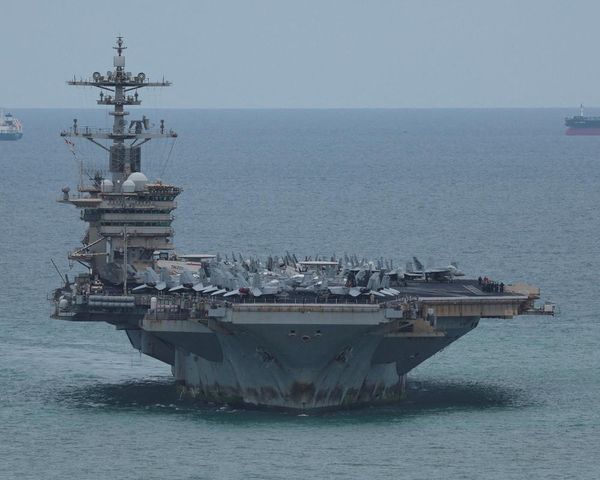
With embattled Mr Farage facing a by-election next week, the party proposed setting up a joint military command with units from the Royal Navy, Royal Marines, RAF and the army, as well as a surveillance command, to track incoming boats in what it says would be “the largest military operation in the English Channel since World War Two”.
The armed forces would then intercept any unauthorised boats and detain their occupants, giving them water, food and a medical assessment before returning them to France or Belgium under escort on UK vessels, Reform said.
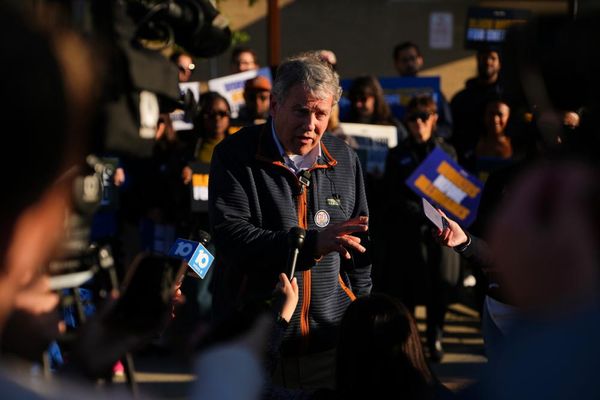
Setting out the proposal at a press conference, the Reform UK leader said: “When you think about it, what is the Royal Navy for? If the Royal Navy is not there to protect this country from invasion, then, frankly, I can’t see what its purpose is.”
But the plan was met with criticism, not least from the French ministry of the interior.
In a statement on Monday, the ministry, which is the equivalent of the UK’s Home Office, said: “This would constitute a violation of French sovereignty, as well as a violation of the law of the sea and international law.”
It added that the measures already agreed with the UK government have led to a “decline in the number of crossings in 2026”.
James M Turner KC, barrister in maritime law at Quadrant Chambers, said the UK would need agreement from France in order to use British vessels to return migrants to French shores.
He told The Independent: “The long and short of it is this – you can’t as a state go and do stuff in another state’s territory without its permission. It would create a huge diplomatic stink. So even if you could sweep up everyone on a rubber boat, you can’t just drop them in another state.”
Meanwhile, Libby Kane, spokesperson at migrants’ rights charity JCWI, said Reform’s proposals were a “dangerous and militarised response”, which will make violence and death at the border and in the Channel worse. She said: “Successive governments have all attempted this approach of increasing securitisation, policing and posturing rhetoric, and this has only resulted in injury and death while doing nothing to stop people from trying to come to the UK.”
And retired Royal Naval commander Tom Sharpe said the navy does not have ships to spare to carry out the operation as he questioned the “substance” of the policy.
“A billion-pound warship that’s configured for anti-air warfare or anti-submarine warfare, which are both threats to the UK, is not best used ferrying people around. You’re better off using an actual ferry,” he told BBC Radio 4’s Today programme.
Labour accused Reform of “reheating” the English Channel announcement from last summer and said that “anger and easy answers won’t bring crossings down”.
No 10 insisted border patrol officers were the “best suited candidate” to deal with such operations, adding: “The Royal Navy is already tackling many threats, including monitoring any Russian warships operating near our shores, protecting our waters and our critical national infrastructure.”
Downing Street also pointed out that, when the Royal Navy had primacy for small boat crossings in 2022, there was no reduction during that period.
For the latest political headlines delivered straight to your inbox, sign up for our daily View from Westminster newsletter here.
Shadow home secretary Chris Philp dismissed the plan as a “gimmick” that Reform have “no detailed plan nor funding” to back up.
“They can’t explain how they will properly fund the military and they can’t explain how they would disembark illegal immigrants in France without French cooperation,” he said.
Meanwhile, former British army officer and Conservative MP Ben Obese-Jecty said: “Reform have announced this ridiculous idea before, except now it’s party policy.”
The party says the plan is in line with international law and that it will both halt small boat arrivals and act as a humanitarian response.
Mr Farage insisted it would comply with international law and said: “It will save lives, it will help the French in fulfilling their job of stopping the boats and it will save a huge amount of money.
“We are very confident that our policy of securely picking people up and safely taking them back to France – we are entirely confident that that falls within other conventions of international law.”
However, Mr Turner KC told The Independent that while UK vessels entering French waters have a right of innocent passage, taking migrants trying to cross the Channel and returning them back to France would not be in accordance with that right.
He explained: “Unloading any person in contravention of the receiving state’s immigration laws would disqualify the passage from being innocent, under Article 19.2(g) of UNCLOS. If it is against the wishes of that country, it would also offend its territorial integrity and sovereignty.”
While Border Force vessels are able to collect small boat migrants from dinghies in British waters, this will be much harder in French waters as migrants are less likely to want to board the boats if they know they will be returned to France.
He added: “The reason asylum seekers will climb onto Border Force vessels is because they know they will come to the UK. If instead they know they will be returned to France, they will resist getting onto the vessels, and you will create a situation of real danger. It is extremely dangerous.”
Under Boris Johnson’s government, home secretary Priti Patel wanted to use Border Force vessels to push back small boats into French waters. However, the policy was never implemented, probably for safety reasons. It was withdrawn after it faced significant legal challenge and was never backed by the Royal Navy.
Mr Turner added: “It is practically impossible to push someone back over a line in a safe manner without endangering them.”
While Mr Farage has said Reform will not perform pushbacks in the Channel, trying to “rescue” migrants from dinghies who do not want to be “rescued” by UK vessels may encounter similar problems.
Jon Featonby, chief policy analyst at Refugee Council, said: “The last thing anyone should be proposing is anything that would risk more loss of life, as this plan inevitably would. It’s also not clear that this plan is even deliverable, as there’s no guarantee France or Belgium would take people back.”