Get all your news in one place.
100's of premium titles.
One app.
Start reading
AAP
AAP
Environment
Poppy Johnston

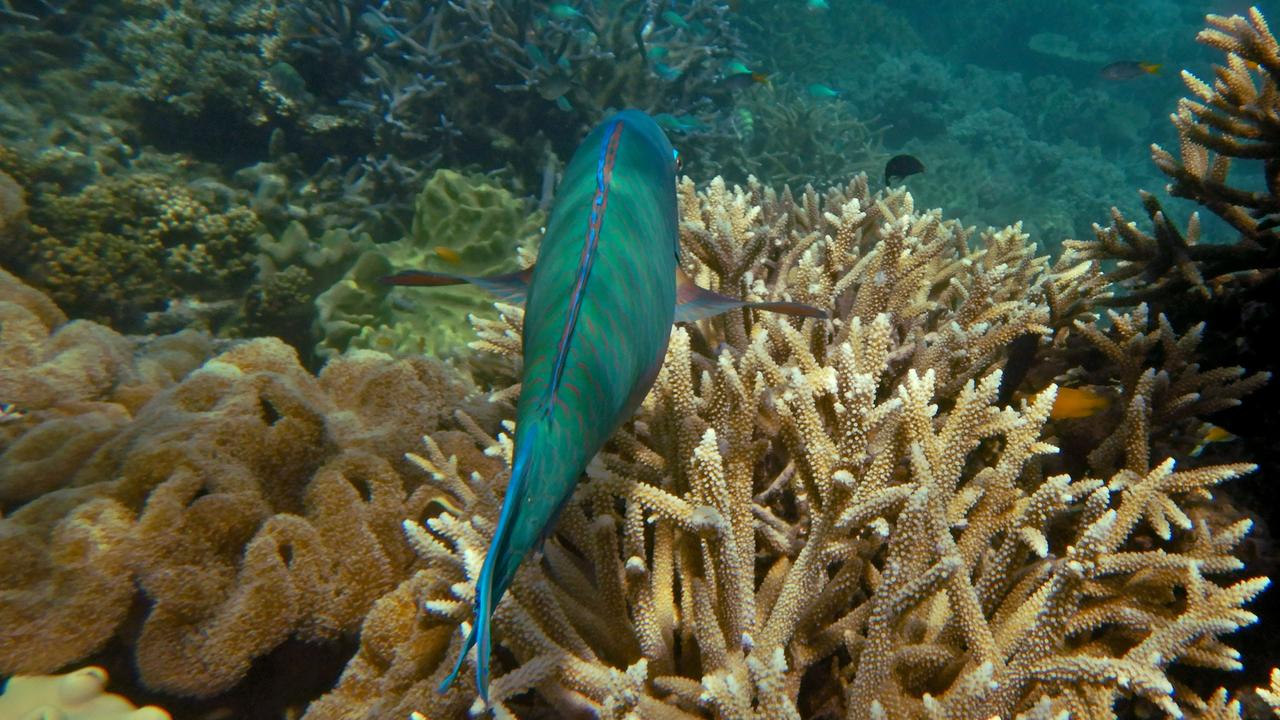
Reef dodges 'in danger' World Heritage listing again

The UN has called on Australia to give an update on the health of the Great Barrier Reef by 2028. (Dean Lewins/AAP PHOTOS)

Environmentalists have called for action to better protect the Great Barrier Reef after the United Nations World Heritage Committee raised concerns about water quality.

The world-famous reef dodged an "in danger" tag, but Australia has been asked for another progress report on the reef's health by 2028, in the UNESCO draft verdict released on Saturday.

The treasured tropical reef has long been under intense pressure from climate change and polluted runoff, with repeated mass bleaching events threatening its UNESCO World Heritage status.

In its interim ruling, the committee singled out water quality as a particular concern and called for an assessment of dredging sediment dumping in the region.

Australia has been trying to avoid an official black mark that would weigh on the fortunes of reef tourism operators who rely on boatloads of international visitors.

The Australian Climate and Biodiversity Foundation (ACBF) said the federal and Queensland governments must take action.

"The world is watching the failure of the Queensland and Federal governments to deliver on their own water quality targets," executive director Lyndon Schneiders said.

"The clock is ticking."

Minister for the Environment and Water, Murray Watt, said Australia was doing more than ever to protect the reef.

"Our efforts are making a difference – but we know there is more work to do," he said.

In the May budget, $91.8 million was allocated towards improving water quality, monitoring, and piloting coral‑spawning techniques designed to help damaged reefs recover after bleaching events, he said.

That brings the total invested in protection and conservation by state and federal governments to more than $5 billion since 2014.

A file photo of Murray Watt
Environment Minister Murray Watt says efforts to protect the reef had made a difference. (Mick Tsikas/AAP PHOTOS)

Reforms to federal environment laws are also expected to close land clearing loopholes, with agricultural clearing along waterways linked to damaging nutrient runoff and sediment.

The Queensland government welcomed the draft decision not to recommend listing the World Heritage site as "in danger".

"Queenslanders care deeply about the Reef, and we welcome the draft decision because it recognises the progress being made to conserve it," Minister for the Environment and Tourism Andrew Powell said.

Lissa Schindler from the Australian Marine Conservation Society said another review in 2028 amounted to Australia's fifth yellow card.

"The Australian and Queensland governments may point to avoiding an 'in danger' listing as proof they are doing enough," Dr Schindler said.

"But the truth is that one of the world's greatest natural wonders remains under international scrutiny because their efforts are not adequate to secure the Great Barrier Reef's future."

She said climate change remained the reef's biggest threat.

"The Queensland government, the joint manager of the reef, has no plan to achieve its legislated 75 per cent emissions reduction target, and continues to push coal-fired power generation while renewable energy projects are blocked or shelved.

"This is the opposite of what the reef needs."

Sign up to read this article
Read news from 100's of titles, curated specifically for you.
Already a member? Sign in here
Related Stories
Top stories on inkl right now
One subscription that gives you access to news from hundreds of sites
Already a member? Sign in here
Our Picks
Fourteen days free
Download the app
One app. One membership.
100+ trusted global sources.