
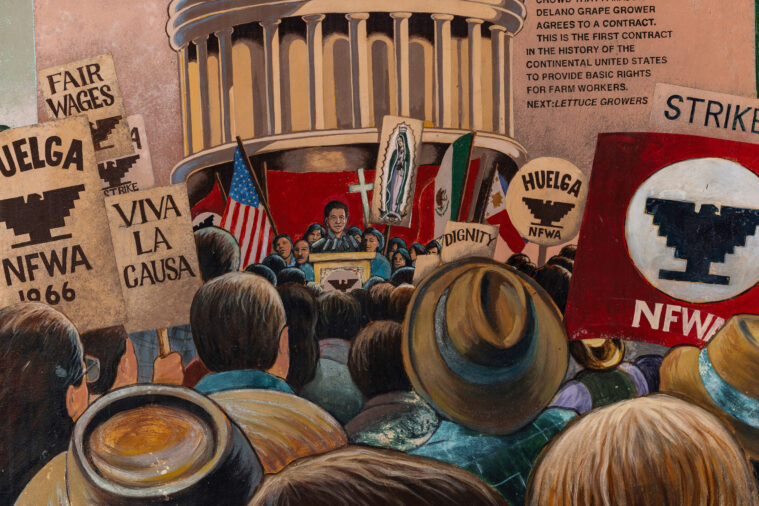
For decades, March 31 was marked with civil rights marches, school commemorations, and community celebrations honoring Cesar Chavez and the labor leader’s championing of better working conditions for farmworkers. In California and Texas, his birthday was a state holiday.
But when The New York Times published its investigation earlier this year on how Chavez groomed and sexually abused two girls and raped civil rights icon Dolores Huerta, the news ripped through the very spaces that had long organized to keep Chavez’s memory alive. Since then, a public reckoning has taken shape with communities revisiting Chavez’s legacy and grappling with how to disentangle him from the history of the broader farmworker movement and the ongoing fight for Latino equality in the United States.














