Get all your news in one place.
100's of premium titles.
One app.
Start reading
Medical Daily
Medical Daily
Elena Vega

Recalled Saline Flush Ampules Used on IV Lines and Ports Receive FDA's Most Serious Rating Over Sterility Concerns

The Food and Drug Administration has identified the recall of certain sodium chloride flush ampules used to clear IV tubing and catheters as the most serious type of recall. The Sept. 18 designation applies to 10-milliliter ampules of 0.9% sodium chloride sold by Spectra Medical Devices and made by South Korean manufacturer Huons Co., Ltd.

The ampules are used to flush IV tubing and devices that stay in a patient's veins, such as central lines and implanted ports. The FDA's recall notice warns that the device "may cause serious injury or death if you continue to use it."
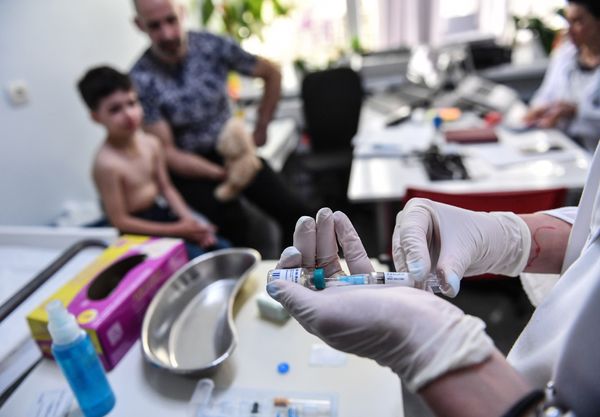
The rating does not signal new injuries. As of July 6, Spectra had not reported any serious injuries or deaths linked to the issue. What it changes is the official risk level for the product at the center of a summer-long chain of related hospital kit recalls.


The Flush Itself Now Carries the Top Recall Tier

Spectra, which is Elevaris Medical Devices doing business as Spectra Medical Devices, told customers on July 6 to check stock immediately and discard or return affected ampules. The recalled products carry catalog codes AMPUL10MLK, 1510-1 for single ampules and 1510-2 for cartons, and the FDA posted a full list of affected lots with its notice.

The problem traces back to Huons, which recalled its sodium chloride injection after an FDA inspection of its manufacturing facility identified quality issues, according to the agency's Huons enforcement report and notice. If sterility is compromised, patients could be exposed to live microorganisms, bacterial toxins called endotoxins, or foreign material. The FDA says that can trigger body-wide inflammation, infections, tiny blood clots, and organ failure, especially in high-risk patients.

The recalled ampules also turned up inside procedure kits made by other companies, prompting a series of downstream actions. On Sept. 10, the FDA classified an epidural kit correction by Medical Action Industries as Class I, warning that contaminated saline used close to the spine could lead to abscesses, infection of the membranes around the brain and spinal cord, and nerve root compression that could cause paralysis or death. The Sept. 18 notice now gives the standalone flush the same top tier.


Patients with Ports and Long-Term IV Lines

The earlier notices centered on hospital supply chains. The more personal concern now is for patients whose lines are flushed repeatedly, such as people receiving chemotherapy through a port, long-term antibiotics through a PICC line, or frequent IV treatment at outpatient infusion centers.

These patients may rely on flushes many times over weeks or months, and many already have weakened immune systems, one of the high-risk groups the FDA singled out. Caregivers who help manage lines at home should know that flush supplies are typically provided by a hospital, infusion pharmacy or home health agency rather than bought at retail.

No FDA notice tells patients to stop treatment or remove a line. Patients and caregivers can reasonably ask their infusion center, home infusion pharmacy, or care team whether their saline supplies have been checked against current FDA recall notices, a question a pharmacist or nurse manager can answer.

Anyone with an IV line or port who develops fever, chills, redness, swelling, warmth, drainage, or pain at the line site should contact their care team promptly. Sudden high fever, confusion, rapid heartbeat, or trouble breathing after a line is used may signal a bloodstream infection and needs emergency care. These are standard warning signs regardless of any recall.


Unanswered Questions for Hospitals and Regulators

Key details remain unclear. The FDA notice does not say how many ampules were distributed, how many facilities received them, or how many may still be in use more than two months after Spectra's letter. The agency also has not said whether additional products or kit makers could be affected.

The burden falls largely on hospital pharmacies and supply staff, who must match lot numbers across supply rooms, carts, clinics and home infusion shipments. The FDA's Spectra enforcement report lists additional recall details.

Clinicians and patients can report suspected problems through the FDA's MedWatch reporting program. Questions about the recall can go to Spectra at [email protected].

The recalled flush should already be off hospital shelves, and no serious injuries have been reported. Patients with ports or long-term IV lines, and the caregivers who support them, have the most reason to ask whether their supplies were checked. MedicalDaily will report any new adverse event reports, distribution figures, or expansion of the recall.


Key Questions Answered

What changed on Sept. 18? The FDA identified Spectra Medical Devices' removal of Huons-made 10 mL sodium chloride flush ampules as the most serious type of recall.

What are these ampules used for? Flushing IV tubing and devices that stay in the veins, such as central lines, PICC lines, and implanted ports.

Has anyone been harmed? As of July 6, Spectra had not reported any serious injuries or deaths associated with the issue.

Why was the product recalled? Huons recalled it after an FDA inspection found quality issues at its manufacturing facility, raising concerns about sterility.

Should patients stop IV treatment? No. The FDA has not advised patients to stop treatment. Patients can ask their care team whether supplies have been checked.

What symptoms should patients with IV lines watch for? Fever, chills, redness, swelling, drainage, or pain at the line site, and urgent symptoms such as confusion or trouble breathing.

Is this related to the kit recalls reported over the summer? Yes. It involves the same underlying product, but the standalone ampule recall now carries the FDA's highest risk tier.

Sign up to read this article
Read news from 100's of titles, curated specifically for you.
Already a member? Sign in here
Related Stories
Top stories on inkl right now
One subscription that gives you access to news from hundreds of sites
Already a member? Sign in here
Our Picks
Fourteen days free
Download the app
One app. One membership.
100+ trusted global sources.