Get all your news in one place.
100’s of premium titles.
One app.
Start reading
MarketBeat
MarketBeat
Bridget Bennett

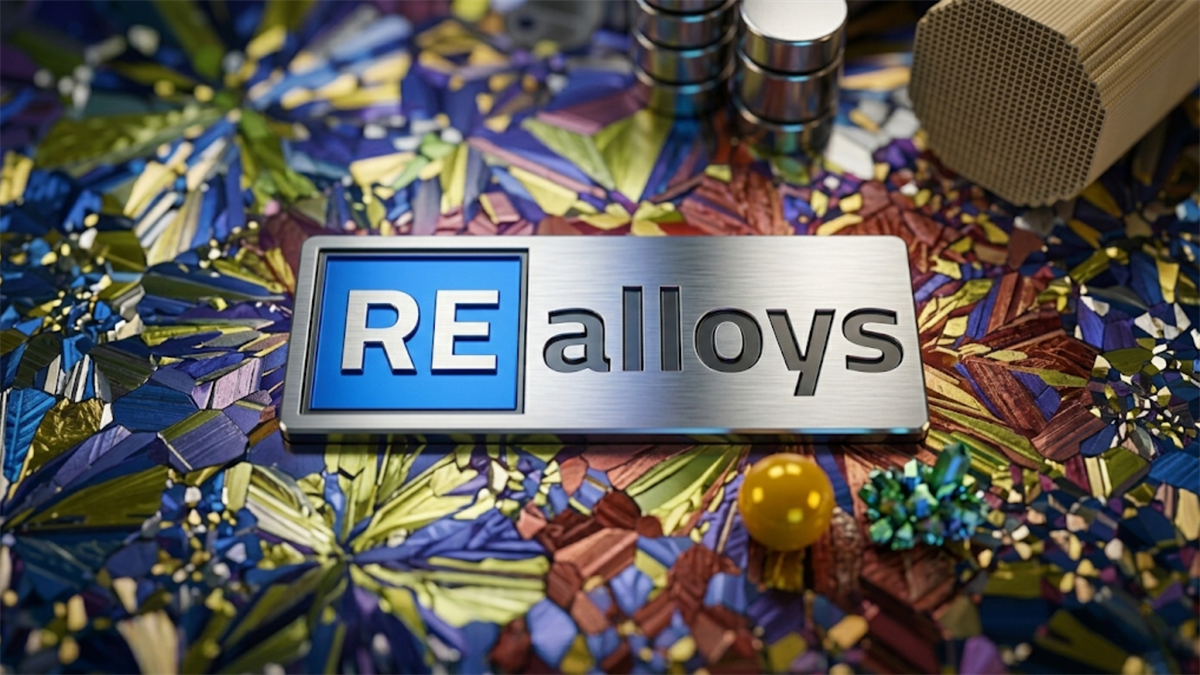
REalloys Could Be the Missing Link in America's Rare Earth Defense Gap

The latest round of geopolitical tension has defense stocks bouncing higher. But the rally isn't limited to weapons makers—it's also drawing fresh attention to the critical rare-earth materials that those defense systems can't function without.

In a recent MarketBeat conversation, Tim Johnston of REalloys Inc. (NASDAQ: ALOY), laid out why the company believes the next chapter for rare-earths in North America won't be defined by who finds the minerals in the ground, but by who can actually refine, metallize, and deliver them to the defense contractors that need them now.

REalloys recently traded in the high-teens range after debuting on the NASDAQ in late February through a reverse merger with Blackboxstocks. The stock saw significant volatility in its first days of trading, reaching a high near $19.75 before pulling back.

Why Heavy Rare-Earths Are the Real Defense Bottleneck

Most investors hear "rare-earths" and think of a single commodity. The reality is more nuanced. Rare-earth elements split into two categories—lights and heavies—and the distinction matters enormously for defense.

Light rare-earths go into everyday permanent magnets for home appliances and standard electric vehicles. Heavy rare-earths are the high-performance enablers: the materials that allow magnets to function in extreme temperatures inside fighter jets, submarines, drones, and advanced robotics.

"Without these components, you simply can't make those instruments perform the way you want them to perform," Johnston said, pointing to high-performance magnets as the linchpin. "Particularly when we're talking about drones and robotics—they're critically important to actually making those things work in the first place."

China's Grip: The Supply Chain Vulnerability Driving U.S. Investment

The geopolitical math is straightforward. China currently controls roughly 90% of all rare-earth refining and, until very recently, handled 100% of global heavy rare-earth metallization. About 70% of raw mining also originates from Chinese sources.

Johnston framed the risk in blunt terms: "You take that away, China shuts down supply, and then all of a sudden you can't build those things that you need for defense technology and really important infrastructure."

That vulnerability is why the U.S. government has announced tens of billions of dollars in investment across programs designed to build a North American allied supply chain. In Johnston's telling, the industry is roughly 30 years behind China—and the catch-up is happening across mining, refining, separation, and magnet manufacturing simultaneously.

How REalloys Is Assembling Its Supply Chain—Without Starting From Scratch

Asked about what sets REalloys apart from the growing field of developing rare-earth companies, Johnston pointed to speed-to-market. Rather than pursuing a years-long greenfield mining buildout, the company has assembled existing assets and partnerships designed to deliver product fast.

The first piece is a five-year offtake agreement with the Saskatchewan Research Council, which operates a commercial-scale rare-earth processing facility in Saskatoon, Canada. For the first five years, feedstock will come from Brazil, South Africa, and North American sources, all refined in Canada.

The second piece is the acquisition of PMT Critical Metals in Euclid, Ohio—a 54,000-square-foot facility with more than two decades of experience producing specialty metals for the Defense Logistics Agency, the Department of Energy, the Department of Defense, and NASA. This is where the final metallization step and eventual magnet production will happen.

Johnston described the ability to be "coming to the market with product by the end of this year" as a "huge milestone" and a key differentiator from peers still years away from production.

The 2027 Deadline: A Regulatory Catalyst With Real Teeth

The timeline matters because of a hard legislative requirement under 10 U.S.C. §4872. Starting Jan. 1, 2027, defense contractors must certify that their entire rare-earth supply chain—from mining through metallization—is free of materials sourced from China, Russia, Iran, or North Korea.

Johnston put it directly: short of a presidential authorization waiver, REalloys will be "the primary producer of heavy rare-earth in North America" capable of meeting that standard. That's management commentary rather than an independently confirmed assessment, but the competitive landscape for heavy rare-earth metallization outside China is genuinely thin.

A Concrete Win: New DLA Contract for Samarium and Gadolinium

One of the most actionable developments this week centered on a new DLA contract awarded to REalloys' subsidiary Terves LLC, worth up to $1.7 million. The contract funds the engineering design for a 300-ton-per-year modular production facility for samarium and gadolinium—two heavy rare-earth metals critical to defense magnet applications.

The structure matters. This isn't a simple metals delivery agreement; it's a process development and facility design contract that could lay the groundwork for significantly larger production commitments. REalloys also filed a provisional patent covering a zero-waste metallization process it claims could cut production costs by up to 50%.

The Board Signals Defense Credibility

REalloys has assembled a board designed to project seriousness in defense circles. Stephen duMont, President of GM Defense, serves as non-executive chairman. Retired four-star General Jack Keane—a longtime adviser to multiple presidential administrations who received the Presidential Medal of Freedom in 2020—joined as a director ahead of the NASDAQ listing.

The Investor Question: Can REalloys Execute Before the Clock Runs Out?

REalloys is a reminder of how quickly a policy catalyst can reshape a sector—especially when national security urgency collides with a supply chain that barely exists outside of one country.

But Johnston's argument was that the window is just opening. "This is a massively growing sector," he said. "The demand for these materials is growing exponentially, particularly when you factor in the need to diversify away from a Chinese-dominated industry."

Whether that plays out cleanly will depend on execution—meeting the end-of-year production target, scaling the Ohio and Saskatchewan operations, and converting engineering contracts into full-scale supply agreements.

Still, the combination of a hard regulatory deadline, genuine scarcity outside China, and early contract wins with defense agencies helps explain why this newly public company is drawing attention in a crowded rare-earth field. The risk is that timelines slip. The upside is that very few companies are even close to delivering what the U.S. defense sector will legally require in less than a year.

Where Should You Invest $1,000 Right Now?

Before you make your next trade, you'll want to hear this.

MarketBeat keeps track of Wall Street's top-rated and best performing research analysts and the stocks they recommend to their clients on a daily basis.

Our team has identified the five stocks that top analysts are quietly whispering to their clients to buy now before the broader market catches on... and none of the big name stocks were on the list.

They believe these five stocks are the five best companies for investors to buy now...

See The Five Stocks Here

The article "REalloys Could Be the Missing Link in America's Rare Earth Defense Gap" first appeared on MarketBeat.

Sign up to read this article
Read news from 100’s of titles, curated specifically for you.
Already a member? Sign in here
Related Stories
Top stories on inkl right now
One subscription that gives you access to news from hundreds of sites
Already a member? Sign in here
Our Picks
Fourteen days free
Download the app
One app. One membership.
100+ trusted global sources.