
Get all your news in one place.
100's of premium titles.
One app.
Start reading
The Conversation
The Conversation
Kimberly Przeszlowski, Assistant Professor of Criminal Justice, Quinnipiac University

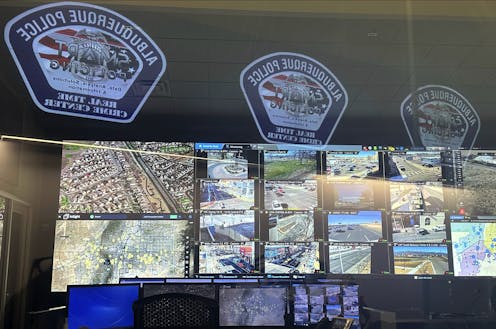
Real-time crime centers are transforming policing – a criminologist explains how these advanced surveillance systems work

A bank of video monitors allows the police department in Albuquerque, N.M., to keep an eye on surveillance cameras throughout the city. AP Photo/Susan Montoya Bryan

In 2021, a driver in Albuquerque, New Mexico, ran a red light, striking and killing a 7-year-old and injuring his father. The suspect fled the scene and eventually escaped to Mexico. Using camera footage and cellphone data, the Albuquerque Police Department’s real-time crime center played a crucial role in identifying, apprehending and charging the person at fault. The driver was ultimately sentenced to 27 years in prison, providing a measure of justice to the grieving family.

Real-time crime centers are specialized units within police departments that use the latest technology to monitor public spaces and record incidents. The New York City Police Department was the first to institute a real-time crime center in 2005.

Sign up to read this article
Read news from 100's of titles, curated specifically for you.
Already a member? Sign in here
Related Stories
Top stories on inkl right now
One subscription that gives you access to news from hundreds of sites
Already a member? Sign in here
Our Picks
Fourteen days free
Download the app
One app. One membership.
100+ trusted global sources.







