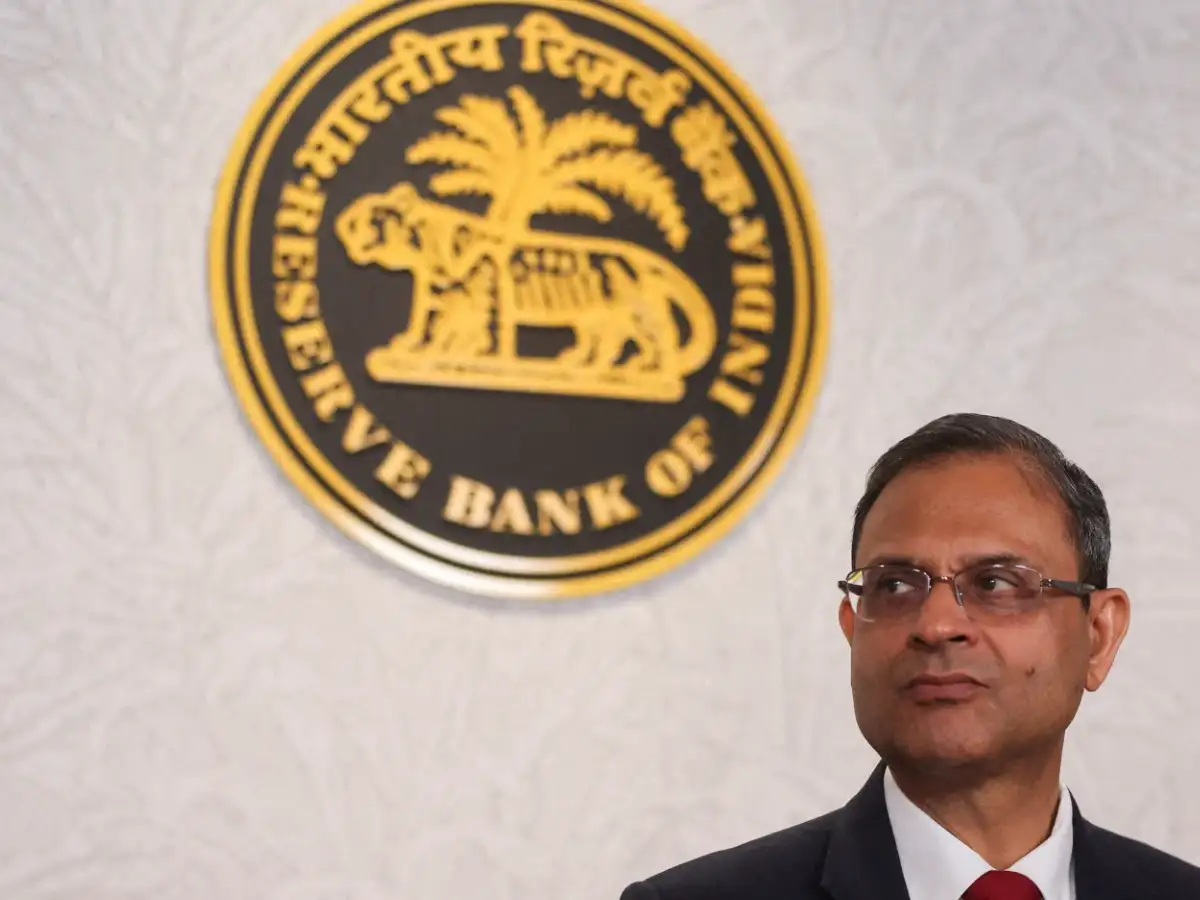
Speaking at the 5th Kautilya Economic Conclave in New Delhi, Reserve Bank of India (RBI) Governor Sanjay Malhotra warned that financial stress can build overnight but take years to resolve, and that India cannot afford to become complacent.
He said the system has absorbed the West Asia conflict shock quite well and growth has been resilient. But the conflict has added to inflationary pressures and raised financial system vulnerabilities, he said, at a time when a fragmenting global order makes risks harder to predict and model.

Also read: RBI appoints Sudhakar Malli as Executive Director with effect from October 1
"We cannot afford to become complacent," he said. "The economic and financial costs of allowing vulnerabilities to build are simply too high."
Malhotra said he does not see any imminent signs of stress, but the system must remain alert to risks. He said the past two decades show that banking and financial stress can build quickly but take years to resolve. It took more than a decade to clean up the legacy of excessive lending and non-performing assets (NPAs) from the early 2000s, he said.
A changing global order
The Governor said the international order that emerged after the Washington consensus is under considerable strain. That order gave decades of globalisation, economic integration and relative stability.
He listed geopolitical and geo-economic fragmentation, strategic realignment, trade restrictions, repeated supply shocks, technological disruption and climate change. These factors are interacting in ways that are hard to predict and even harder to model using historical relationships, he said.
Price and financial stability cannot be looked at in isolation from these developments, he added.
RBI's mandate on financial stability
Malhotra said the RBI Act, 1934 does not give the central bank an explicit mandate for financial stability. But he said it is implicit in the functions assigned to the RBI. The preamble of the Act gives the RBI responsibility for monetary stability as well as price stability. The Foreign Exchange Management Act (FEMA), 1999 provides for the orderly development and maintenance of the forex market.
The RBI regulates banks and non-banking financial companies (NBFCs). It also regulates payment systems, acts as lender of last resort and runs deposit insurance. He said this gives the RBI the view, mandate, capability and tools to assess emerging vulnerabilities and take timely corrective action.
"Financial stability is the foundation on which price stability rests," Malhotra said. He added that it is essential for effective transmission of monetary policy. The full potential of economic growth cannot be reached without a stable and healthy financial system, he said.
Malhotra pointed to the Financial Stability and Development Council (FSDC) as the institutional mechanism for financial stability. The Finance Minister heads the FSDC. It includes all financial sector regulators and members from the government. Its role is to exchange information and coordinate policy actions.
Focus on resilience
The Governor said no one can prevent every shock, whether it comes from the real economy, a geopolitical event, a commodity price spike or technological disruption. What can be ensured is that the financial system acts as a shock absorber, he said.
He said the RBI's focus over the years has been to improve the resilience of the financial system. It does this through prudent regulation, risk-based supervision, macroprudential measures and liquidity support, including emergency liquidity assistance. The final tool is resolution.
Balancing risk and growth
Malhotra said regulations aim to build a financial system that is well capitalised, liquid and well governed, so that it can manage and absorb shocks. At the same time, he said, trying to remove all risks would curtail innovation and investment. Regulations therefore try to strike the right balance between risk management and support for economic growth, he said.
On supervision, the Governor said the RBI has a well-developed system of both off-site and on-site supervision. He said the central bank is increasingly using modern tools such as data analytics, technology-enabled surveillance and thematic assessments. These help identify emerging risks and vulnerabilities at an early stage, he said.
Stress tests and countercyclical policies
Malhotra said the RBI, along with other financial sector regulators, periodically conducts stress tests to check resilience. The results are presented in the RBI's six-monthly Financial Stability Reports, he said.
He said countercyclical macroprudential policies are particularly important to lean against the build-up of vulnerabilities in the financial cycle. As an example, he pointed to 2023, when risk weights were raised on certain consumer credit exposures and on bank lending to NBFCs. The step came in view of the rapid expansion in unsecured credit, he said.
Lender of last resort
The Governor said the RBI also has the role of lender of last resort to deal with liquidity crises. He said this can sometimes conflict with the goal of price stability, especially in periods of high inflation. It therefore requires tools that are targeted and temporary, he said.
Also read: India's forex reserves fall $18.3 bn as RBI steps in to defend rupee
Malhotra said it is important to differentiate between liquidity and solvency issues. Monetary policy and liquidity cannot solve for solvency, he said. During the Covid-19 pandemic, the RBI provided targeted and temporary liquidity facilities to financial intermediaries and markets, he said.
Monetary policy and financial stability
On the interplay between the two, Malhotra said the RBI usually does not use monetary policy to address financial stability risks. He said the central bank follows the separation principle. Monetary policy is aimed at price stability, while targeted regulatory, supervisory and macroprudential tools are used where financial stability risks are identified. He added that the RBI still keeps financial stability in mind in its monetary policy discussions and decisions.
Five global risks
Turning to the major emerging global financial stability risks, Malhotra said the global economic environment continues to remain challenging. He listed five risks.
Elevated global debt: Debt levels have risen, maturity periods have shortened and bond yields have hardened sharply, he said. Higher borrowing costs can narrow fiscal space for sovereigns and worsen debt dynamics for corporates. Tighter fiscal conditions could strain the debt servicing capacity of banks, he said. Mark-to-market losses on sovereign bonds may weaken bank balance sheets just when governments face fiscal pressure and find it hard to support troubled banks. Emerging markets with high sovereign debt held by non-residents may face capital outflows as carry trades unwind, he said.
Stretched asset valuations, particularly in AI: The AI investment cycle has been a major support for global financial markets, especially in advanced economies, he said. But as the cycle matures, any slowdown in AI investment or earnings could trigger a sharp repricing of financial assets, especially in the AI value chain. High risk appetite has spurred a rise in leverage, which, along with declining cash flow among major AI firms, could amplify market corrections and volatility, he said.
High leverage: This is particularly true of advanced economies, where hedge funds, option sellers, exchange traded funds and other non-bank financial intermediaries have expanded leverage in equity and bond markets, he said. Rising leverage is a sign of a maturing financial cycle. It is a concern when equity valuations are stretched and bank and non-bank interconnectedness has deepened, as any tightening of financial conditions can then spill over to banks and other markets, he said.
Private credit: Malhotra said this is more a phenomenon in advanced countries. He said the default of some high-profile cases suggests weak and loose lending standards, making it a source of vulnerability.
Cyber risks compounded by AI: He said AI has heightened cyber risks, model risks and third-party dependence, and has eroded human oversight and accountability. With the development of sophisticated AI tools that have tremendous autonomy and problem-solving capabilities, the most immediate concern is cyber risk, he said. This is especially so for highly interconnected financial systems that have no national borders. Large differences in cyber capabilities, resilience and resolution capabilities across countries have implications for jurisdictions far beyond the source of the vulnerability, he said.
Each of these risks individually may not be a concern right now, he said. But their simultaneous occurrence can put significant pressure on the global financial architecture.
What it means for India
Malhotra said India, as a large open economy, remains exposed to the West Asia conflict through higher commodity prices and external sector pressures. But he said the economy is navigating this phase from a position of strength. Inflation averaged 2% last year, and India has had the strongest growth among major economies, he said. Strong macroeconomic fundamentals and a resilient financial system give confidence in the ability to withstand the lingering shock, he said.
He said further measures are being taken to build resilience. These include diversification of import sources, greater self-sufficiency in energy and other critical resources, building strategic petroleum reserves, accelerating the energy transition, improving the competitiveness of domestic manufacturing, deeper integration into global value chains, wider market access through free trade agreements and promoting trade settlement in local currencies.
The Governor said Indian government bond yields have risen only partially in response to higher global energy prices and global bond yields. He said this reflects prudent fiscal management as the government continues on a path of fiscal consolidation. It is also a testimony to credible monetary policy and declining structural pressures on inflation, he said.
Indian equity markets have corrected in recent months, albeit from high valuations, but the movement has been orderly, he said. If AI-related valuations correct in advanced countries, it may have a positive impact on capital inflows to India, he said.
On AI and cyber security, Malhotra said the RBI has taken a number of measures for banks, NBFCs and all regulated entities, including directions, training and capacity building programmes. On private credit, he said India is insulated as the segment is still quite small and is not assessed to be a risk. He said NBFCs in India are increasingly interconnected with banks, but banks are assessed to be strong. Unlike in other countries, the RBI has a direct view and responsibility for regulation and supervision, which is effective in managing these risks, he said.
Overall, the Indian financial system is very resilient, supported by healthy balance sheets of banks and NBFCs, he said. He pointed to the RBI's June 2026 Financial Stability Report. Bank capital ratios are very comfortable even in adverse scenarios, he said. NBFCs on average have capital adequacy of more than 25%, against the regulatory requirement of 15%.
"Today's resilience may not necessarily imply tomorrow's immunity," he said, adding that the RBI is committed to remaining vigilant of emerging vulnerabilities.
Five priorities for policymakers
Malhotra ended with five priorities that policymakers must factor in while safeguarding financial stability.
First, he said many shocks will be inevitable. Financial stability is not about preventing them but about strengthening systemic resilience to face them and contain their amplification, he said. The aim must be a financial system that can provide services in all states of the world, even under severe shocks.
Second, a new generation of systemic risks is taking shape, and assessing them and their complex interactions is vital, he said. Risks are increasingly exogenous, cross-border and interconnected. "The next financial crisis may not originate in a bank, or even in the world of finance," he said. It may begin with a geopolitical event, a cyber attack or a technological failure that hits the financial system through multiple channels. He said regulators must better understand these networks of dependencies and contagion channels and make scenario analysis a cornerstone of risk management.
Third, monitoring and assessment frameworks must improve, which needs better and more granular data, he said. Data on non-bank financial intermediaries, interconnected exposures, technology developments and cross-border positions sometimes remain fragmented. The quality of data will increasingly determine the quality of risk assessment, he said.
Fourth, resilience must be system-wide, he said. A strong banking system is necessary but not sufficient. Resilience is needed across NBFCs, financial markets, payment systems, technology infrastructure providers, critical third parties and cross-border financial networks.
Fifth, innovation must strengthen and not fragment the foundations of trust, he said. AI, tokenisation and new forms of financial intermediation can dramatically improve efficiency. But innovation will be sustainable only if the financial system preserves the properties on which trust rests, such as sound institutions, finality, singleness of money and financial integrity, he said.
The challenge is to build a financial system that can withstand shocks that can be anticipated and even those that cannot yet be foreseen, Malhotra said. This needs resilient institutions, better data, deeper markets, credible safety nets, effective resolution mechanisms, and regulation and supervision that is proactive and forward-looking while being proportionate, he said.
"If we succeed, financial stability will remain largely invisible, and in central banking, invisibility is perhaps the most invaluable and meaningful measure of success," he said.