
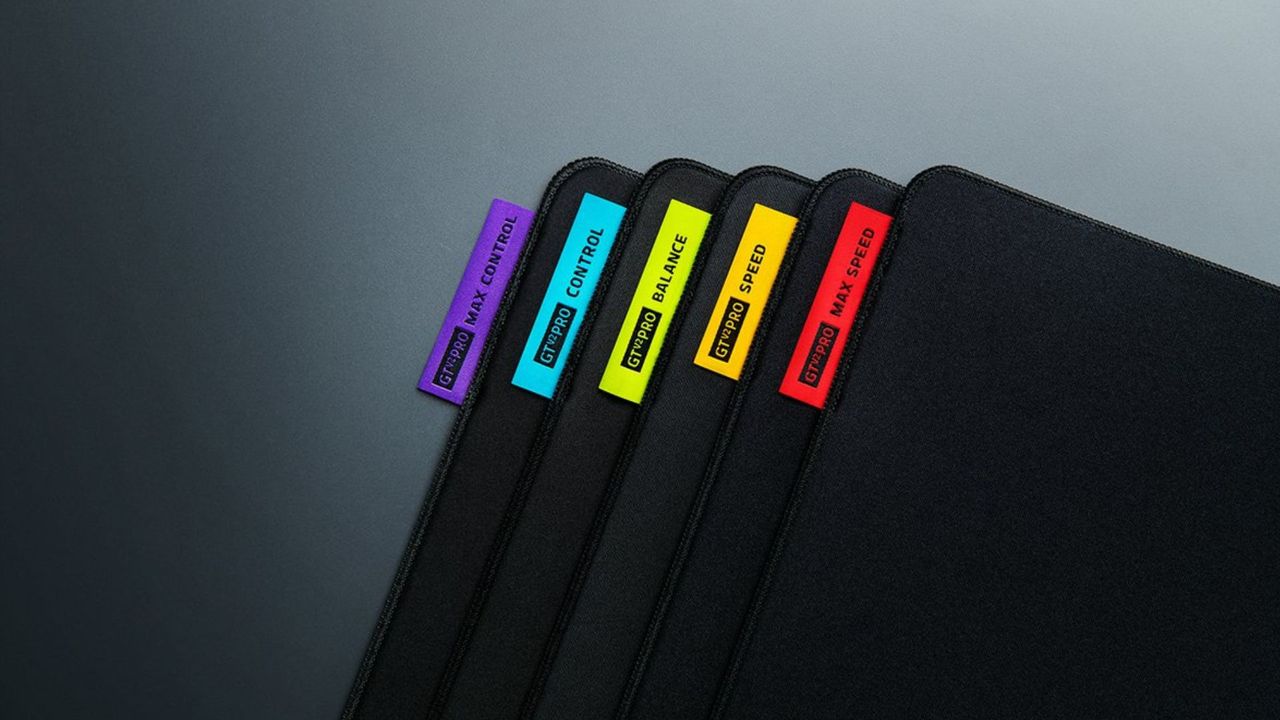
Razer has announced its latest Gigantus mouse pad, and I'm sure there are probably lots of people out there thinking it's a bit much. Giving people five levels of mouse pad speed to choose from probably sounds a bit silly - at a certain point, isn't it more about your aiming skill than the gear you're using? Well, I'm one of those weirdos who actually cares about the nuances different gaming mouse pads can give you, so let me tell you why I'm all for it.
The new Razer Gigantus V2 Pro goes even deeper than the SteelSeries QCK Performance pads we saw release last year, which offer three distinct feeling surfaces with different friction levels and speeds. Razer has expanded that to five different speeds with the new Gigantus V2 Pro; Max Control, Control, Balance, Speed, and Max Speed.

All of the new Gigantus V2 Pro mats use Razer's proprietary GlideCore Foam, but each "speed" uses it in different ways. The slowest two (Max Control and Control) utilize Soft Foam, with large air pockets for a softer and spongier feel and more stopping power. The Balance and Speed variants use a medium foam that Razer claims is "optimized for smooth glide with reliable control", and the Max Speed version uses a harder foam that's closer to glass/hard surface mats that have become more popular in recent years.
Last summer, I went down a bit of a rabbit hole with mouse pads, because until then, I really hadn't considered that there were even different speeds and that they could make such a drastic difference to your mouse aim. Then I tried the SteelSeries QCK Performance pads, which highlighted it all to me. My mind was blown - turns out I had been using a much, much slower pad than I should have been for over a year, and that's a reason I was losing so many close-quarters fights in my favorite multiplayer games.
It turns out that depending on the games you play and the way you configure your mouse settings, there's an optimal type of pad for you. While you might still be thinking that "a bad workman blames his tools", I promise you, after trying different mouse pad speeds and textures, it really does make a tangible difference to how you aim.

A harder surface with less friction, like Razer's new "Max Speed" pads, tends to be really popular among FPS gamers who play titles that require them to make fast moves, big flicks, or continuous tracking while shooting in games like Apex: Legends or Marathon. In games that require accuracy for a precise stopping points with your mouse, you'll probably benefit more from a pad that has more friction so you can stop exactly on an opponent's head - think Counter Strike or Valorant.
The FPS game I play the most is Hunt: Showdown, which is sort of a hybrid of the above examples. It's old western weaponry, so I need that stopping power and accuracy in my mouse pad to aim with single shots at a time, but I also need the speedy flicks to be quicker on the draw than my opponents. There are a lot of nuances to mouse pad speeds depending on the game.
For this reason, I really like that Razer is offering five different speeds. I'd be interested to try them to see if the middle options really do actually feel different from one another, but it's great that Razer is allowing people to lock into their favorite game's specific speed.

If there's something I'm disappointed about, it's that there only seems to be one size of each pad available right now. The Gigantus V2 mouse pads made different sizes their USP, so I'm hoping Razer follows up with more generous sizing options soon. I'm someone who loves having their whole desk space covered in the same surface, so if you're the same, the SteelSeries QCK Performance pads that do come in XL sizes might be the best option for you.
The new Gigantus V2 Pro mats have low-profile stitched edges, which is great for preventing fraying over time, as well as wrist irritation. Razer also claims that they've been optimized for optical sensors thanks to micro-texturing.
For more on gaming mice, check out the best wireless gaming mouse and the best Razer mice.