
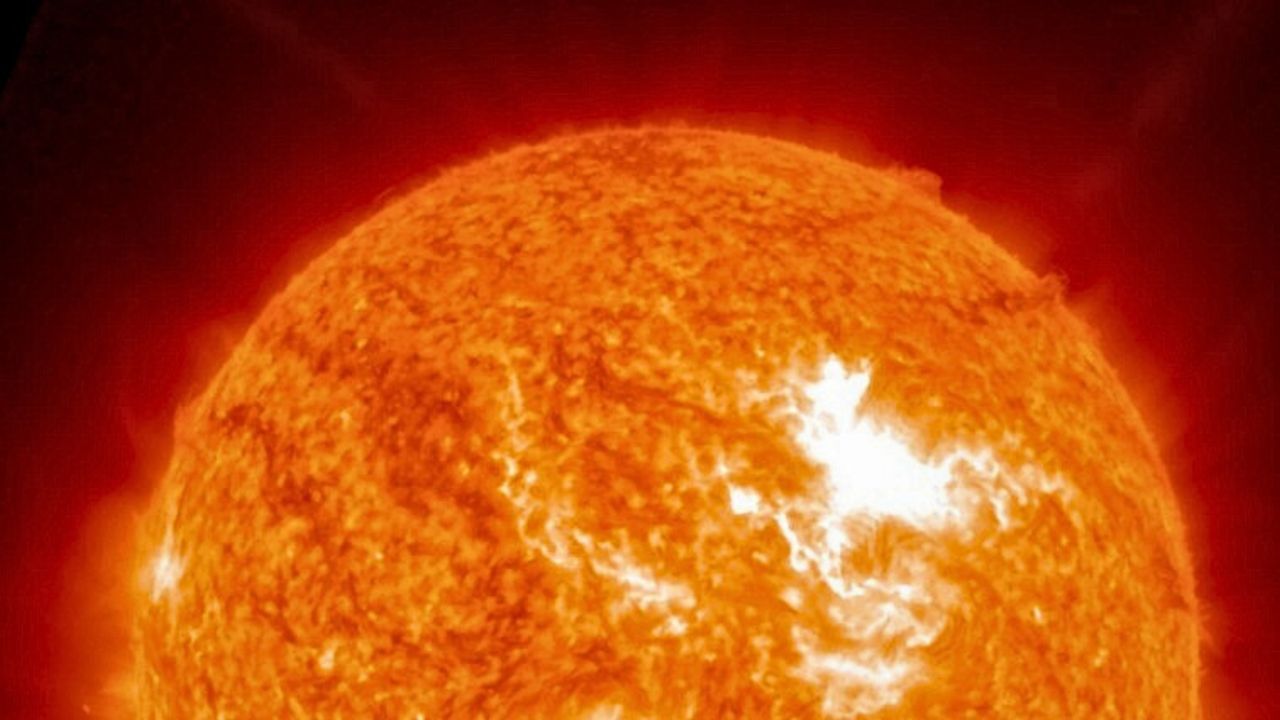
Radiation levels in Earth's atmosphere rose to the highest level in nearly two decades in November after a rare solar super-flare pummeled the planet with high-speed particles from the sun. The solar flare, an extremely bright flash of light, erupted from the AR4274 sunspot on Nov. 11. Classified as a powerful X5.1, the flare followed a series of milder flares and coronal mass ejections (CMEs) that treated skywatchers to mesmerizing aurora displays as far south as Florida.
Apart from being the most intense solar flare of 2025 to date, the X-class flare also unleashed a stream of high-speed protons and other energetic particles toward our planet, something very few solar flares do. This year, about 20 X-flares hit Earth — but only the one from Nov. 11 was accompanied by the high-speed proton stream. That day, when Earth-based monitors began showing elevated radiation levels, researchers released several stratospheric balloons with sensors to see how radiation levels evolved throughout the atmosphere.