Get all your news in one place.
100's of premium titles.
One app.
Start reading
Sports Illustrated
Sports Illustrated
Sport
Blake Silverman

Raptors Offseason Preview: How Toronto Can Grow Into an Eastern Conference Contender

Despite Immanuel Quickley’s absence and Brandon Ingram’s struggles, the Raptors pushed James Harden, Donovan Mitchell and the Cavaliers to the brink of elimination.

RJ Barrett, the hometown kid, saved Toronto’s season in Game 6 with a heroic game winner that hit the back heel of the rim, bounced all the way up to the top of the shot clock and back down through the net. Although the Raptors’ magic ran out in Game 7 once the Cavs took control in the second half, Barrett’s moment is one for him and the entire city to remember for some time as it had all the Kawhi Leonard vibes.

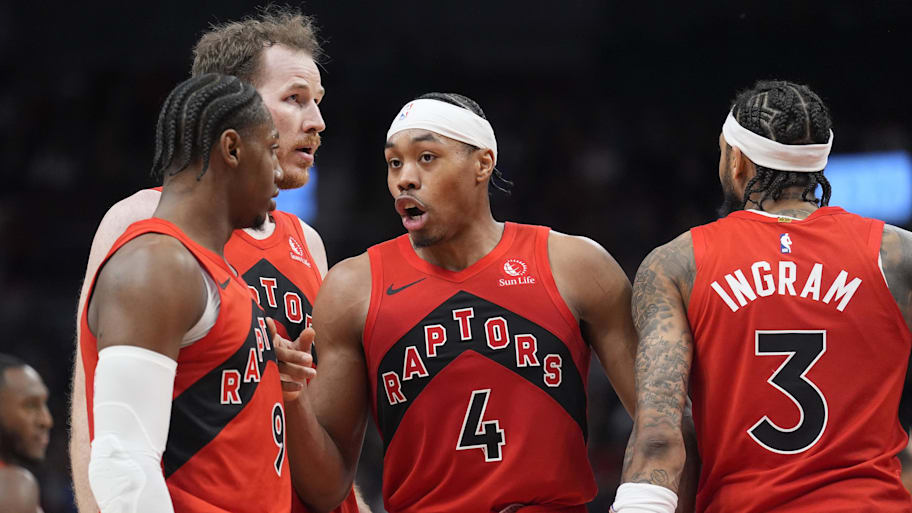
Even with a disappointing end to the season, the Raptors took a step forward this season. In year three under head coach Darko Rajaković, they improved from 30 wins to 46 and made the playoffs for the first time since 2022. Toronto didn’t even have to go through the play-in tournament to do so thanks to a surprising Magic loss to the Celtics’ reserves on the final day of the regular season. Scottie Barnes had his best season yet and earned his second All-Star nod, Barrett continued to thrive for his hometown team, Ingram provided 21.5 points a night and the Raptors youngsters of Jamal Shead, Ja’Kobe Walter and Collin Murray-Boyles each contributed in significant roles.

The Raptors are on the rise, but have yet to cross into the upper echelon of Eastern Conference contenders. Now that this group has some playoff experience, Toronto’s next step is to get over the hump in hopes of making a run through the East. Here’s a look at the Raptors’ upcoming summer as general manager Bobby Webster tries to adjust the roster to meet that goal behind Barnes, Ingram and Barrett.

Toronto’s upcoming free agents and roster decisions

RJ Barrett
RJ Barrett hit an incredible game winner to force a Game 7 against the Cavs | Nick Turchiaro-Imagn Images

Toronto’s key roster pieces are mostly locked down for the foreseeable future, almost to the franchise’s detriment. Barrett is eligible for an extension this summer and all signs point toward the organization inking him longterm, whether that comes now or later. Besides Barrett, Barnes is under contract until the 2029–30 season, Quickley until 2028–29 and Ingram for the next two seasons (as long as he picks up his $41.9 million player option, which is expected).

Jakob Poeltl is also under contract through the end of the decade—more on that deal momentarily—which ties up a lot of money with the current group. Next year, Toronto has 11 players with fully guaranteed salaries but it has a few team options and is $9.3 million under the first apron and $22.3 million under the dreaded second apron, per Spotrac, so there is some room to work with—just not much with its current core locked down.

One of those team options lies with Jamal Shead, who played in all 82 games this season and stepped up in the playoffs in Quickley’s absence. Toronto should be inclined to work out a new, long-term deal for Shead or at the very least, pick up his cheap team option for next season.

Barrett is the big name that surrounds Toronto’s offseason. His contract turns into an expiring deal next season with just one year left, but both Barrett and the organization would be wise to ink a new deal that goes well into the future. That would limit the Raptors’ flexibility even further, but Barrett’s play and fit with the team warrants it and he wants to be with his hometown team for the rest of his career.

Here’s a look at each free agent and roster decisions Webster will have to make this summer:

Unrestricted free agents:

  • Garrett Temple (guard)
  • A.J. Lawson (forward)

Restricted free agents:

  • Jamal Shead (guard)
  • Chucky Hepburn (guard)
  • Alijah Martin (guard)

Team options:

  • Trayce Jackson-Davis (forward)
  • Jamal Shead (guard)
  • Jonathan Mogbo (center)

Player options:

  • Sandro Mamukelashvili (center)

Extension eligible:

  • RJ Barrett (forward)
  • Gradey Dick (guard)
  • Jonathan Mogbo (center)
  • Jamal Shead (guard)

That Jakob Poeltl contract ... oof

Jakob Poelt
Jakob Poeltl averaged 10.7 points and 7.0 rebounds per game this season for the Raptors | Ken Blaze-Imagn Images

The Raptors are a young team as Poeltl is the only rotation player in his 30s. He turns 31 at the start of next season and had a year riddled with injuries as he appeared in just 46 games as he dealt with back issues. When healthy, he’s Toronto’s starting center and is effective in the role, but he’s yet to play in more than 60 games in three seasons and signed a three-year, $84.5 million contract extension last summer which keeps him with the team through the 2029–30 season. That deal doesn’t kick in until after next season and comes with a pay bump from $19.5 million next year to $27.3 million the following season.

If Poeltl can stay available and contribute as a solid starting big man into his mid-30s, the deal is worth it. However, that’s a lot of money to have locked up with a player who’s only getting older and hasn’t been able to stay healthy in recent seasons. All that said, a trade would make sense, but another team would must be willing to take on Poeltl’s contract. The Raptors may need to attach significant draft capital to Poeltl if they choose to move off him, which would only make sense if they are getting a true impact player in return.

Otherwise for trade candidates, third-year guard Gradey Dick could be moved over the summer. He took a step back shooting the ball as he connected on 30.1% of his three-point attempts in just 14 minutes per game. He played close to 30 minutes per night last season and seemingly fell out of Rajaković’s rotation, with only garbage-time minutes in the playoffs. Another team may want to take a chance on Dick in the final year of his rookie deal before he hits restricted free agency. That would open up some wiggle room for Toronto, although not much. Webster would have to sell low, but Dick could net some second-round picks and his departure would bring some additional space to improve the roster elsewhere.

A look at the Raptors’ future draft assets

Collin Murray-Boyle
Collin Murray-Boyles had a strong rookie season for the Raptors | David Dermer-Imagn Images

Toronto hit its top selection last year with Murray-Boyles as the ninth pick in the NBA draft. The versatile forward stepped up in the playoffs with 14.4 points, 6.4 rebounds and 2.4 stocks (steals plus blocks) off the bench. With this year’s success, the Raptors move back in the draft and hold the 19th pick in the first round. They have control of each first-round pick through 2032 to use in trades as needed or to complete the roster through the draft. In the first round this year, Toronto should target shooting as this year’s group shot 35.4% from three as a unit on just 32.1 attempts per game, which is a bottom-five mark across the NBA. Additional shooting—whether through the draft, free agency or trades—would allow the Raptors’ core group more space to operate and bring offensive flow as the team hopes to grow into a contender in the East.


More NBA Playoffs from Sports Illustrated

Listen to SI’s NBA podcast, Open Floor, below or on Apple and Spotify. Watch the show on SI’s YouTube channel.


This article was originally published on www.si.com as Raptors Offseason Preview: How Toronto Can Grow Into an Eastern Conference Contender.

Sign up to read this article
Read news from 100's of titles, curated specifically for you.
Already a member? Sign in here
Related Stories
Top stories on inkl right now
One subscription that gives you access to news from hundreds of sites
Already a member? Sign in here
Our Picks
Fourteen days free
Download the app
One app. One membership.
100+ trusted global sources.