As the final week of the 2026 regular season draws to a close, teams are hard at work preparing their postseason plans. While most teams generally trot out the same lineup that got them into the playoffs, pitching rotations are often shortened during the postseason, with teams leaning more heavily upon their top three or four arms to make the bulk of the starts. In turn, there are generally one or two starting pitchers that will be shuttled to the bullpen in October.
With that in mind, we’re going to rank each potential playoff team’s postseason rotation, highlighting the top four pitchers who could potentially toe the rubber in October.

1. Los Angeles Dodgers
Potential postseason rotation: Tarik Skubal, Yoshinobu Yamamoto, Blake Snell, Tyler Glasnow
Rotation ERA (MLB rank): 3.46 (2nd)
Rotation FIP (rank): 3.75 (5th)
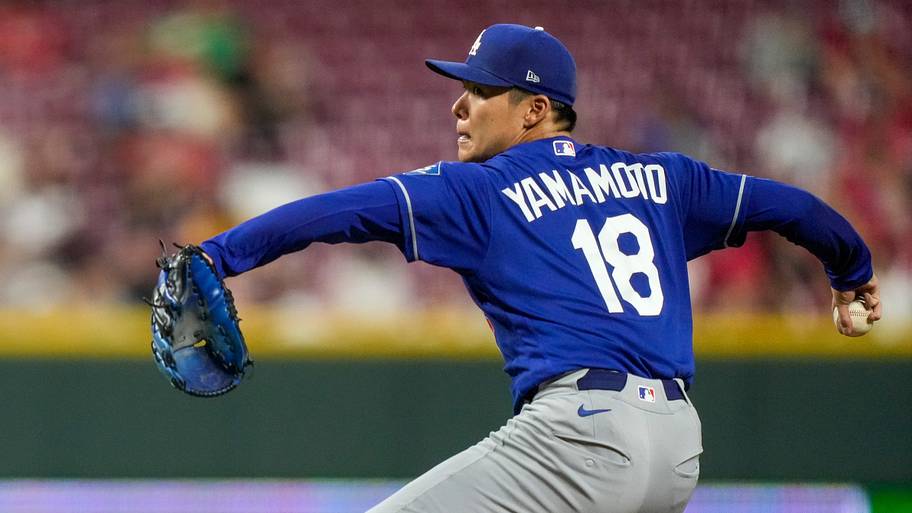
Even without Shohei Ohtani available to pitch in the postseason, the Dodgers have the best starting pitching depth on the planet. Los Angeles hasn’t been at full strength for most of the season, but, with the exception of Ohtani, they’ll have their top arms available in October. Having won back-to-back World Series, L.A.’s starters boast plenty of postseason experience. Between Skubal, Yamamoto, Snell and Glasnow, the Dodgers’ projected postseason starters combine for six All-Star appearances, four Cy Young awards, four ERA titles and a World Series MVP. They’ll be hard to beat.
2. New York Yankees
Potential postseason rotation: Cam Schlittler, Max Fried, Gerrit Cole, Carlos Rodon
Rotation ERA (MLB rank): 3.26 (1st)
Rotation FIP (rank): 3.56 (1st)
With the AL Cy Young favorite in Schlittler spearheading the rotation, and a trio of All-Star-caliber veterans ready to go behind him, the Yankees may have the league’s most formidable playoff rotation when it comes to recent performance. Despite navigating injuries to multiple starters—Fried, Cole and Rodon all spent time on the injured list—New York ended the season with the league’s best ERA and FIP. The Yankees’ rotation has combined to make 54 postseason appearances, and that experience should serve them well as they look to make a deep run in October.
3. Milwaukee Brewers
Potential postseason rotation: Jacob Misiorowski, Logan Henderson, Dustin May, Kyle Harrison
Rotation ERA (MLB rank): 3.65 (5th)
Rotation FIP (rank): 3.74 (3rd)
Misiorowski has been MLB’s best pitcher in 2026, and he looks destined to win the NL Cy Young. Now, he’ll look to lead the Brewers on a deep postseason run, with a supporting cast of Henderson, May and Harrison. Milwaukee’s rotation was one of the best in the league during the regular season, but the rotation lacks significant experience in the playoffs. The Brewers’ starters have combined to make 12 postseason appearances, and only three starts, all of which were by May. How they fare when the stakes are raised remains to be seen, but from a talent perspective, they’re as well equipped as any team in the league.
4. Philadelphia Phillies
Potential postseason rotation: Cristopher Sanchez, Zack Wheeler, Jesus Luzardo, Aaron Nola
Rotation ERA (MLB rank): 3.80 (7th)
Rotation FIP (rank): 3.70 (2nd)
The Phillies have arguably the best three-headed monster atop their rotation in all of MLB with Sanchez, Wheeler and Luzardo. That trio combined for 15.4 fWAR during the regular season, and all three maintained an ERA of 3.06 or better. Luzardo has been dealing with shoulder inflammation which landed him on the IL in mid-September, so his status for the postseason remains somewhat uncertain. With a healthy Luzardo, the Phillies would be higher up on this list. But if he can’t start in the postseason, the team will likely insert Aaron Nola as its No. 3 starter, and although he’s pitched well in the second half of the season, he has generally struggled over the last two seasons.
Cristopher Sánchez, Filthy Changeups. 👌
— Rob Friedman (@PitchingNinja) June 30, 2026
7th & 8th Ks thru 4 pic.twitter.com/iXsFGTvcn4
5. Boston Red Sox
Potential postseason rotation: Sonny Gray, Ranger Suarez, Payton Tolle, Jake Bennett
Rotation ERA (MLB rank): 3.94 (9th)
Rotation FIP (rank): 3.74 (4th)
With Garrett Crochet sidelined for most of the season, the Red Sox have missed their ace, but Gray has come pretty close to replacing his production with a 2.72 ERA and an MLB-best 18 wins. He and Suarez both boast plenty of experience, combining to make 17 postseason outings, though it’s the rookie Tolle who has arguably been the team’s best pitcher this season. All three figure to play an important role in the postseason, and Bennett will be a solid fourth option for Boston if it makes a deep run.
6. Cleveland Guardians
Potential postseason rotation: Parker Messick, Gavin Williams, Tanner Bibee, Joey Cantillo or Foster Griffin
Rotation ERA (MLB rank): 3.93 (8th)
Rotation FIP (rank): 3.92 (9th)
Messick and Williams are quickly developing into one of the best one-two punches in MLB, as both young pitchers have taken big strides in 2026. Messick, in his first full season, owns a 2.55 ERA across 31 starts, while Williams set a career high with 244 strikeouts, second only to Jacob Misiorowski. Beyond those two, the Guardians’ rotation isn’t quite as sharp as some other contending teams, though Bibee is still a solid No. 3. Cantillo and Griffin can both make a case to be the team’s fourth option in October, but neither boasts much postseason experience and Griffin has been getting hit relentlessly (11.4 hits per 9 IP, 5.19 ERA) since being acquired at the trade deadline.
7. Tampa Bay Rays
Potential postseason rotation: Drew Rasmussen, Freddy Peralta, Nick Martinez, Ian Seymour or Griffin Jax
Rotation ERA (MLB rank): 3.46 (3rd)
Rotation FIP (rank): 3.76 (7th)
Shane McClanahan’s injury keeps the Rays out of the top five, as it’s still not yet clear how much of a role he’ll have in October. He’s currently shelved with forearm tightness. Rasmussen has quietly been one of MLB’s best pitchers over the last few seasons, and owns a 2.67 ERA across 30 starts. Peralta got off to a shaky start in Tampa after the midseason trade to acquire him from the Mets, but he’s been much better in the final month of the season, recording a 1.19 ERA over his last four starts. Martinez has been reliable, even without great strikeout stuff, and Seymour and Jax are both flexible in terms of their availability out of the bullpen or as a starter.
Drew Rasmussen delivered one of the best starts of his major league career in the biggest game of the season for the Rays.
— Running From The OPS (@OPS_BASEBALL) September 23, 2026
6.2 IP | 1 H | 1 ER | 3 BB | 11 K | 18 Whiffs
It was the most pitches a Rays starter has thrown in a game this season. pic.twitter.com/disPzrWhy4
8. Atlanta Braves
Potential postseason rotation: Chris Sale, Tyler Mahle, Grant Holmes, Bryce Elder
Rotation ERA (MLB rank): 3.76 (6th)
Rotation FIP (rank): 4.24 (18th)
The ageless Sale continues to dominate as one of MLB’s best pitchers, but beyond him there’s a lack of certainty with what the Braves will get out of their starting rotation in October. Even with Sale’s regular-season dominance, he hasn’t been too reliable in October, logging a 6.35 ERA in 10 postseason outings. Since arriving in Atlanta, Mahle has been excellent and owns a 1.28 ERA in eight starts. Holmes and Elder are likely to round out the rotation after Martin Perez (3.04 ERA) was just placed on the IL with a back injury, sidelining him until at least the NLDS. None of that trio have much experience in the postseason, however, as Perez is the only one to have made more than one start in October.
9. Texas Rangers
Potential postseason rotation: Jacob deGrom, MacKenzie Gore, Kumar Rocker, Nathan Eovaldi or Jordan Montgomery
Rotation ERA (MLB rank): 4.19 (15th)
Rotation FIP (rank): 3.97 (11th)
Jacob deGrom isn’t as sharp as he was during his prime, but he’s still an elite starter and capable of shouldering a significant workload in October. Gore is a decent second option, though he often struggles with command and recorded a career-high 70 walks this year. Cal Quantrill would’ve served as a valuable No. 3 option, but he was recently placed on the 60-day IL with a lat injury and is done for the year. Eovaldi would be another serviceable option with plenty of postseason experience, though it remains to be seen if he’ll be stretched out enough to rejoin the rotation. He’s been used in relief since returning from his own IL stay, but has a 3.05 postseason ERA across 17 appearances (12 starts) in his career.
10. Arizona Diamondbacks
Potential postseason rotation: Brandon Pfaadt, Corbin Burnes, Eduardo Rodriguez, Michael Soroka or Zac Gallen
Rotation ERA (MLB rank): 4.28 (17th)
Rotation FIP (rank): 4.59 (24th)
The Diamondbacks have an abundance of experienced starting pitchers they could turn to if they reach the postseason. The problem, however, is that many of them have struggled this year. Gallen and Merrill Kelly both had rough seasons, while Corbin Burnes and Michael Soroka both dealt with injuries throughout the year. Pfaadt and Rodriguez have both enjoyed strong campaigns, and should be key arms for Arizona if they reach the postseason, but the team will be relying on some of its other veterans to turn things around if they’re to make any sort of run.
11. Houston Astros
Potential postseason rotation: Hunter Brown, Peter Lambert, Cristian Javier, Hayden Wesneski
Rotation ERA (MLB rank): 4.83 (27th)
Rotation FIP (rank): 4.77 (27th)
Brown has the makings of an ace, but there’s not much to be excited about in the Astros’ rotation beyond him. The team’s starting pitching has struggled all season, ranking 27th in ERA and FIP and 28th in fWAR––the lowest among all contending teams. Lambert and Wesneski have pitched well of late, but Javier’s struggles are a concern. Houston is fighting to become the first team to reach the postseason with fewer than 82 wins (in a 162-game season), but if they’re hoping for more than a short stay in October, they’ll need a strong outing from Brown, and for the entire supporting cast to step up.
Another 10-strikeout performance for Hunter Brown 🔥
— MLB (@MLB) September 20, 2026
He has THREE in his last five starts! pic.twitter.com/13vnzRiDeH
12. Chicago Cubs
Potential postseason rotation: Kevin Gausman, Clay Holmes, Shota Imanaga, Matthew Boyd
Rotation ERA (MLB rank): 4.33 (19th)
Rotation FIP (rank): 4.64 (25th)
Much like the Diamondbacks, the Cubs have plenty of options to turn to in October, though many of them have been rather inconsistent this season. Gausman has struggled since arriving in Chicago, and his woes on the mound could force the team to reconsider his role for the postseason. Holmes, another deadline acquisition, has been solid, but he’s never started a game in the postseason, though he has made 19 relief appearances. Imanaga can eat up innings, but he’s incredibly prone to the long ball, having surrendered a league-high 34 home runs on the year. If the Cubs are to make a deep postseason run, it’ll be on the back of the offense.
13. San Diego Padres
Potential postseason rotation: Michael King, Casey Mize, Nick Pivetta, Robbie Ray or Walker Buehler
Rotation ERA (MLB rank): 4.41 (21st)
Rotation FIP (rank): 4.69 (26th)
What the Padres lack in terms of high-end starting pitching, they largely make up for with an elite bullpen. The starting rotation ranks 27th in fWAR and 26th in FIP, while logging a subpar 4.41 ERA. Their relievers, on the other hand, lead MLB in fWAR and rank second in FIP. San Diego won’t need its starting pitchers to gobble up innings. If the starters can make it through five or six innings without surrendering a flurry of runs, the bullpen will be in a great spot to shut the door. King has been solid this year, while both Mize and Ray have had decent yet inconsistent seasons. Pivetta has been sharp since returning from injury, though it’s not clear how deep into games he’ll be pitching after a near five-month stay on the IL.
14. Chicago White Sox
Potential postseason rotation: Sean Burke, Davis Martin, Anthony Kay, Erick Fedde
Rotation ERA (MLB rank): 4.61 (26th)
Rotation FIP (rank): 4.44 (22nd)
The White Sox are sorely lacking an ace, and even Burke, who has been their best pitcher, would likely be a No. 3 option in most contenders’ rotations. Further still, between Burke, Martin, Kay and Fedde, Chicago doesn’t have a starter that’s thrown even a single inning in the postseason. The team lacks postseason experience, and White Sox starters have cumulatively pitched the fewest innings in MLB this season. What the team does have going in its favor is a quality bullpen that is conditioned to pitch multiple innings and is capable of shutting the door on opponents if they are passed the baton with a lead.