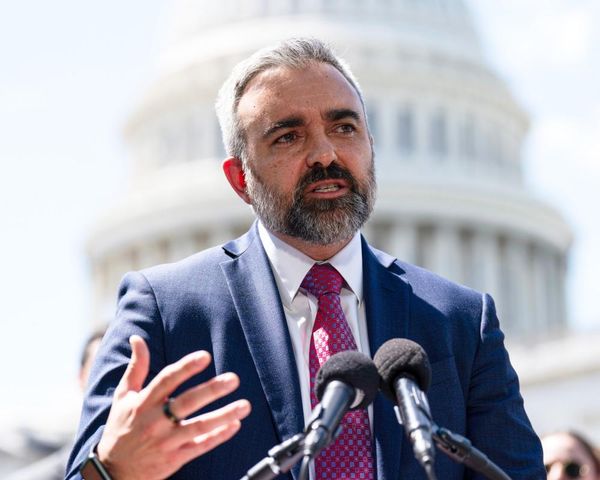
Sen. Rand Paul, the Kentucky Republican who chairs the Senate Homeland Security Committee, has become the chokepoint for DHS legislation. With few weeks of work left in this Congress, even bipartisan bills are stuck, Politico reported on Monday.
His open rift with DHS Secretary Markwayne Mullin adds friction just as the Dec. 11 funding and cyber-law deadline approaches.
An Old Grudge With New Consequences
Paul and Mullin have clashed for years, but the dispute erupted on camera at Mullin's confirmation hearing. Paul confronted him over earlier remarks in which Mullin said he understood why the neighbor who assaulted Paul in 2017 had acted as he did, after Mullin had reportedly derided Paul in public. Paul read those comments as approval of the attack.
Paul then broke with his own party's nominee. The Senate confirmed Mullin 54-45 on March 23, with Democrats John Fetterman and Martin Heinrich joining Republicans, and Paul was the lone GOP no. He had argued that Mullin's history of aggressive remarks made him a poor fit to oversee ICE and Border Patrol.
Why One Chairman Can Freeze an Agenda
A committee chair sets the calendar. Paul decides which measures get hearings and votes in the panel that oversees DHS. Politico's sources, drawn from both parties, the lobbying world and the administration, described going around him as close to impossible, even for ideas with bipartisan support.
Politico also reported that the White House pulled a nominee after Paul sought more information about agency investigations into January's immigration enforcement surge in Minneapolis. With so little time left, colleagues may have to wait until a new Congress convenes in January to advance their priorities.
Cybersecurity Is the Clearest Test
The Cybersecurity Information Sharing Act of 2015 gives companies legal cover when they voluntarily pass threat data to the government. It expired on Oct. 1, 2025, and Cybersecurity Dive named Paul as the chief obstacle. He wanted new limits on the cyber agency's disinformation-fighting work, and he stymied repeated attempts at a rescue.
Politico adds that Paul also slowed renewal of a separate bipartisan law that sends federal cyber money to state and local governments. His committee oversees the Cybersecurity and Infrastructure Security Agency, which he told Politico in 2024 he wanted to eliminate.
Lawmakers have relied on temporary fixes since. The House cleared a stopgap on Tuesday, Sept. 1 that moves the cyber law's deadline to Dec. 11, and Nextgov noted that Paul has typically resisted clean, no-strings extensions. The Senate had passed the measure 90-6, the House vote was 370-48, and Trump signed it on Sept. 2.
That sets up a repeat fight in roughly ten weeks.
A Policy Fight or a Personal One?
The reporting does not show that the cyber standoff grew out of the Mullin dispute. Paul's objections to the 2015 law date to 2025, months before Mullin was nominated, and they center on the cyber agency's disinformation work.
What the feud appears to remove is goodwill. Politico's assessment is that the bad blood is likely to complicate DHS's dealings with Paul's committee, leaving fewer natural back channels for the compromises stalled bills usually need.
What DHS Says
The department declined to address the relationship between the two men directly. It said Mullin promised at his confirmation hearing to keep lines open with Congress and is continuing that approach.
An anonymous DHS official went further, telling Politico the department is making progress on Capitol Hill even though there is "no love lost" between the two men.
What to Watch Next
Three markers will show whether the gridlock eases or hardens:
- Committee activity: whether Paul's panel schedules any DHS-related markups before this Congress ends.
- The Dec. 11 cliff: whether lawmakers settle the cyber-sharing dispute before the law expires again.
- Direct contact: whether Paul and Mullin open a working channel or leave the relationship to staff and intermediaries.
Until one of those moves, the chairman's gavel remains the biggest variable in DHS's Senate agenda.