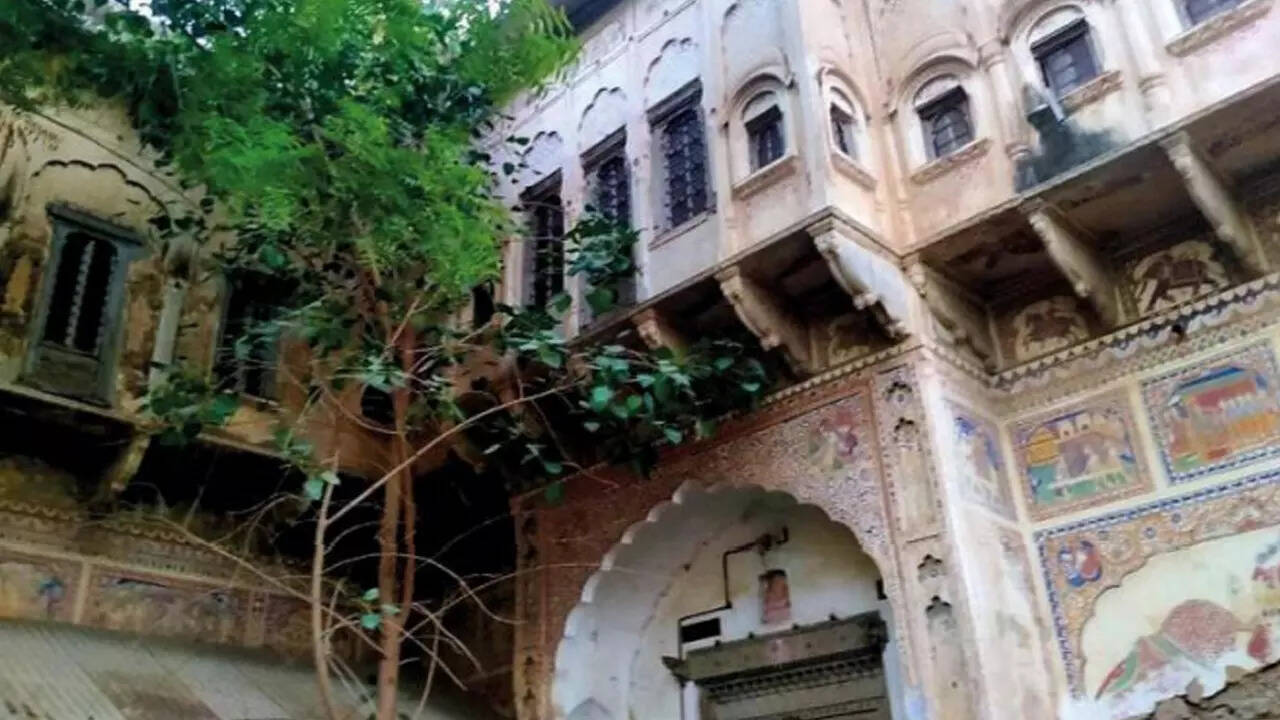
JAIPUR: In the past few decades, the painted havelis of Mandawa pitchforked the Shekhawati region to the world tourism map. But now if the local land mafia has its way, the centuries-old, frescoes-laden mansions will bite the dust soon. Sadly, the government does not have a plan to keep alive the piece of heritage that resonates with the history of the corporate India's big daddies.
While the demolition of old havelis in Shekhawati region is going on for long time, it has picked up pace in the past few years. Mandawa has become the epic centre of the land mafia because it attracts the maximum inflow of tourists in the region and the land value has increased manifold due to the flourishing tourism industry.
"Centuries-old havelis with priceless frescoes are being demolished by the land mafia with the support of local political leaders. The havelis, which have catapulted the Mandawa region into the tourism map of the world, have drawn domestic and international tourists, Bollywood and many others. Unless the government frames rules like it has done for Mt Abu to preserve the historical tradition and culture, the region will lose its appeal as a tourist destination.-TimesView"
In recent times, Mandawa has also caught the eyeballs of the Bollywood resulting in movie shoots. PK, Bajrangi Bhaijaan, and Jab We Met are just a few to name.
Early this month, Radhakrishna Goenka haveli, known for some of the best paintings, was razed despite several attempts by the local people and the government to save it. There was an order from the chief secretary to the district collector for not allowing people to demolish these structures. The district collector issued a restrictive order to the sub-divisional magistrate and executive officer of the Nagar Palika for enforcing the same. Despite that the EO allowed a permission in violation of the collector's order to demolish the haveli.
In July last year, the local people had written to the chief minister and the chief secretary against the plans of the land mafia that was intent on demolishing the building. "After demolishing four big heritage havelis, the local land mafia at the backing of the political leaders have been targeting these buildings to convert them into shops and establishments," said a representative of the local tourism industry.
One month before the demolition of the Radhakrishna Goenka haveli, the land mafia had already brought down the Ram Avtar Jhalan ki haveli. The representatives of the local tourism industry, preferring anonymity, said that the Sonthalia haveli is the next target of the mafia.
While the private properties can be sold and bought and be changed as per the existing rules, these properties are no ordinary structures. They are central to the heritage of the region because of which, the region has attracted lot of tourists transforming the economy of the area. Representatives of local the hotel industry want the state government to introduce a legislation like Mount Abu which will restrain the land mafia from destroying the buildings and the local heritage. "A law can be legislated so that heritage can be preserved for the future. These buildings constitute the core strength of Mandawa as a tourist destination. If they are demolished, why would tourists come here," said the representative.
He said that the local self-government needs to issue a blanket order stating that heritage buildings cannot be broken, or the facade cannot be altered without a special permission from Jaipur and not from the district.
Explaining the modus operandi of the mafia, a hotelier said, "When they target a haveli, over a period stretched over months, they would stealthily start damaging the walls, windows, doors and other structures to convince the owners and the government authorities that these buildings are not safe and need to be demolished. They would buy these havelis from rich owners who are residing in big cities and don't care about these properties."
The havelis have a long history. Mandawa is on the erstwhile silk route used for trading of silk and spices. Since the desert region was starved of livelihood opportunities, the rulers encouraged the people to take up trading. They would send their army to safeguard the traders from pirates and thieves, as they would travel to China and send their merchandise to Europe from there. Once they become rich, they built these havelis to show off their wealth and love for art. Later, these scions of these prosperous traders moved to big cities for growing their business.
It's well known that many of the leading industrialists in the country trace their roots to the Shekhawati region.