On a street where a Border Patrol agent had just shot and killed a U.S. citizen in her car, one of the agency’s leaders defended his actions to journalists who gathered at the scene.
“Fearing for his life, he discharged his weapon to get the vehicle to stop,” Rodney Scott said.
This was not Minneapolis 2026. It was in Chula Vista, California, nearly 14 years ago, and Scott was the deputy chief of the San Diego Sector of Border Patrol. He is now the commissioner of Customs and Border Protection, overseeing all of CBP and Border Patrol.
The woman, Valeria Tachiquín, had walked out of a Chula Vista apartment where plainclothes Border Patrol agents showed up with a warrant for someone else. An agent followed her, and she ended up dead.
Several witnesses told local media that Tachiquín had her car in reverse, backing away from the agent when he killed her. One of those witnesses, a U.S. Marine Corps veteran, said Border Patrol agents locked him in their patrol car and tried to convince him of their narrative that the car hit the agent before he fired.
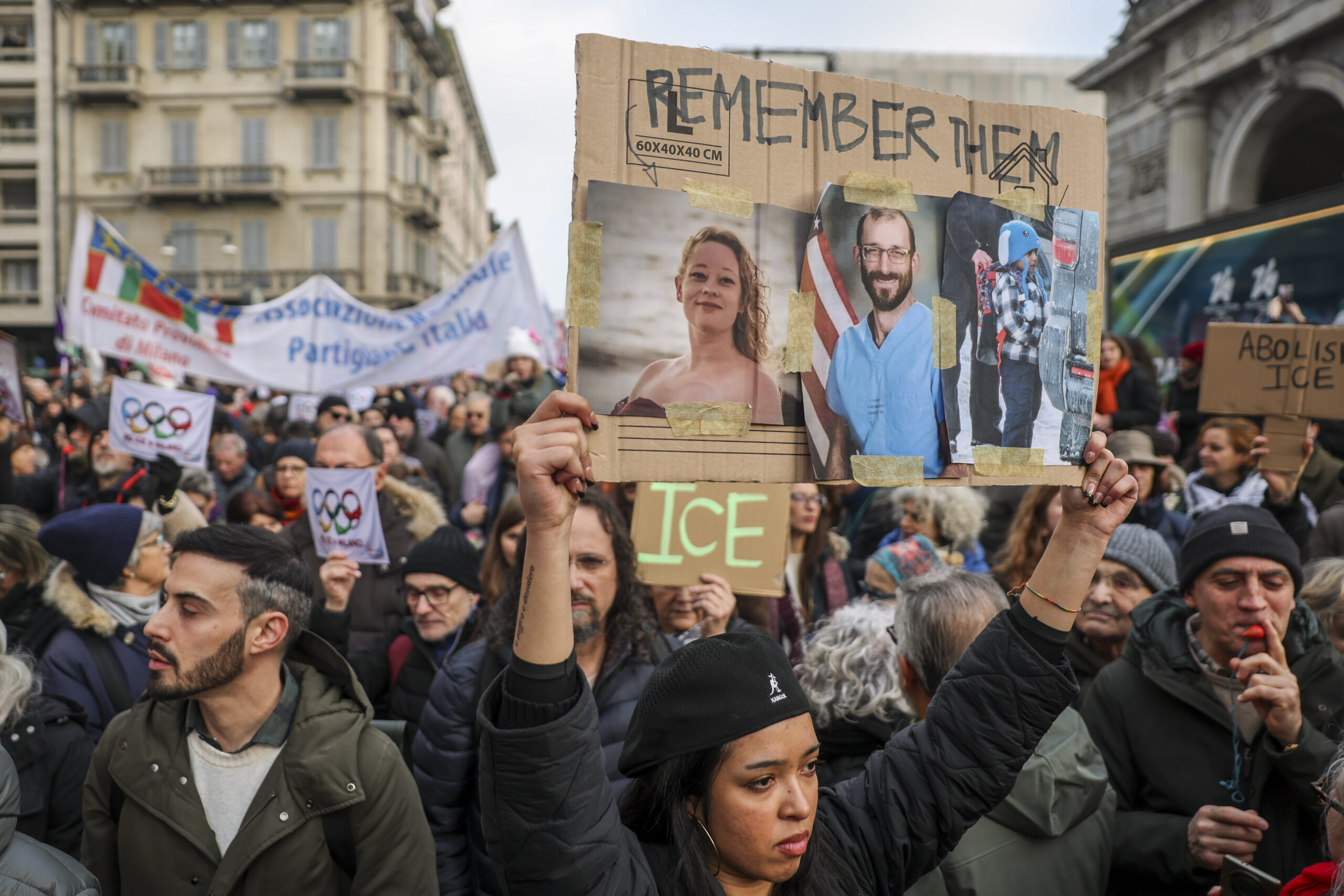
The circumstances around the recent killings of Renee Good and Alex Pretti by immigration officials in Minnesota have strong similarities to two killings that occurred under Scott’s watch in San Diego — that of Tachiquín and an earlier killing of Anastasio Hernández Rojas — including the positions the victims were in when officials attacked them, federal officials’ claims each had been aggressive that were later questioned or debunked, and Customs and Border Protection’s involvement in handling the evidence.

To activists in the U.S.-Mexico border region who monitor federal use of force, the similarities are not surprising but rather show symptoms of the impunity with which the agency operates. They say now that the agency’s presence has expanded to other parts of the country, those places are experiencing the same issue.
An unnamed Customs and Border Protection spokesperson said via email that both San Diego-area killings were more than a decade ago and that law enforcement had investigated at the time and found no wrongdoing.
“Efforts to malign CBP and ICE officers as lawbreakers are slanderous, irresponsible, and only reveal the media’s eagerness to mislead the American people,” the spokesperson said.
But to activists who monitor use of force in the border region, the investigations were part of the problem.
In September 2012, witnesses said Tachiquín was reversing her car away from a plainclothes Border Patrol agent in California when he shot and killed her. In January 2026, Renee Good turned the wheels of her car to seemingly drive away from immigration officials on the streets of Minnesota. One shot her dead.
In May 2010, Anastasio Hernández Rojas lay on a concrete walkway at a San Diego port of entry with immigration officials piled on top of him and beat him until one shot him repeatedly with a Taser. He died days later. In January 2026, Alex Pretti was on his hands and knees on the snowy ground in Minneapolis surrounded by immigration officials who had piled on top of him and beaten him when one shot him with a gun and killed him.
In each case, officials with the federal government tried to blame the people who were dead, saying they had been aggressive and violent. Officials with the agency involved were part of the investigations, leading activists to question their independence and impartiality.
Last year, an international human rights tribunal found that border officials tortured and killed Hernández Rojas and then tried to cover up what happened. The case documents pointed to actions by several agency leaders, including Scott, who defended his behavior during his Senate confirmation hearing last April.
“This is just par for the course,” said Andrea Guerrero, executive director of Alliance San Diego, which has monitored the agency’s use of force over the years. “This is business as usual for the CBP that we know in the southern border region which has engaged in countless incidents of deadly force and gotten away with it until Anastasio.”
Preserving Evidence
At a hearing earlier this month with the Senate Committee on Homeland Security and Governmental Affairs, Scott told members of Congress that Customs and Border Protection was among the agencies investigating the killings and that the agency was responsible for preserving evidence.
To Guerrero, who helped investigate the alleged cover up in the Hernández Rojas case, that’s a red flag.
“It renders the investigation partial and puts the integrity of the investigation under doubt when the involved agency is charged with preserving evidence,” Guerrero said. “That’s a conflict of interest, pure and simple.”
It’s also something she has seen before.
In preparing the Hernández Rojas case for the Inter-American Commission on Human Rights, Guerrero’s team learned that Border Patrol had a special unit that gathered evidence and worked to mitigate agency liability. Known as a critical incident team, critical incident investigative team or evidence collection team depending on the Border Patrol sector, the unit helped block the San Diego police from obtaining information, including Hernández Rojas’ medical records.
After Alliance San Diego and the Southern Border Communities Coalition raised concerns about the special units to Congress, the Biden administration phased them out in 2022. But, Guerrero pointed out, the memo announcing that change left room for Border Patrol to still collect evidence in “border enforcement seizures” and “to document management inquiries.”

Guerrero said she’s worried that these management teams, as she called them, may still be affecting the outcomes of criminal investigations into agents.
“The answer to independent and impartial investigations of federal law enforcement is we don’t have one,” Guerrero said.
Part of the problem, she said, is the way Congress has set up who investigates when a federal law enforcement officer commits a crime on the job.
“This is a problem of our own making,” Guerrero said.
The FBI and Department of Justice have the authority to investigate potential crimes committed by federal law enforcement. Because those are sister agencies to the Department of Homeland Security, Guerrero said, there isn’t enough separation for an independent and impartial investigation. Ultimately, both departments answer to the same boss — the president.
Within the Department of Homeland Security, the Office of the Inspector General also has power to investigate misconduct, criminal or otherwise, by the department staff. But the department secretary has the power to stop an investigation, which means the investigation isn’t entirely impartial, Guerrero said. At the beginning of President Donald Trump’s second term, he fired more than a dozen inspectors general and defunded the oversight offices.
Federal law enforcement agencies including Customs and Border Protection and Immigration and Customs Enforcement each have an Office of Professional Responsibility, which Guerrero said acts much like an internal affairs office does at a local law enforcement agency by reviewing officer conduct for policy violations and potential administrative consequences. In 2016, Congress gave the Customs and Border Protection Office of Professional Responsibility the power to conduct criminal investigations as well, an authority it still possesses.
“They’re not a good choice because they answer to the same commissioner that agents using force answer to,” Guerrero said.
She said federal law enforcement agencies should follow what local police do in California by having an independent law enforcement entity investigate any potential wrongdoing. In California, that means that large local police departments have an agreement that they will investigate for each other. In rural California, that means the state Attorney General’s Office investigates.
But in Minnesota, federal agencies have blocked local police’s participation in the investigations into the killings of Good and Pretti.
Guerrero said Scott has responsibility in that.
“He is a part of the system that people have been building for a long time, a system of abuse and impunity,” Guerrero said. “He drank the Kool-Aid a long time ago. He is in a position to be knowing and doing, and so the buck does stop with him.”
Customs and Border Protection responded to requests for comment from Scott through an unnamed spokesperson.
“Trying to smear Rodney Scott for sharing the initial facts of what happened that day — that an agent was struck by a vehicle, carried on the hood, and, fearing for his life, fired to stop the threat — in a case that’s closed and was reviewed with outside involvement is poor journalism,” the spokesperson said, referencing the Tachiquín case.
When Not to Comment
Trump administration officials, including Homeland Security Secretary Kristi Noem, made false and misleading claims about Pretti including labelling him a domestic terrorist, that were not supported by the facts and later had to be walked back. When asked about those claims in Congress, Scott declined to speak for Noem and the other high-ranking officials.
Scott repeatedly told the senators that he couldn’t comment on a pending investigation.
But Scott also told them that Pretti was “fighting back nonstop” before one of Scott’s employees killed him.

Scott was responding to questions from Sens. Rand Paul and Gary Peters about a moment in video footage of Pretti’s death when he was on the ground with several immigration officials on top of him after one had pepper sprayed his face at close range.
Paul, a Republican who represents Kentucky and leads the Senate Committee on Homeland Security and Governmental Affairs, said he didn’t see anything aggressive in Pretti’s movements.
“I don’t see any resistance,” Paul said. “Anybody — the natural instinct when you have six people on you, you’re going to try to move.”
When Peters, a Democrat from Michigan, questioned Scott about CBP use-of-force policy relating to one official who appeared to use a pepper spray canister to beat Pretti, Scott declined to answer directly.
“We’re leaving out what I’m seeing is a subject that’s not complying,” Scott said.
That’s similar to what officials said about Hernández Rojas — that he was aggressive and not compliant even though he was face down on the ground.
Though Scott himself has shown more restraint with his comments in the cases of Good and Pretti than he did when an agent killed Tachiquín, he still showed himself much quicker to voice judgment of a victim than of the officer who killed them.