Get all your news in one place.
100's of premium titles.
One app.
Start reading
The Conversation
The Conversation
Environment
Patrick Keyser, Professor of Forestry, Wildlife and Fisheries and Director, Center for Native Grasslands Management, University of Tennessee

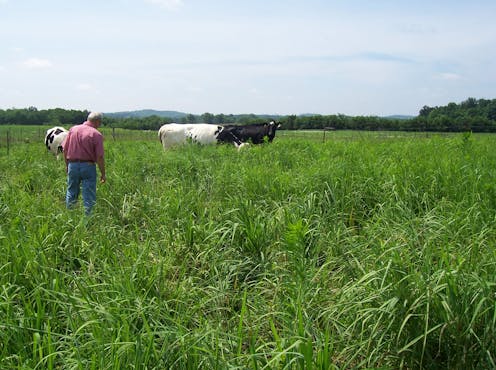
Raising cattle on native grasses in the eastern U.S. benefits farmers, wildlife and the soil

Native grasses, long overlooked, have been shown to benefit cattle and diverse native animals. Patrick Keyser, CC BY-ND

Early on a cool June morning, heavy dew lies on the grass of rolling farm country somewhere in Tennessee, or Missouri, or Pennsylvania. Small patches of fog hang in low lying pockets of these fields. In the distance, hardworking farmers are starting their day. Farm equipment clangs, tractors roar to life and voices lining out the day’s work drift on the air.

This pastoral scene is repeated thousands of times each morning across rural America. But something is missing: the exuberant “Bob bob white!” call of the bobwhite quail that for generations was the soundtrack to summer mornings. Once abundant across the eastern U.S., bobwhite populations have declined by 85%. Calculations suggest that the remaining population could be cut in half within the next decade.
Sign up to read this article
Read news from 100's of titles, curated specifically for you.
Already a member? Sign in here
Related Stories
Top stories on inkl right now
One subscription that gives you access to news from hundreds of sites
Already a member? Sign in here
Our Picks
Fourteen days free
Download the app
One app. One membership.
100+ trusted global sources.