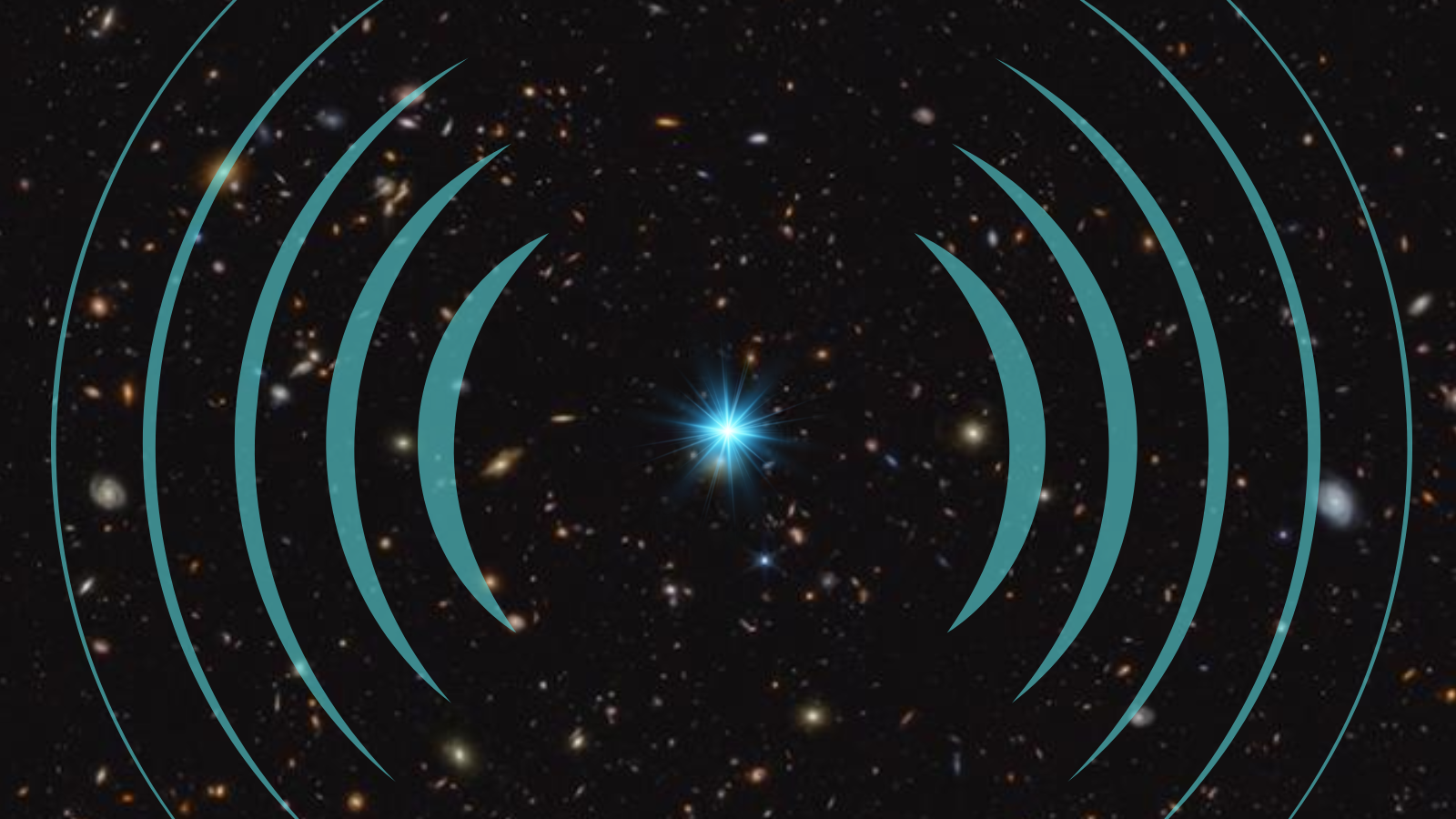
Astronomers could use specific radio signals from the universe's earliest epoch to "weigh" the first stars in the cosmos. The investigation could reveal more about the so-called Cosmic Dawn, the period of the universe during which darkness lifted and light became free to travel.
These first stars, or "Population III" (Pop III) stars, can't be seen even with the most powerful telescopes because their light was prevented from traveling by a dense cosmic fog spread between star-forming regions that consisted mostly of hydrogen.
However, during this period, around 100 million years after the Big Bang, this hydrogen created a radio signal called "the 21-centimeter signal." An international team of astronomers now suggests this signal could be used to determine how light from the first stars interacted with this cosmic fog, helping to lift it.