This was, in some ways, a make or break statement for Rachel Reeves as chancellor, with the country being dragged into a Middle East war of Donald Trump’s making and the economic figures all going wrong for this government.
Interest rates are no longer going down, inflation and unemployment are already going up and growth is also tumbling.
Against this backdrop, and after a big billing last night with the Cobra emergency meeting, there were expectations that the chancellor would come to the Commons with a plan to deal with a potential economic shock.
What we heard instead was Ms Reeves trotting out a series of previously announced policies, somehow sidetracking to the two-child benefit cap and nursery funding when concerns are focused on energy and fuel. But there were no new plans to deal with a spike in prices.
No wonder the silence in the Commons was deafening. Reeves took 15 minutes to read out an announcement of nothing.
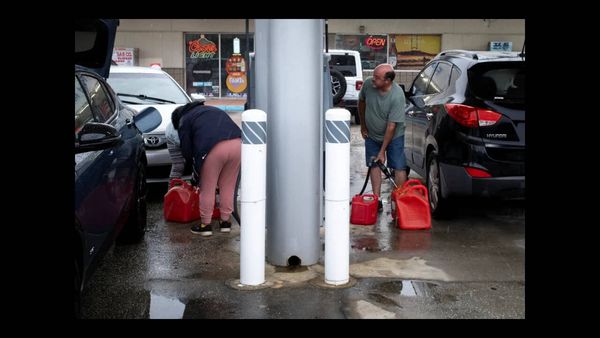
There was no movement on fuel duty, nothing on further support for energy prices, no extra defence spending and nothing on extracting oil and gas from the North Sea.
Not only was there a defiant put down to demands from the Opposition benches, but there was also a swipe at Labour MPs.
The chancellor has been under huge pressure from Labour backbenchers and some cabinet ministers to loosen up her rules on borrowing and spending to help deal with the crisis.
But Ms Reeves had a blunt “no” to those pleas.
She told the House that she would be “acting within our iron-clad fiscal rules”. So no new borrowing, no flexibility in the rules, just more of the same.

All there was in the statement was a promise to look at fuel prices again in the next month and a decision to take more action against “price gouging” and “profiteering”.
There will be many looking nervously at the calendar and when the 5p hike in fuel duty is set to come in this September.
It feels hard to believe that the Cobra meeting on Monday could have only come up with a “steady as it goes” plan with no new serious measures if the expected economic shock comes.
Another way to look at this was that Ms Reeves announced “no extra help for millions”.
But the question really is, what was the point of this statement at all?
A number of planted soft questions from Labour MPs may have provided some comfort for her. But in truth more of her colleagues will be seething.
While Ms Reeves may see this as a moment of vindication for her, Labour MPs looking at the local and devolved elections on 7 May and the party’s pitiful opinion poll ratings below 20 per cent may have a different perspective.
They will have wanted to hear about planned help for households struggling with the impact of the war, but also measures which could be sold on the doorstep.
Unless the war comes to a rapid end – which is always possible with the random nature of President Trump – it feels like Ms Reeves, or perhaps her successor, will have to come back to the House to announce emergency measures which she failed to offer as possibilities on Tuesday.
The reality is that this statement may be the epitaph to Ms Reeves’s troubled reign as chancellor if she is moved on in the coming weeks. A chancellor who has struggled to adapt to or understand the political mood – whether it was winter fuel payments to pensioners, welfare cuts or now the impact of a war in the Middle East.
Pain at the pumps: drivers pay £307m price of Trump’s Iran war
Iran vows to fight for a ‘complete victory’ after rebuffing Trump peace talks
Oil majors boost FTSE 100 amid war uncertainty
Inflation expected to remain at 3% before Middle East conflict sparks jump
UK ‘strongly disagrees’ with Trump approach over health aid, says Yvette Cooper
Late Royal Mail post is ‘badly affecting our national life as a country’