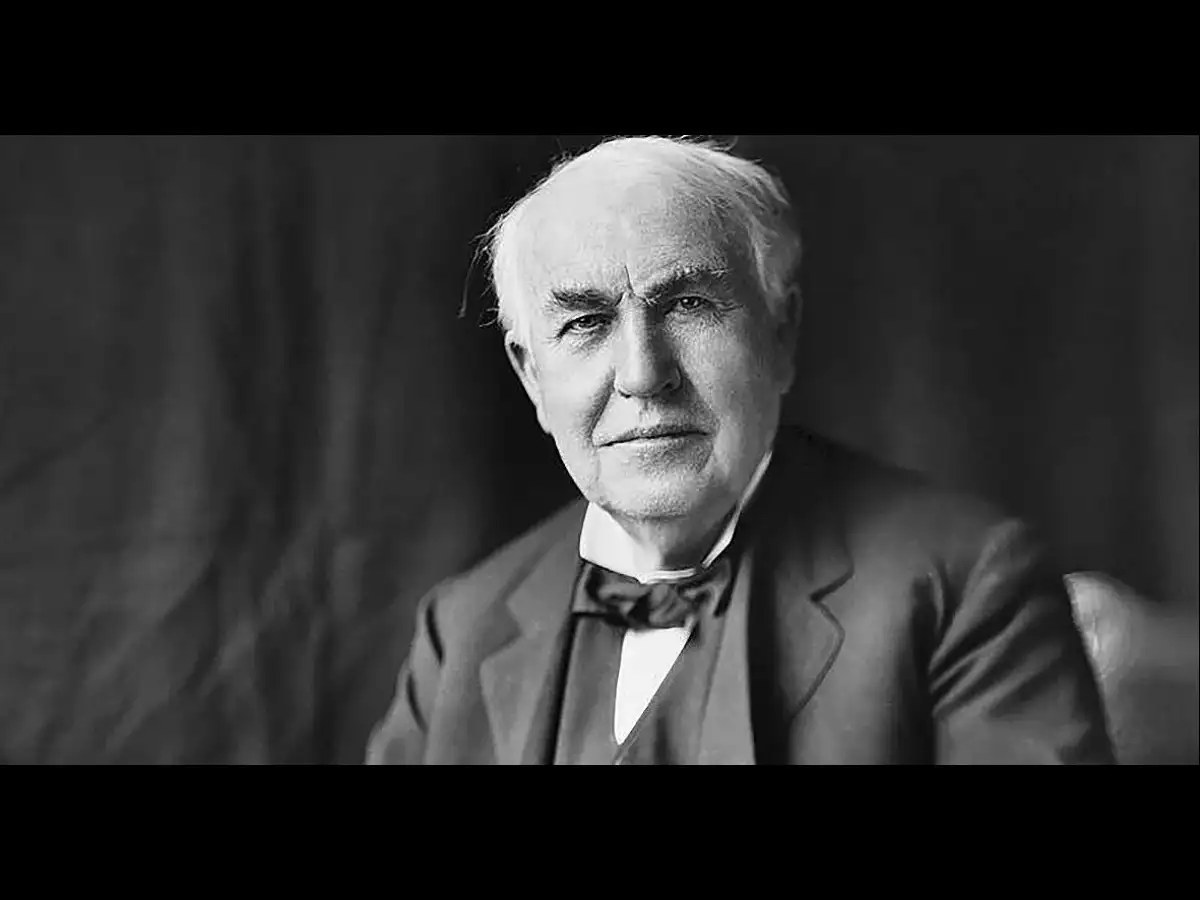
Quote of the day by Thomas Edison talks about the role of a child’s mind in creativity and learning. Edison’s saying, "The greatest invention in the world is the mind of a child" compares thought with mechanical invention. A machine works within the limits of its design while a child can ask questions imagine possibilities and explore ideas without fixed boundaries. His life shows why curiosity and independent thinking can influence invention and discovery.

What the quote says about a child’s mind?
The saying presents a child’s mind as a source of potential. Children often approach the world without established assumptions.
The main ideas include:
Pure potential
A child can imagine possibilities without being limited by existing methods.
Natural curiosity
Questions help children observe details and make connections.
Original thinking
Independent ideas can develop when children are allowed to explore.
Active learning
Experience, observation and mistakes can become part of the learning process.
Creative thinking
Imagination can lead to questions that later support inventions and discoveries.
Quote of the day by Thomas Edison: Meaning and relevance
The quote suggests that invention begins with thought. Mechanical inventions have a defined purpose. The human mind can create new purposes and ask new questions. Edison’s view also connects with education. The idea is also linked to the development of science and technology. Major discoveries can begin with a question or an attempt to understand something that others may overlook.
Thomas Edison’s life and learning
Thomas Edison was born on February 11 1847 in Milan, Ohio. He died on October 18 1931 in West Orange, New Jersey. The American inventor held, alone or jointly 1,093 patents. He established the world’s industrial research laboratory.
Edison was the last child and the fourth surviving child of Samuel Edison Jr. And Nancy Elliot Edison. He developed hearing problems at an age. He also learned telegraphy. Became an apprentice telegrapher in 1863.
His hearing difficulties created problems as telegraphy increasingly depended on sound. He worked as a telegrapher for six years across the Midwest, South, Canada and New England. He also worked on improving telegraph equipment.
Life lessons from the quote
The saying offers lessons:
Protect curiosity of dismissing unusual questions.
- Encourage children to think.
- Allow mistakes to become part of learning.
- Give people time to observe and explore.
- Use hands-on activities to support the learning.
- Avoid relying on rote memorisation.
- Give children space to develop ideas.