Get all your news in one place.
100's of premium titles.
One app.
Start reading
The Economic Times
The Economic Times

Quote of the Day by Simone de Beauvoir: ‘No one is more arrogant toward women, more aggressive or…’ Why do some people need to belittle others? The brutal warning about ego and insecurity

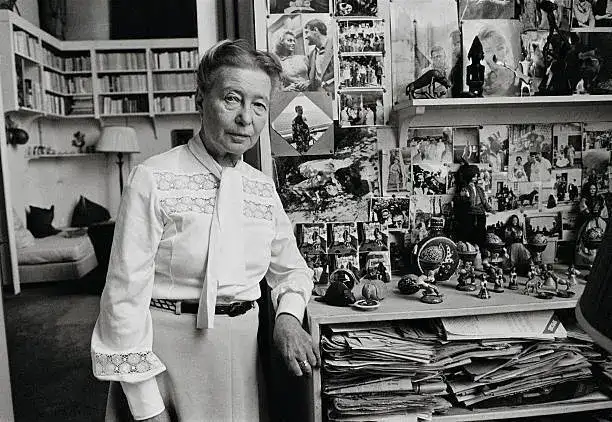
Quote of the Day: Simone de Beauvoir remains one of the most influential thinkers of the 20th century. A philosopher, novelist, and pioneering feminist, she challenged social norms and encouraged people to examine the hidden forces that shape human behavior. Best known for her groundbreaking work The Second Sex , Beauvoir spent much of her life exploring questions of freedom, identity, equality, and power. Her ideas continue to resonate decades after her death because they address issues that remain deeply relevant today. One of her most thought-provoking observations focuses on how insecurity can sometimes disguise itself as confidence, offering a lesson that feels surprisingly modern.

Quote of the Day Today

The quote of the day by Simone de Beauvoir is:

"No one is more arrogant toward women, more aggressive or scornful, than the man who is anxious about his virility."

Though written decades ago, the statement remains a powerful commentary on human psychology, relationships, and the connection between insecurity and behavior.

READ ALSO: Quote of the day by Marilyn Monroe: ‘All a girl really wants is for one guy to prove to her…’ Timeless truth about trust and relationships, and how women may believe not all men are the same

Who Was Simone de Beauvoir?

Born in Paris in 1908, Simone de Beauvoir became one of France's most celebrated intellectuals. She studied philosophy at the Sorbonne, where she met philosopher Jean-Paul Sartre, beginning a lifelong intellectual partnership. Throughout her career, she wrote novels, memoirs, philosophical essays, and political works that challenged traditional views about gender and society.

Her most famous book, The Second Sex , published in 1949, transformed feminist thought by examining how women had historically been defined through restrictive social expectations. Beyond feminism, Beauvoir's work explored freedom, responsibility, aging, morality, and the complexities of human relationships.

What made her writing so influential was her willingness to question accepted truths and examine uncomfortable realities. Her quotes often cut directly to the heart of human behavior, and today's quote is a perfect example.

Quote of the Day Meaning

At first glance, Beauvoir's statement may seem like a criticism aimed at a particular type of man. However, its deeper meaning is about insecurity rather than gender alone.

The quote suggests that people who feel uncertain about themselves often compensate by putting others down. When someone feels threatened, inadequate, or fearful about their own identity, they may react with arrogance, hostility, or contempt. Instead of addressing their internal doubts, they project those insecurities outward.

In Beauvoir's view, aggressive behavior is not always a sign of strength. In many cases, it can be evidence of vulnerability hidden beneath a confident exterior. The person who constantly seeks to dominate, belittle, or control others may actually be struggling with fears about their own worth.

READ ALSO: Quote of the day by Princess Diana: ‘People think that at the end of the day a man is the only answer. Actually…’ Timeless message about work, independence and fulfillment

Modern psychology supports this idea. Researchers have long noted that individuals with fragile self-esteem sometimes engage in defensive behaviors to protect their self-image. What appears to be confidence may actually be insecurity seeking a disguise.

The Life Lesson Behind the Quote

One of the most valuable lessons from this quote is the importance of looking beyond surface behavior. When people encounter arrogance or hostility, the natural reaction is often anger or resentment. Beauvoir's observation encourages a different perspective.

Rather than seeing aggression as proof of superiority, we can recognize that it may stem from unresolved fears or personal insecurity. This does not excuse harmful behavior, but it can help explain it.

The quote also asks us to examine our own reactions. Everyone experiences moments of self-doubt. The challenge is deciding how to respond to those feelings. Some people become defensive or critical, while others use self-reflection and growth to build genuine confidence.

True confidence rarely requires proving superiority over others. It is usually expressed through respect, empathy, and self-assurance. People who are secure in themselves generally have little need to diminish someone else.

Why the Quote Still Resonates Today

Even in today's world of social media, public debates, and constant comparison, Beauvoir's words remain relevant. Many conflicts, whether personal, professional, or online, can often be traced back to feelings of insecurity and the desire for validation.

The quote reminds us that strength is not measured by dominance. Real strength comes from self-awareness, emotional maturity, and the ability to treat others with dignity.

READ ALSO: Quote of the Day by Nicholas Sparks: ‘In the blink of an eye, something happens by chance, when…’ A surprising truth about fate, love and second chances that every fan of The Notebook and Dear John needs to read today

That message may be one reason Simone de Beauvoir's work continues to inspire readers around the world. Her insights encourage us not only to understand society more deeply but also to better understand ourselves. And in a world where appearances often matter more than substance, that lesson may be more valuable than ever.

Sign up to read this article
Read news from 100's of titles, curated specifically for you.
Already a member? Sign in here
Related Stories
Top stories on inkl right now
One subscription that gives you access to news from hundreds of sites
Already a member? Sign in here
Our Picks
Fourteen days free
Download the app
One app. One membership.
100+ trusted global sources.