Get all your news in one place.
100's of premium titles.
One app.
Start reading
The Economic Times
The Economic Times
Rana Sarkar

Quote of the Day by Sigmund Freud: ‘Dogs love their friends and bite their enemies, quite unlike people, who are incapable of pure love and…’ - why we keep loving the people who hurt us

Think of that friend who calls you at 2 a.m. after a fight, crying, swearing they’ll never speak to you again, then shows up at your door the next evening with your favorite street food and an apology you didn’t ask for. Or the colleague who praises your work in meetings but subtly undermines you in emails. We’ve all been there: tangled in relationships where affection and irritation, care and control, seem to arrive in the same breath.

It’s exhausting, confusing, and probably what humans do. We rarely feel one thing at a time. We love people who frustrate us, forgive those who hurt us, and sometimes carry tenderness for someone we would rather not speak to again. As per Sigmund Freud, a dog seems to have no such trouble separating devotion from hostility. And that simple contrast opens the door to a much more complicated question about what it means to love another person.

Quote of the Day by Sigmund Freud: “Dogs love their friends and bite their enemies, quite unlike people, who are incapable of pure love and always have to mix love and hate.”

Also Read: Quote of the Day by Gigi Hadid: ‘Eat clean to stay fit; have a burger to stay sane’ - a simple reminder that healthy living should leave room for pleasure

Why Sigmund Freud’s quote on love and human nature matters today

Human relationships are rarely clean; it's only a matter of time before you learn it by observing or experiencing. We don’t just love or hate, we oscillate. We hold grudges while sending birthday wishes. We block someone, then check their stories. We say “I’m fine” while seething inside.

Freud isn’t romanticizing dogs or demonizing people. He’s pointing to a psychological truth that feels even sharper now: ambivalence, the coexistence of opposing feelings, is built into how we relate. As our time demands we pick sides, his words remind us that emotional complexity isn’t a flaw. It’s the condition of being human.

What Sigmund Freud’s quote means in real life

The quote sounds cynical on the surface. But look closer: Freud is describing emotional honesty. Dogs operate on instinct, loyalty or threat, warmth or warning. Humans, by contrast, carry histories, hopes, fears, and social scripts. We love our parents even as we resent their expectations. We cherish partners while nursing old wounds. We defend friends yet feel flickers of jealousy. This isn’t hypocrisy; it’s the texture of human emotions, which is complex.

Also Read: Quote of the Day by Albert Einstein: ‘If I was not a physicist, I would probably be a musician…’ - why your favorite hobby can simply be something you love, not another way to make money

In practical terms, this insight can be liberating. If you’ve ever felt guilty for loving someone while being angry at them, Freud’s words offer relief: that tension is normal. The goal isn’t to purge “negative” feelings but to recognize them, name them, and choose how to act. Healthy relationships aren’t those without conflict; they’re those where love and disagreement can coexist without destroying each other.

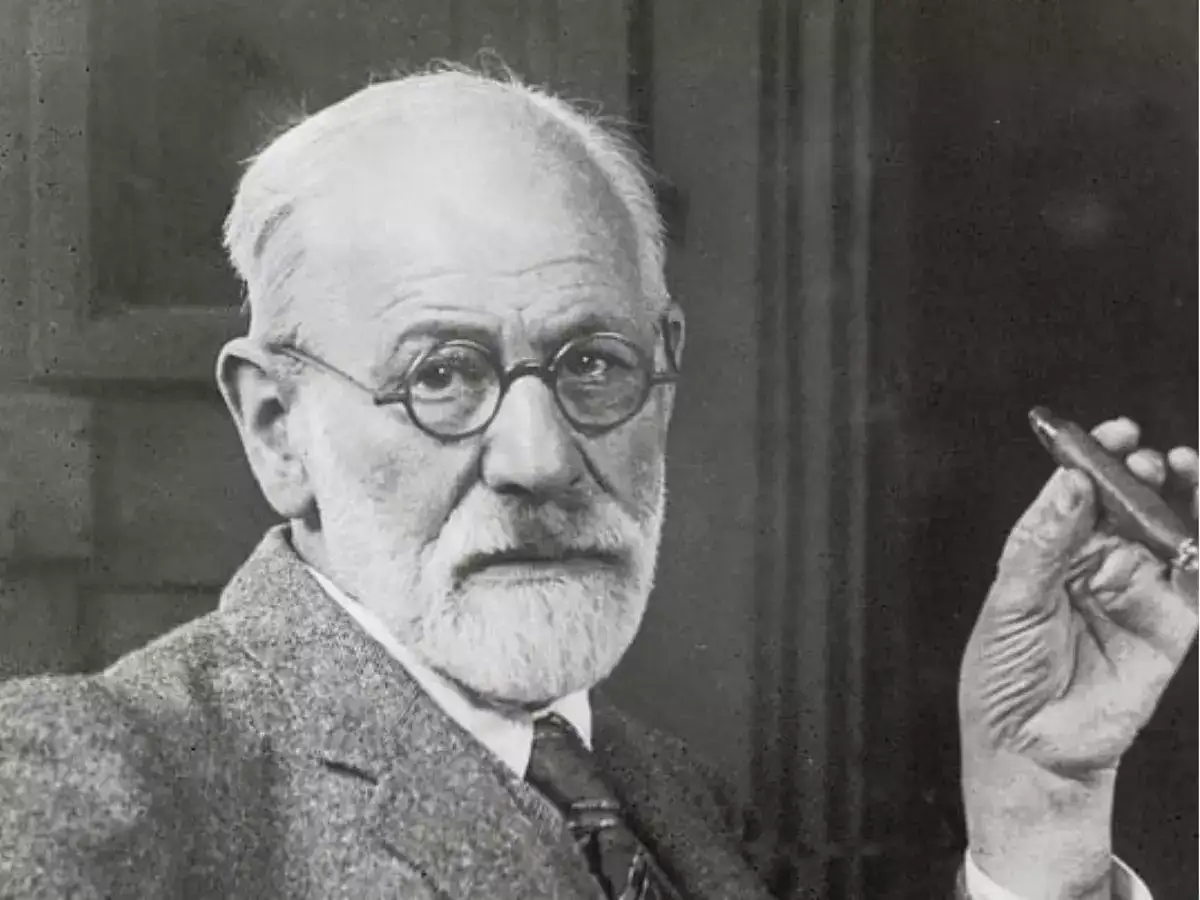
Who was Sigmund Freud?

Sigmund Freud (1856–1939) was an Austrian neurologist and the founder of psychoanalysis, a revolutionary approach to understanding the mind through unconscious drives, childhood experiences, and hidden conflicts. Trained as a medical doctor in Vienna, he began treating patients with hysteria and trauma, eventually developing the “talking cure” a method where patients spoke freely while analysts listened for patterns, slips, and symbols.

Also Read: Quote of the Day by Mark Twain: ‘I can teach anybody how to get what they want out of life. The problem is that I can't find anybody who can tell me what they want’

Freud introduced concepts that reshaped psychology and culture: the unconscious mind, repression, dream interpretation, and the tripartite structure of the psyche (id, ego, superego). Though many of his specific theories have been revised or contested, his core idea—that much of human behavior stems from forces we don’t fully see, remains foundational to therapy, literature, film, and everyday self-reflection.

Sign up to read this article
Read news from 100's of titles, curated specifically for you.
Already a member? Sign in here
Related Stories
Top stories on inkl right now
Our Picks
Fourteen days free
Download the app
One app. One membership.
100+ trusted global sources.