Get all your news in one place.
100's of premium titles.
One app.
Start reading
The Economic Times
The Economic Times
Trending Desk

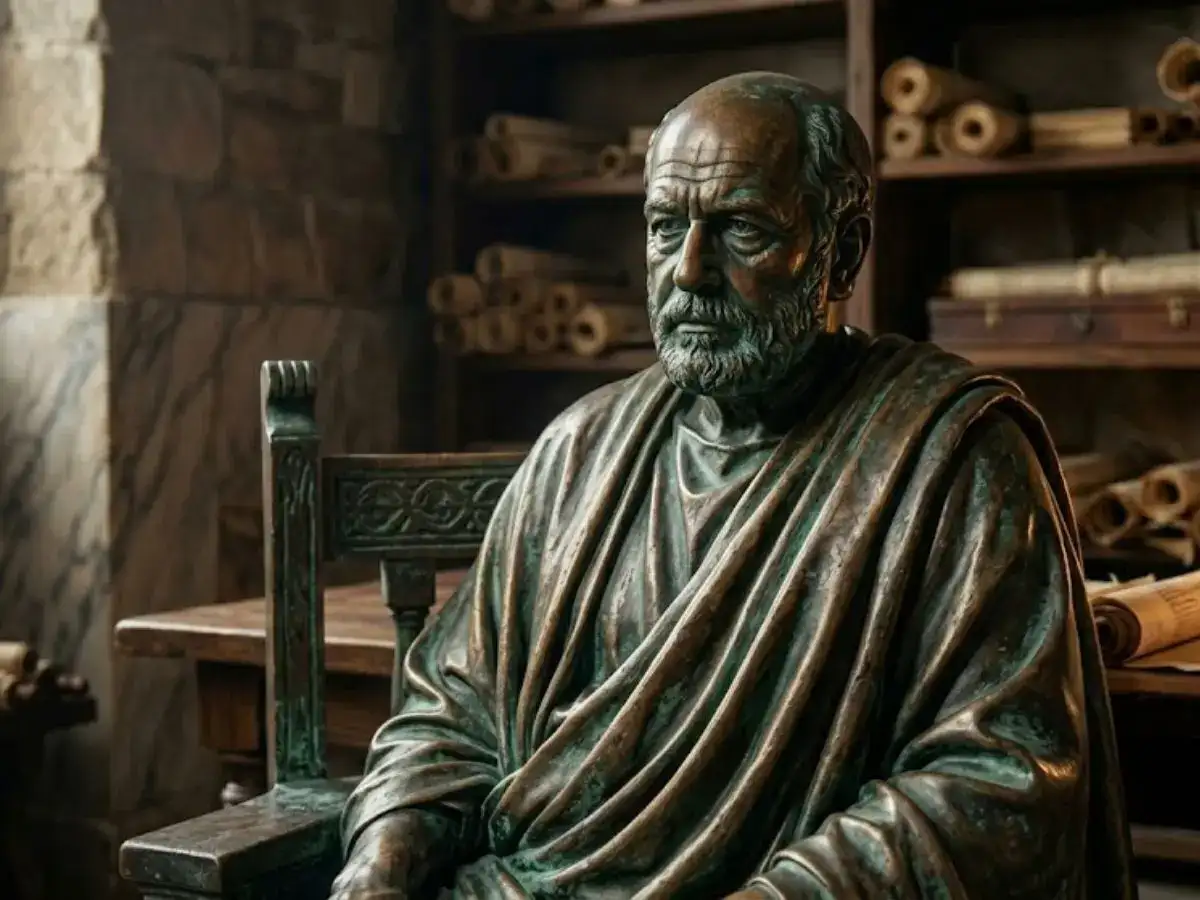
Quote of the day by Seneca: ‘Peace does not come to the man who refuses to declare war on what is destroying him’- Stoic philosopher shares life lesson on confronting inner struggles

Roman Stoic philosopher Lucius Annaeus Seneca continues to resonate with modern audiences through his reflections on discipline, suffering and self-mastery. One of his widely shared quotes, “Peace does not come to the man who refuses to declare war on what is destroying him,” has recently gained renewed attention online for its message on confronting personal struggles directly.

Quote reflects Stoic philosophy on self-discipline

The quote captures a central principle of Stoicism, the ancient philosophy that emphasises reason, resilience and control over one’s impulses. Seneca argued that inner peace cannot be achieved by avoiding harmful habits, destructive behaviour or emotional conflict.

Rather than presenting peace as passive comfort, the statement frames it as the outcome of difficult personal decisions and sustained self-discipline. According to Stoic thought, unresolved fears, addictions, anger or unhealthy attachments continue to create suffering when left unchallenged.

Modern audiences relate quote to mental and emotional struggles

The quote has frequently been shared in discussions around mental health, productivity and personal growth. Many interpret it as a reminder that long-term stability often requires confronting uncomfortable realities instead of avoiding them.

Across social media platforms and motivational forums, users have linked the statement to struggles involving toxic relationships, burnout, unhealthy routines and emotional suppression. The message has also been viewed as relevant in professional settings where individuals delay difficult conversations or decisions despite ongoing stress.

Seneca’s writings continue to influence contemporary thought

Seneca, who lived during the first century AD, remains one of the most influential Stoic thinkers alongside Marcus Aurelius and Epictetus. His essays and letters explored themes including morality, mortality, anger and the pursuit of a meaningful life.

Though written centuries ago, many of his ideas continue to find relevance in contemporary conversations around resilience and emotional well-being. The enduring popularity of the quote reflects the continued appeal of Stoic philosophy in helping people navigate personal and social challenges.

Seneca, whose full name was Lucius Annaeus Seneca, was a Roman Stoic philosopher, writer and statesman who lived during the first century AD. He also served as an adviser to Roman emperor Nero.

Who was Seneca?

Seneca is widely known for his writings on Stoicism, in which he explored themes such as self-control, anger, grief, morality, wealth and coping with hardship. Many of his works, particularly “Letters to Lucilius,” continue to be widely read and quoted today.

Despite advocating simplicity and virtue, Seneca became one of the wealthiest and most influential figures in Rome. His life later took a dramatic turn when he was accused of involvement in a conspiracy against Nero and was ordered to take his own life in AD 65.

In recent years, Seneca’s quotes and teachings have regained popularity as Stoic philosophy continues to attract modern audiences seeking guidance on resilience, discipline and emotional control.

Sign up to read this article
Read news from 100's of titles, curated specifically for you.
Already a member? Sign in here
Related Stories
Top stories on inkl right now
One subscription that gives you access to news from hundreds of sites
Already a member? Sign in here
Our Picks
Fourteen days free
Download the app
One app. One membership.
100+ trusted global sources.