Get all your news in one place.
100's of premium titles.
One app.
Start reading
The Economic Times
The Economic Times
Shreya Biswas

Quote of the day by René Descartes: 'The two operations of our understanding, intuition and deduction, on which...' - inspiring life lessons on how we gain knowledge, how to think clearly and reach logical conclusions by French philosopher

René Descartes quote today : Knowledge does not always come from simply memorising facts. Understanding something often requires a person to think carefully, connect ideas and decide whether a conclusion makes sense. This is the idea behind a famous quote by French philosopher and mathematician René Descartes, who explored how people can use reason to arrive at knowledge. His words focus on two important ways of understanding: intuition and deduction. Together, they highlight the role of clear thinking in the process of learning and reaching conclusions.

Quote Of The Day Today: René Descartes On The Power Of Intuition And Deduction

René Descartes said, “ The two operations of our understanding, intuition and deduction, on which alone we have said we must rely in the acquisition of knowledge ,” as per BrainyQuote.

The quote points to two processes that Descartes considered important when acquiring knowledge. Rather than accepting information without examination, his words suggest that understanding involves using the mind to recognise ideas and connect them logically.

READ ALSO: Quote of the day by Jane Austen: 'Give a girl an education and introduce her properly into the world, and...' - inspiring life lessons on women's empowerment, independence, how education can give girls the power to build their own future by Pride and Prejudice author

hat Does René Descartes’ Inspiring Quote About Knowledge Mean

The first idea in the quote is intuition. In Descartes’ philosophical approach, intuition refers to the mind’s ability to grasp something clearly and directly.

Deduction, meanwhile, involves moving from one idea or established point to another through reasoning. It allows a person to build a conclusion from what they already understand.

Together, intuition and deduction represent different but connected ways of reaching knowledge. One helps the mind recognise an idea, while the other helps connect ideas through logical reasoning.

What Life Lesson Can We Learn From René Descartes’ Quote

The broader lesson is that learning involves more than collecting information. It also requires understanding how different ideas relate to one another.

The quote encourages a thoughtful approach to knowledge. Instead of immediately accepting every claim, a person can examine an idea and consider how it connects with other things they already know.

It also highlights the value of reasoning. When people carefully follow ideas from one point to another, they can develop conclusions based on a logical process rather than simply relying on assumptions.

READ ALSO: Quote of the day by Ariana Grande: 'The best fashion advice I'd say would be just to do what makes you...' - Grammy-winning singer of Defying Gravity and Rain on Me teaches inspiring life lessons on confidence, personal style, self-expression and why feeling comfortable can make you look your best

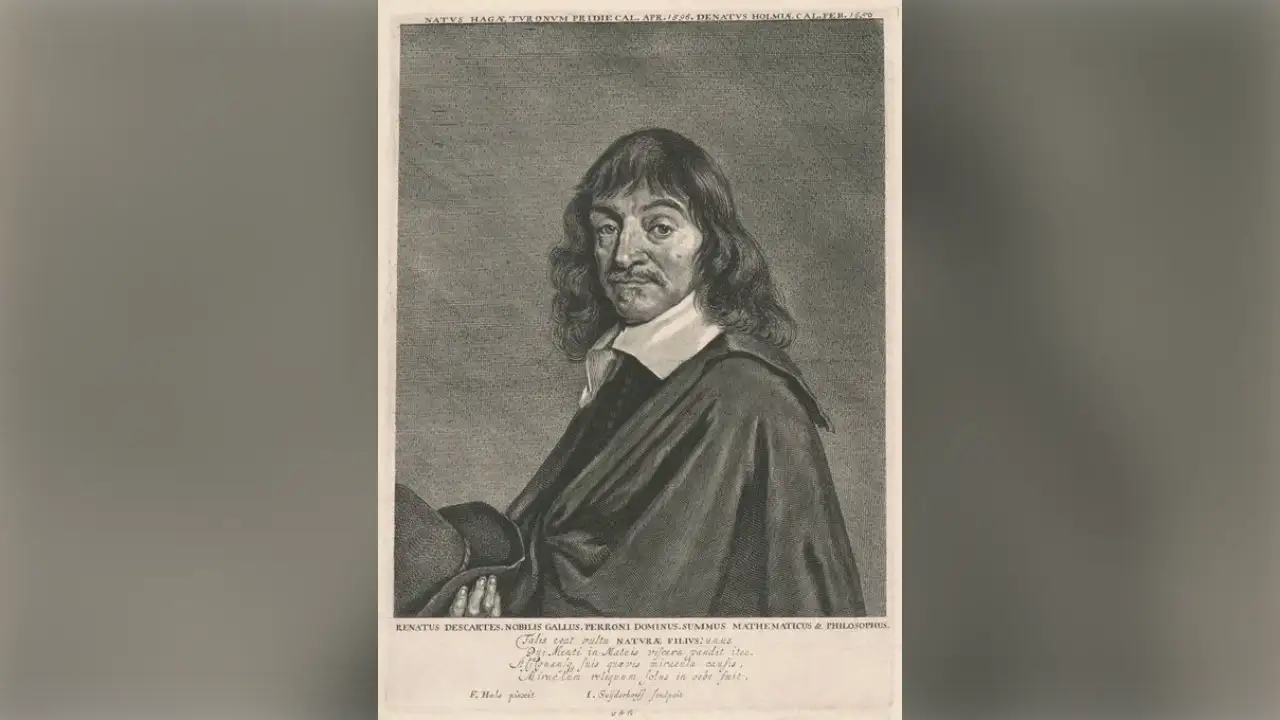
Who Was René Descartes

René Descartes was a French mathematician, scientist and philosopher who is generally regarded as the founder of modern philosophy. Born on March 31, 1596, in La Haye, France, he became known for his ideas about reason, knowledge, mathematics and science.

Descartes developed a method of systematic doubt, questioning knowledge based on authority, the senses and reasoning. His approach led to the famous idea, “I think, therefore I am,” which expressed his belief that thinking provides certain knowledge of one’s own existence.

What Did René Descartes Study

Descartes studied at the Jesuit college at La Flèche, where he learned classical subjects, science, mathematics and metaphysics, as per a Britannica report. He later received a law degree from Poitiers in 1616.

In the Netherlands, he studied mathematics and military architecture and was encouraged by physicist Isaac Beeckman. During his travels in Europe, he developed analytic geometry and a method of deductive reasoning.

READ ALSO: Quote of the day by Sylvia Plath: 'One should be able to control and manipulate experiences with an...' - inspiring life lessons on how your mind may be the key to handling life’s challenges and why you must think before letting experiences control you by Tulips and Nick and the Candlestick poet

What Did René Descartes Write

Descartes published Discourse on Method in 1637, followed by Meditations on First Philosophy in 1641 and Principles of Philosophy in 1644. His works explored reason, knowledge, the mind, matter, science and God.

His method emphasised accepting only what is clear, breaking problems into simpler parts, moving from simple to complex ideas and checking the reasoning.

When Did René Descartes Die

Descartes moved to Sweden in 1649 after being invited by Queen Christina, whom he taught philosophy, as per the Britannica report. He caught a chill in February 1650 and soon developed pneumonia. He died in Stockholm on February 11, 1650.

READ ALSO: Quote of the day by C. S. Lewis: 'It may be hard for an egg to turn into a bird: it would be a jolly sight harder for...' - inspiring life lessons on self-growth, why you must change to reach your full potential and why you can't grow while being in your comfort zone by The Chronicles of Narnia author

Sign up to read this article
Read news from 100's of titles, curated specifically for you.
Already a member? Sign in here
Related Stories
Top stories on inkl right now
One subscription that gives you access to news from hundreds of sites
Already a member? Sign in here
Our Picks
Fourteen days free
Download the app
One app. One membership.
100+ trusted global sources.