
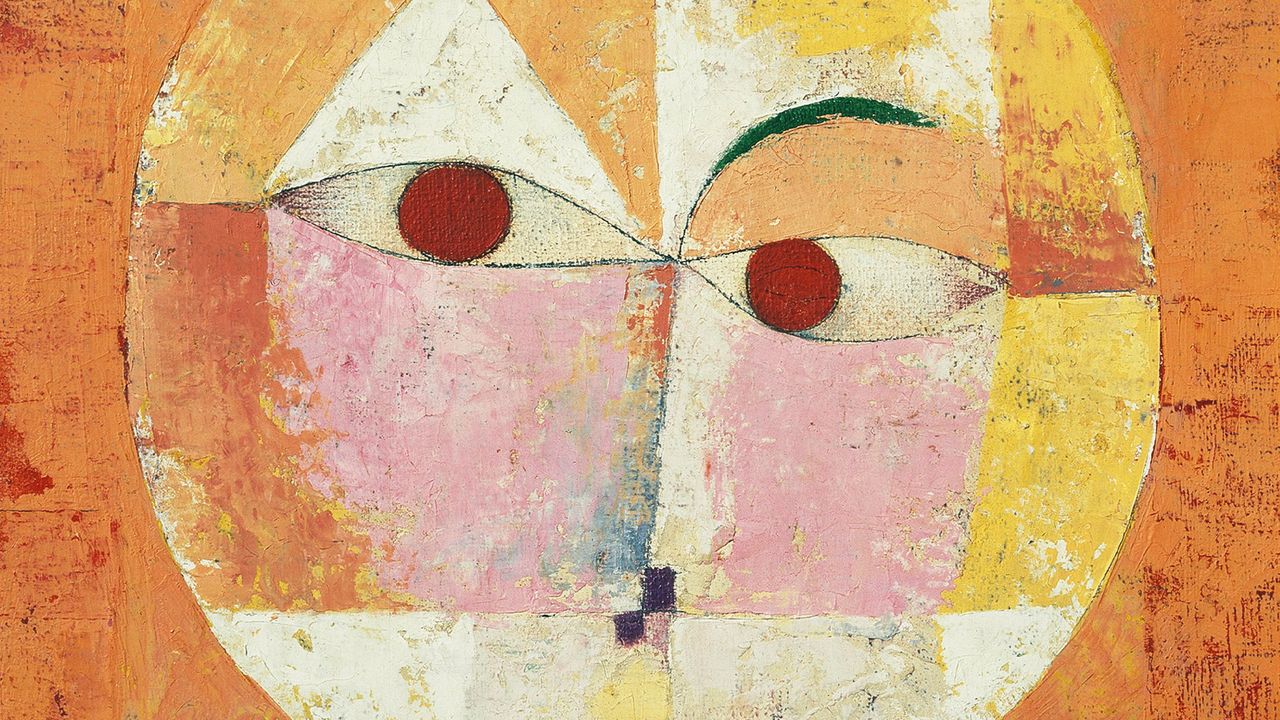
Source: Paul Klee, “Schöpferische Konfession” (“Creative Credo”), 1920. Translation varies; commonly translated as “Art does not reproduce the visible; rather, it makes visible.”
Art does not reproduce the visible; rather, it makes visible.
Paul Klee

For years, modern art escaped me. As a kid, a teacher once told me it was about rejecting rules and recognising that ideas matter as much as application. But when I read that Paul Klee wrote, “art does not reproduce the visible; rather, it makes visible,” I realised he was describing one of the central ideas behind modern art, and it made sense. It's also a reminder why in everything we create, ideas and conveying a feeling can matter more than simply replicating the world around us – something AI can't do.
The statement comes from Klee’s essay “Creative Credo”, published in 1920. At the time, artists across Europe were moving away from the idea that painting’s purpose was simply to imitate the physical world. Klee believed art could reveal invisible things: emotions, movement, rhythm, memories and ideas. Importantly, a painting needn't look exactly like reality to communicate something meaningful.
This philosophy shaped his own work. His paintings often used simplified forms, symbols and abstract compositions that seemed closer to music or poetry than traditional representation. He looked for harmonies of colour, in the same way a composer seeks musical rhythm. Klee was also a dedicated teacher, particularly during his time at the influential Bauhaus. He encouraged students to understand the underlying structures of creativity rather than simply copy what they saw.
That's the lesson that remains important, and something revisiting Klee's quote brought back for me: whether you're creating a 3D environment, a new character design for a game, an illustration for a client, a font or logo, the goal is rarely just about accuracy and replication.
The strongest creative work communicates a feeling or idea. It shows audiences something they might sense but have never been able to express. AI is incapable of achieving what Klee set out to do because it has no ideas or emotions.
Visit the online The Tate for art by Paul Klee.
Our pick of the best Paul Klee art books: