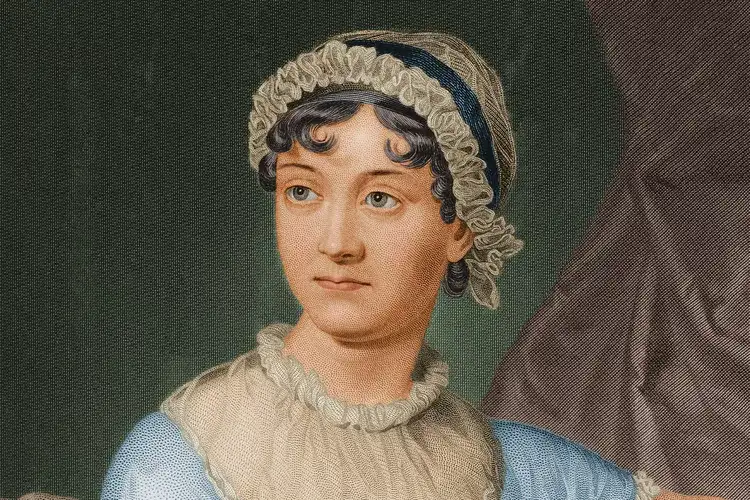
Quote of the Day by Jane Austen: Love and imagination often move faster than reason, shaping how people interpret emotions, relationships, and future possibilities. A small spark of admiration can quickly grow into deep emotional attachment in the mind, even before reality fully supports it. Human emotions, especially in matters of romance, are often guided as much by imagination as by truth.
This idea is beautifully captured in Jane Austen’s powerful observation: “A lady's imagination is very rapid; it jumps from admiration to love, from love to matrimony in a moment.” This quote reflects the sharp social insight of Jane Austen, who was known for her deep understanding of love, relationships, and human psychology. Through her works, Austen often explored how emotions can be influenced by expectation, social pressure, and personal imagination. In this quote, she highlights how quickly admiration can evolve in the mind into love, and then into the idea of marriage—sometimes without

Quote of the Day Today: Jane Austen on relationships, feelings and transformation
Quote of the Day by Jane Austen: “A lady's imagination is very rapid; it jumps from admiration to love, from love to matrimony in a moment”
Meaning of Jane Austen’s Quote About Love and Imagination
Jane Austen’s quote, “A lady's imagination is very rapid; it jumps from admiration to love, from love to matrimony in a moment,” reflects the powerful role of imagination in shaping emotions and romantic expectations. The phrase highlights how quickly admiration can transform into deeper feelings in the mind, even before reality fully develops those emotions.
Austen is not simply describing romance, but pointing out how human imagination can accelerate emotional interpretation. A small gesture of admiration can be magnified into love, and love can quickly evolve into thoughts of lifelong commitment. The quote gently reveals the gap between emotional perception and real-life understanding in relationships. At a deeper level, it also emphasizes the importance of balance between imagination and reason. While emotions are natural and meaningful, Austen suggests that they should not be rushed or misunderstood. True emotional clarity comes when feelings are tested by time, experience, and genuine understanding rather than instant interpretation.
Why Love Often Begins with Imagination, Not Reality
Love often begins with imagination rather than reality because the human mind tends to fill gaps with hopes, ideals, and expectations. When people first meet someone, they usually see only limited traits, so the brain quickly builds a picture based on attraction, fantasy, and personal desires. This imagined version feels exciting and perfect, even though it may not fully reflect the real person. Emotions also play a strong role, making small gestures seem meaningful and creating stories in the mind. Social influences like movies, books, and cultural ideas further shape these expectations. Over time, as real experiences replace imagination, love either deepens with understanding or changes when reality does not match the imagined image. Thus, early love is often driven more by what we hope to see than what is actually present in front of us.
Early Life of Jane Austen
Jane Austen was born on December 16, 1775, in Steventon, Hampshire, England, into a close-knit and intellectually lively family. Her father, George Austen, was a clergyman who encouraged reading and education, while her mother, Cassandra Austen, supported creativity and humor within the household.
Growing up in a large family with six brothers and one sister, Jane was surrounded by storytelling, letters, and literary discussions. This environment deeply influenced her observational skills and her understanding of human behavior, especially within family and social settings. From an early age, she began writing short stories, plays, and humorous sketches that reflected her sharp wit.
Education and Early Development
Unlike many formal writers of her time, Jane Austen did not receive extensive institutional education. Instead, she was educated at home, where she had access to her father’s library. She studied literature, history, and languages through self-learning and reading widely across genres.
She also attended brief periods of formal schooling in Oxford, Southampton, and Reading, but most of her intellectual development came through independent study and constant writing practice. This self-driven learning helped shape her unique voice—precise, observant, and deeply focused on everyday human interactions.
Rise as a Writer and Literary Recognition
Jane Austen began writing seriously in her teenage years, developing early versions of what would later become her famous novels. Her writing style was defined by irony, realism, and deep social observation. She focused on themes such as marriage, class, family dynamics, and the limited roles available to women in society. Although her novels were initially published anonymously, they gradually gained recognition for their brilliance and insight into human relationships. Austen’s ability to portray emotional complexity with subtle humor made her one of the most respected writers in English literature.
Six major novels by Jane Austen :
- Sense and Sensibility (1811)
- Pride and Prejudice (1813)
- Mansfield Park (1814)
- Emma (1815)
- Northanger Abbey (1818, published posthumously)
- Persuasion (1818, published posthumously)
These six novels are considered her core literary works, known for their sharp social commentary, strong character development, and exploration of love, class, and morality in 19th-century England.
Personal Life and Challenges
Jane Austen lived a relatively quiet and private life, never marrying, though she experienced emotional relationships and social expectations like many women of her time. She faced financial limitations and health struggles in her later years, yet continued writing with dedication and discipline. Despite not achieving widespread fame during her lifetime, she remained committed to her craft. Her focus on observation rather than personal drama allowed her to create timeless stories that continue to resonate across generations.
Legacy and Lasting Influence
Jane Austen passed away on July 18, 1817, in Winchester, England, at the age of 41. Today, she is regarded as one of the most important novelists in English literature.
Her works continue to be studied, adapted, and celebrated worldwide for their wit, emotional intelligence, and realistic portrayal of relationships. Austen’s insights into love, imagination, and social behavior remain highly relevant, especially in understanding how emotions shape human decisions. Her legacy endures not only in literature but also in modern discussions about relationships, gender roles, and emotional awareness.
Life Lessons from Jane Austen’s Famous Quote
Jane Austen’s quote, “A lady's imagination is very rapid; it jumps from admiration to love, from love to matrimony in a moment,” teaches an important lesson about the power of imagination in shaping emotions. It shows how easily human feelings can move from simple admiration to deep emotional attachment when guided more by imagination than reality. Austen highlights that emotions, especially in love, are often influenced by perception, expectation, and personal interpretation rather than actual understanding.
The quote also emphasizes the importance of emotional balance and self-awareness. While imagination makes love feel exciting and meaningful, it can also create unrealistic expectations if not grounded in real experience. Austen’s insight reminds us that healthy emotional development requires time, clarity, and genuine understanding rather than rushing through emotional stages too quickly.
Why This Quote Still Matters Today
Jane Austen’s quote remains highly relevant in today’s world, where emotions often develop quickly due to social media, instant communication, and idealized portrayals of relationships. People can easily move from attraction to emotional attachment without fully understanding the other person, often influenced by imagination rather than reality.
This quote reminds us of the importance of slowing down emotional assumptions and allowing relationships to develop naturally. In a fast-paced digital age, where impressions can feel deeper than reality, Austen’s words encourage mindfulness in love and relationships. It also highlights the need for emotional awareness and realistic expectations. Healthy relationships are built on understanding, trust, and time—not just initial admiration or imagined compatibility. Austen’s message continues to guide modern readers toward more thoughtful, grounded, and emotionally mature connections.
Relationship Wisdom
Jane Austen’s quote reflects a timeless truth about love and human imagination: emotions can grow quickly in the mind, but real relationships require time, understanding, and lived experience. True love is not just about what we imagine, but about what we learn, observe, and build with another person over time. Real emotional connection should balance imagination with reality. While admiration can spark attraction, lasting relationships depend on trust, communication, and genuine compatibility. Austen’s insight reminds us that emotional rush should not replace emotional depth.