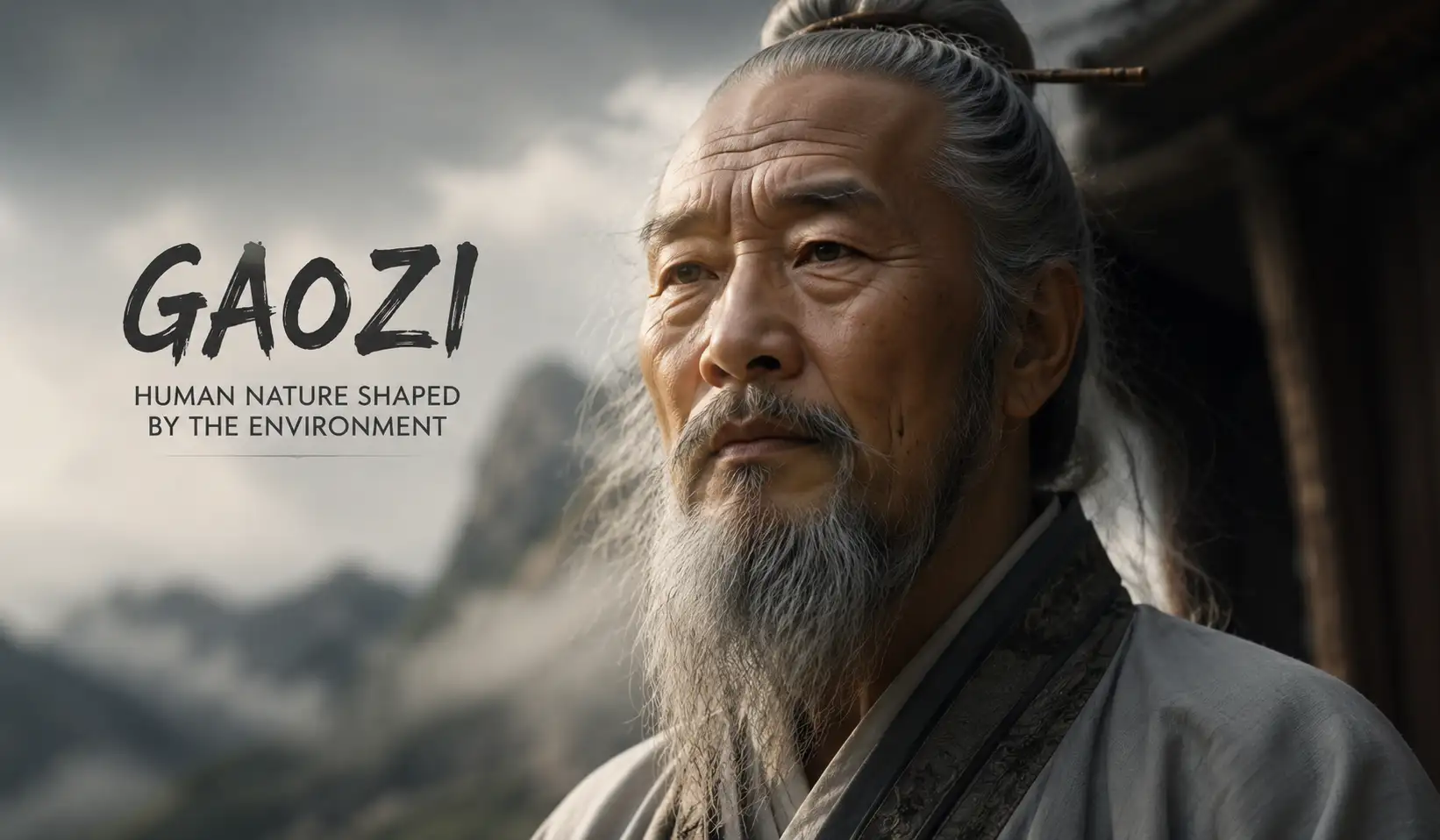
Quote of the Day by Gaozi: Human nature is like whirling water, possessing raw momentum rather than an innate moral direction. At its core, this ancient maxim reveals that our foundational urges are inherently neutral. Good and evil are not pre-written scripts within us, but paths carved by habit, culture, and social environment. By framing morality as an external craft, Gaozi highlights our vulnerability to surrounding influences while emphasizing our power to design constructive environments. Ultimately, character is not what we inherit, but the direction in which our societal banks channel our raw energy.
Quote of the Day Today: Inspiring life lesson on character, choice and human nature
Quote of the Day by Gaozi: "Man's nature is like the whirling water of a river. Give it a breach to the east, and it will flow to the east. Give it a breach to the west, and it will flow to the west. Human nature makes no distinction between good and bad, just as water makes no distinction between east and west." - Chinese philosopher Gaozi (c. 420–350 BCE
Meaning of Gaozi's Quote About Human Nature and Environment
In classical Chinese philosophy, few debates are as enduring as the inquiry into the raw material of the human soul. Gaozi framed human nature not as inherently virtuous or inherently corrupt, but as entirely neutral kinetic energy. When he remarked, "Give it a breach to the east, and it will flow to the east; give it a breach to the west, and it will flow to the west," he drew a vivid picture using the natural movement of water. Water possesses no intrinsic moral preference for heading in one direction over another; it simply responds to the physical terrain provided for it. As recorded in ancient philosophical repositories such as the Mencius texts and cited across classical literature archives like BrainyQuote, Gaozi’s quote illustrates how external channels dictate human moral trajectories.