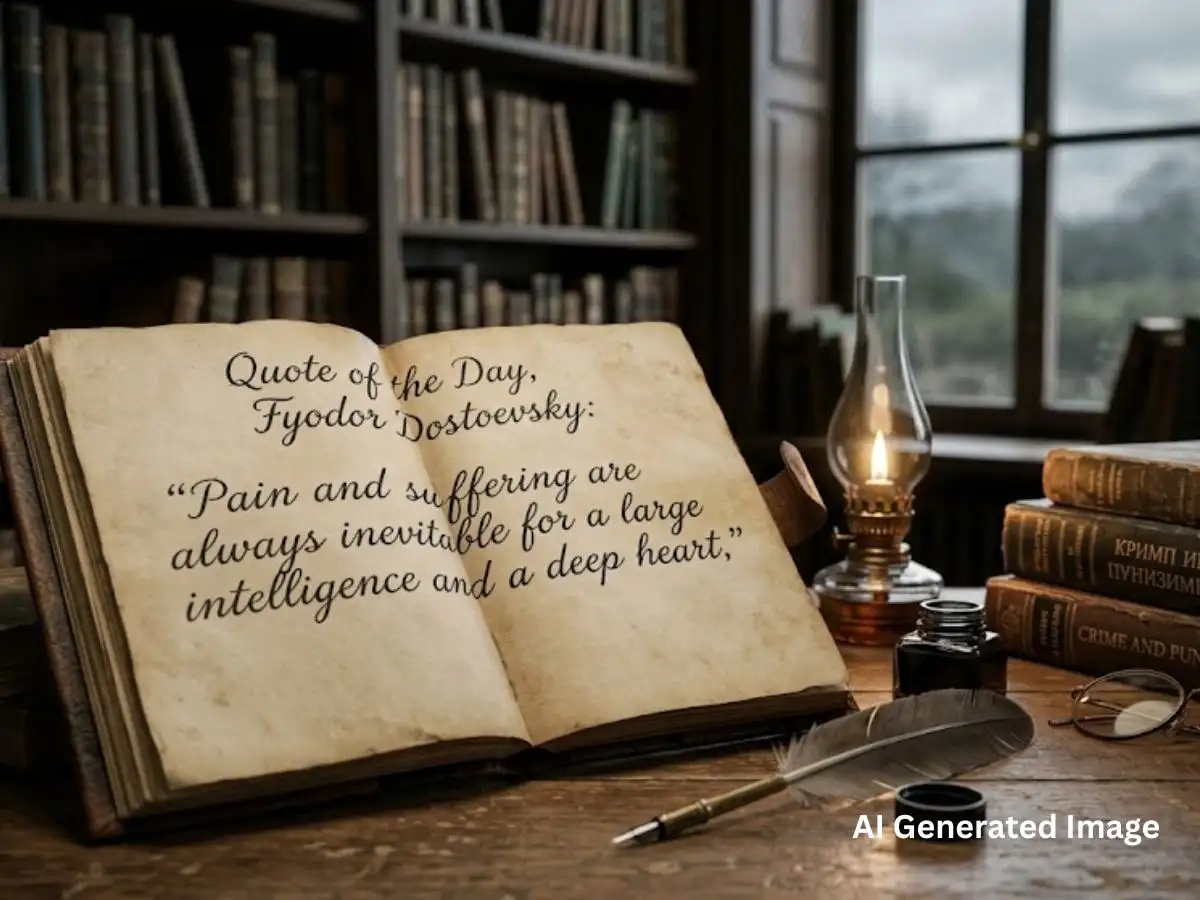
Fyodor Dostoevsky's line ties intelligence and emotional depth directly to suffering, arguing that the two rarely exist without the third. A large intelligence, in this sense, is not simply the ability to solve problems or absorb information. It is the capacity to see further into a situation than comfort allows, to notice contradictions, injustices, and consequences that a shallower mind would pass over without a second thought. A deep heart works the same way in the emotional register. It does not just feel, it feels fully, absorbing the weight of what it witnesses rather than deflecting it. Put those two capacities together in one person, and pain becomes close to unavoidable, because there is very little left to protect that person from what they see and feel.
This is not a claim that intelligence or sensitivity causes misery on its own. It is a claim about exposure. A person who thinks less and feels less has more insulation between themselves and the world's hard edges. Bad news lands and slides off. Contradictions in other people, or in themselves, go unexamined. Dostoevsky's really great men, by contrast, cannot look away as easily. They see the gap between how things are and how they should be, and they feel the emotional weight of other people's suffering as though it were partly their own. Sadness, in this framing, is not a flaw in greatness. It is closer to a symptom of paying full attention to being alive.