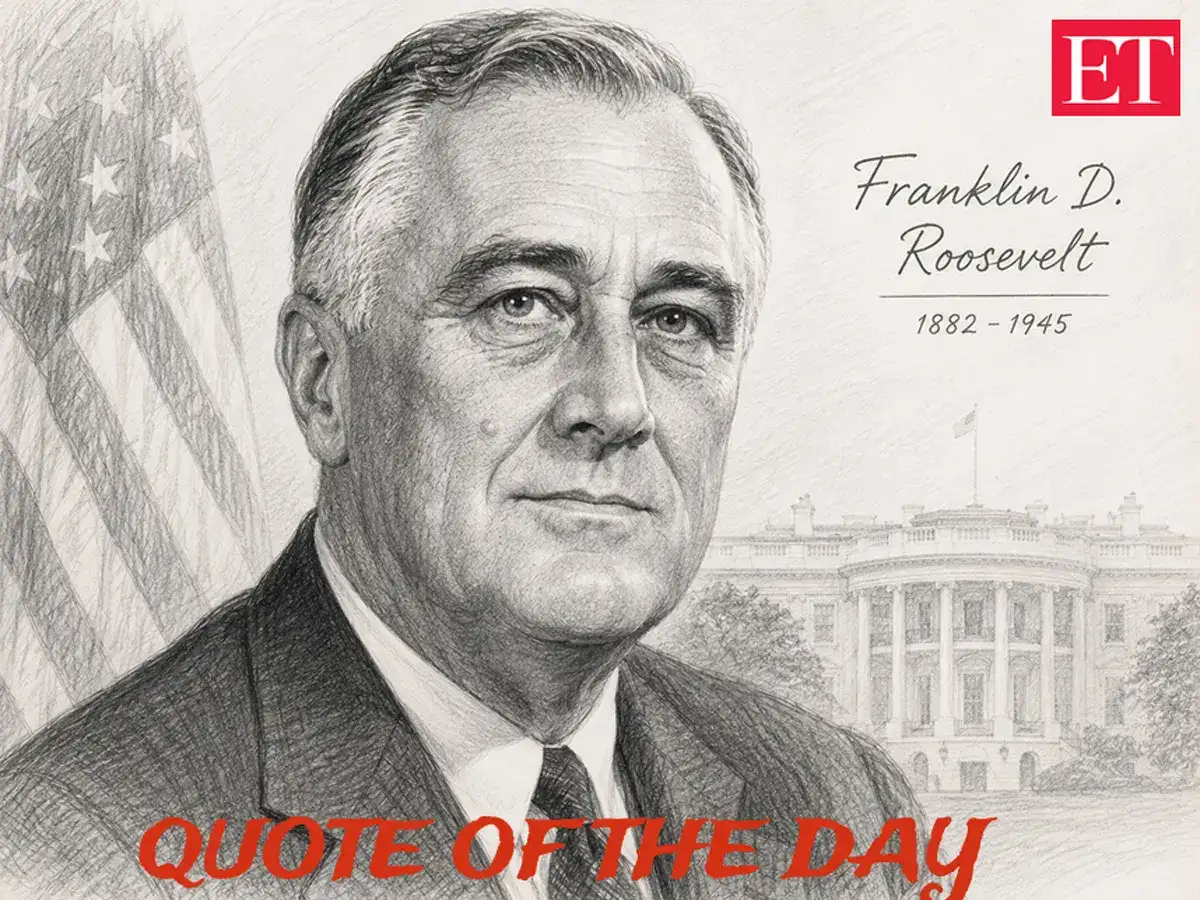
Quote of the Day by Franklin D. Roosevelt continues to inspire people because it teaches a simple lesson about communication. The quote, "It is better to swallow words than to have to eat them later," encourages people to think before they speak. It reminds everyone that silence is sometimes better than saying something that may cause regret. The message supports emotional intelligence, patience, discretion, and self-control. Whether someone is dealing with family, friends, colleagues, or strangers, careful communication helps avoid conflict and builds trust. The quote remains meaningful because its lesson applies to everyday situations across every stage of life.

Quote of the Day Today
Franklin D. Roosevelt once said,
"It is better to swallow words than to have to eat them later."
Understanding the Message Behind the Famous Quote
The quote encourages people to control their emotions before speaking. Many people react quickly during disagreements or stressful situations. Such reactions often lead to regret. The quote explains that it is easier to remain silent for a moment than to apologize later for hurtful words. It reminds people that patience often produces better results than anger.
The message also promotes emotional intelligence. Emotional intelligence is the ability to understand emotions, control reactions, and respond with care. People who practice these skills usually communicate better and maintain stronger relationships. The quote remains useful because every person faces situations where emotions influence decisions. Taking a short pause before speaking can prevent many unnecessary problems.
Life Lessons That Can Be Learned From the Quote
The quote offers several practical life lessons that remain useful today.
The power of taking a pause
People often respond immediately when they feel upset. A short pause gives the mind time to think clearly. This helps people choose words that solve problems instead of creating new ones.
Preventing future regret
Words cannot be taken back once spoken. Remaining silent during emotional moments is often easier than explaining or apologizing later. The quote encourages people to avoid situations that create unnecessary regret.
Building trust and credibility
People who speak carefully usually earn respect from others. They become known for making balanced decisions and giving thoughtful responses. Trust develops when people know someone will not speak without thinking.
Choosing peace over arguments
Winning every argument is not always necessary. Maintaining healthy relationships often matters more than proving a point. The quote reminds people that peace can sometimes be achieved by showing restraint.
Improving mindful communication
Mindful communication means paying attention to what is being said and how it affects others. The quote encourages people to think before speaking, especially during disagreements.
Quote of the Day by Franklin D. Roosevelt: Meaning and Relevance
The meaning of this quote is simple. People should exercise restraint before speaking, especially when emotions are high. Harsh comments, assumptions, or unverified opinions may create problems that become difficult to fix later.
The phrase "eat your words" refers to admitting that something said earlier was wrong or inappropriate. Franklin D. Roosevelt suggested that avoiding careless speech is much easier than facing embarrassment or apologizing afterward.
Today, the quote has become even more relevant because communication happens instantly through text messages, emails, and social media. A quick response written in anger can spread rapidly and remain available for a long time. Taking a few moments to think before replying can prevent misunderstandings and protect personal and professional relationships.
The Origin of the Famous Quote
Franklin D. Roosevelt delivered this famous statement during his remarks at the Daughters of the American Revolution Convention held in Washington, D.C., on April 21, 1938. Although many decades have passed since the speech, the quote continues to be shared across books, speeches, classrooms, and online platforms. Its message has remained unchanged because human communication continues to present the same challenges.
Who Was Franklin D. Roosevelt?
Franklin Delano Roosevelt, also known as FDR, was born on January 30, 1882, in Hyde Park, New York. He became the 32nd President of the United States and served from 1933 until his death in 1945.
He remains the only American president elected four times. During his presidency, he guided the country through two major events of the twentieth century: the Great Depression and the Second World War.
Roosevelt introduced a series of government programs and reforms known as the New Deal. These programs aimed to help people recover from economic hardship. He also played a major role in the Allied effort during World War II against German National Socialism and Japanese militarism.
Early Life and Education
Franklin D. Roosevelt was the only child of James Roosevelt and Sara Delano Roosevelt. He spent his early years at the family estate in New York and also travelled to Europe. He received private education until the age of fourteen before attending Groton Preparatory School in Massachusetts. There he learned the importance of public service and helping people facing difficulties.
Later, Roosevelt entered Harvard University. During his college years, he became interested in politics and admired his fifth cousin, Theodore Roosevelt. He also met Eleanor Roosevelt, Theodore Roosevelt's niece. They married on March 17, 1905. After Harvard, Roosevelt attended Columbia University Law School. Although he completed his legal training and passed the New York bar examination, he showed greater interest in public service than in practicing law.
Beginning of His Political Career
Franklin D. Roosevelt entered politics in 1910 when Democratic leaders encouraged him to contest a seat in the New York State Senate. He won the election before turning twenty-nine years old. In the state senate, Roosevelt supported progressive reforms and gradually became known across New York. He backed Woodrow Wilson during the 1912 presidential campaign.
In 1913, Roosevelt was appointed Assistant Secretary of the Navy. During this period, he gained experience in government administration, labour negotiations, and public policy. These experiences prepared him for higher responsibilities that later led him to the presidency.
Why This Quote Still Matters Today?
The quote continues to guide people because communication remains one of the most important parts of everyday life. Families can avoid unnecessary disputes by choosing careful words. Employees can maintain professional relationships by responding calmly during workplace disagreements. Friends can preserve trust by avoiding statements made in anger.
The quote also serves as a reminder for responsible communication on social media, where comments can quickly reach large audiences. Its message encourages patience, discretion, emotional intelligence, and thoughtful responses. These values remain important regardless of age, profession, or culture.