Get all your news in one place.
100's of premium titles.
One app.
Start reading
The Economic Times
The Economic Times

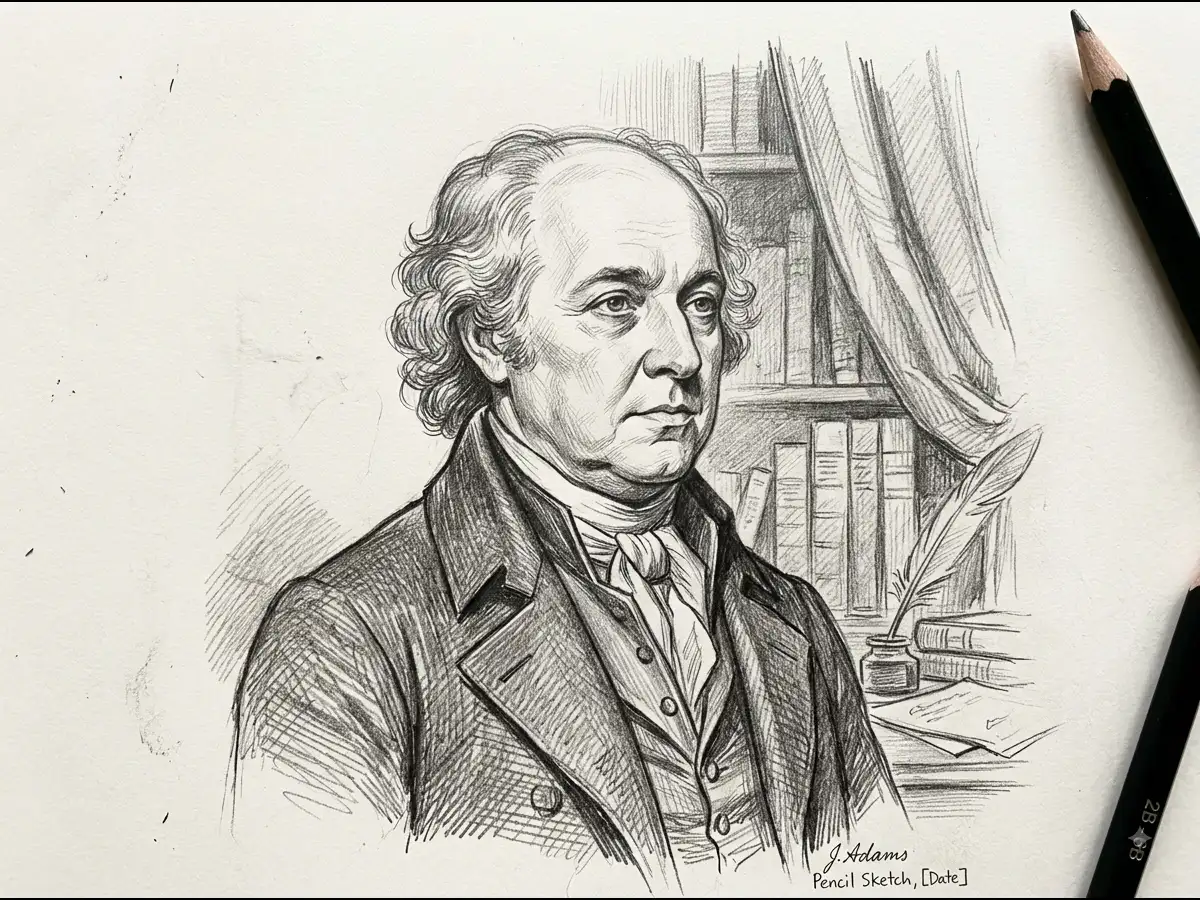
Quote of the Day by Ex-US President John Adams: ‘I must judge for myself, but how can I judge, how can any man judge, unless his mind has been…’ - How can reading regularly transform the way you think?

You read a headline, hear an opinion, or scroll past a strong claim online. But how do you know whether it is true? How do you decide what deserves your attention and what does not. And when two people present completely different versions of the same issue, what helps you make up your own mind.

Former US President John Adams believed that reading could play an important role in developing that judgment. In his diary in 1761, Adams wrote, “I must judge for myself, but how can I judge, how can any man judge, unless his mind has been opened and enlarged by reading” . The quote reflects his belief that knowledge and reading could help people develop the ability to think independently and make better judgments.

Why Quote Matters Today

John Adams wrote these words more than two centuries ago, but the idea behind them remains relevant. People today have access to more information than ever before. News websites, social media, podcasts, videos, books, and online discussions can all influence how we understand the world.

Having access to information, however, does not automatically mean having good judgment. Reading can expose us to different ideas, arguments, experiences, and points of view. It can also encourage us to question assumptions instead of accepting every claim at face value.

Adams was particularly interested in the connection between knowledge and the ability of people to participate in public life. In the same passage, he connected reading with understanding political affairs and judging the character and knowledge of people who sought public responsibility.

That makes his quote especially interesting today. A person does not become independent simply by having an opinion. Independent thinking requires the willingness to learn, examine information, and consider ideas beyond personal assumptions.

What Quote Means in Real Life

Imagine making an important decision based on one conversation. Later, you discover that you never heard the other side of the story. Would your decision have been different if you had known more?

That is close to the central idea in Adams' words. Reading can enlarge the mind by giving us more information to consider before reaching a conclusion.

This does not mean that every book or article contains the truth. Reading widely also requires judgment. A thoughtful reader compares ideas, questions claims, recognizes weaknesses in arguments, and remains willing to change an opinion when better evidence appears.

In everyday life, this can apply to almost anything. It can influence how we understand history, politics, science, culture, careers, relationships, and even our own beliefs.

The deeper lesson is that an informed mind has more material from which to reason. The more we learn, the more opportunities we have to challenge our first impressions and develop a broader understanding of an issue.

Who is John Adams

John Adams was an American lawyer, Founding Father, diplomat, and statesman who became the second President of the United States. He served as president from 1797 to 1801 and had previously served as the nation's first vice president under George Washington.

Adams was born on October 30, 1735, in what was then Braintree, Massachusetts. He graduated from Harvard and became a lawyer before becoming deeply involved in the movement for American independence. During the Revolutionary War, he served in diplomatic roles in Europe and helped negotiate the peace that ended the conflict with Great Britain.

As president, Adams faced major challenges involving relations with France, domestic political divisions, and the young nation's struggle to establish its government. He also became the first president to live in the White House, moving into the new presidential residence in Washington in 1800.

His life was closely connected to education, reading, political thought, and the responsibilities of citizenship. His writings show a repeated interest in learning and the development of an informed mind.

Context and Meaning of Quote

The quote comes from Adams diary in 1761, when he was a young man and long before he became president. The passage discusses the responsibility of individuals to read, examine ideas, and make judgments for themselves.

The context is important because Adams was not simply praising reading as a hobby. He was connecting reading with independent judgment.

In the passage, Adams argued that people should have the ability to think and act for themselves. He then asked how anyone could properly judge without a mind that had been opened and enlarged by reading. He also referred to sources such as the Bible, books, almanacs, and newspapers as ways people could broaden their range of thought.

The idea is simple but powerful. Judgment depends partly on what a person knows. If someone is exposed to only one idea, one source, or one perspective, their understanding can remain narrow. Reading can introduce them to information and viewpoints that they might otherwise never encounter.

For Adams, this mattered not only to personal development but also to public life. He believed that people needed knowledge and understanding to make meaningful judgments about political leaders and public affairs.

The quote therefore carries a larger message about intellectual independence. Reading does not tell us what to think. Instead, it can give us more information with which to think.

Life Lessons

John Adams quote offers a reminder that good judgment does not appear overnight. It develops through learning, reflection, and the willingness to look beyond what we already believe. Reading can make us pause before forming an opinion. It can introduce us to experiences different from our own. It can help us understand why another person sees an issue differently. Most importantly, it can make us more comfortable with questioning our own assumptions.

There is also a lesson in intellectual humility. The more a person learns, the more they may realize how much they still do not know. That realization can encourage curiosity instead of certainty. In a world where information moves quickly and opinions are often presented as facts, Adams' message remains remarkably useful. We do not have to accept every idea we encounter, but we should give ourselves the opportunity to encounter more ideas before deciding what we believe.

His words ultimately point toward a simple habit. Read, think, question, and then judge for yourself. A wider mind can lead to a better informed judgment, and that may be one of the most valuable reasons to keep learning throughout life.

Sign up to read this article
Read news from 100's of titles, curated specifically for you.
Already a member? Sign in here
Related Stories
Top stories on inkl right now
One subscription that gives you access to news from hundreds of sites
Already a member? Sign in here
Our Picks
Fourteen days free
Download the app
One app. One membership.
100+ trusted global sources.