Get all your news in one place.
100's of premium titles.
One app.
Start reading
The Economic Times
The Economic Times

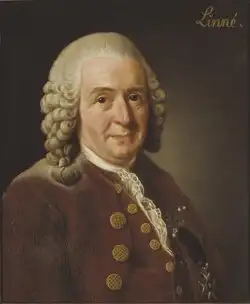
Quote of the Day by Carl Linnaeus: 'If you do not know the names of things, the knowledge of them is lost, too...' - What's in a name? Inspiring lessons on knowledge, curiosity, science, and why naming the world is the first step to understanding it by the "Father of Modern Taxonomy" himself

Quote of the Day by Carl Linnaeus : Knowledge is the foundation of understanding, and without knowing the true names of people, places, ideas, or living things, their meaning won't last longer. Every discovery begins with identification, and every meaningful conversation starts with understanding what something truly is. Carl Linnaeus believed that naming and classifying the world was not just a scientific exercise but a way of preserving knowledge for future generations.

Every discovery begins with recognition. Before we can understand something, protect it, or teach it to others, we must first know what it is. Carl Linnaeus, the father of modern taxonomy, understood this better than anyone. His famous quote reminds us that knowledge begins with naming.

Quote of the Day Today: Carl Linnaeus on naming, and understanding

Quote of the Day by Carl Linnaeus as per Quote Fancy reads , "If you do not know the names of things, the knowledge of them is lost, too."

His famous quote reminds us that names carry history, identity, and understanding. In today's world, where information is abundant but often overlooked, this message encourages curiosity, learning, education, and respect for knowledge. Whether studying nature, history, science, or everyday life, understanding what something is called helps us appreciate its value and importance.

In today's world of rapidly changing science, disappearing species, and endless information, Linnaeus' words are more relevant than ever. They teach us that language is not merely a collection of words. It is the foundation upon which learning, memory, and human progress are built.

Meaning of Carl Linnaeus' Quote About Knowledge and Names

The quote carries a profound lesson about education and human civilization. Names allow us to organize the world around us. They help distinguish one object from another, preserve information across generations, and enable people to communicate ideas accurately. Without names, knowledge becomes scattered, confusing, and eventually forgotten.

Linnaeus believed that classification was not merely an academic exercise. It was the foundation of scientific understanding. By giving every living organism a clear and universal name, he made it possible for scientists around the world to study, compare, and discuss nature without confusion.

Beyond science, the quote reminds us that language shapes memory. Whether learning history, medicine, geography, or everyday life, naming something helps transform curiosity into lasting knowledge.

Why knowing names matters more than you think

Knowing names creates connections. A child who learns the names of trees begins noticing forests differently. A student who identifies constellations starts appreciating the night sky. A doctor who accurately names diseases can provide proper treatment.

Names also preserve cultures and traditions. Languages, local plants, historical places, and indigenous knowledge survive because they are identified, recorded, and passed down through generations.

When names disappear, stories often disappear with them. Forgotten languages, extinct species, and lost traditions all remind us how closely knowledge is tied to identification.

Linnaeus encourages us to observe carefully, learn continuously, and respect the value of knowledge in all its forms.

Early Life of Carl Linnaeus

Carl Linnaeus was born on May 23, 1707, in Råshult, Sweden. His father was a Lutheran minister with a deep love for gardening, and young Linnaeus inherited this fascination with plants from an early age, as per information sourced from Britannica.

Unlike many children of his era, he found greater joy in exploring flowers and nature than in traditional classroom studies. His natural curiosity soon attracted the attention of teachers who encouraged his interest in botany.

These childhood experiences shaped the scientist who would later revolutionize biology.

Education and Intellectual Development

Linnaeus studied medicine first at Lund University before transferring to Uppsala University. Financial hardships made his student years difficult, yet his passion for botany never diminished.

He gained access to valuable botanical collections and libraries through supportive professors, allowing him to develop innovative ideas about plant classification long before achieving international recognition. His education combined medicine, botany, zoology, and natural history, giving him an unusually broad scientific perspective.

READ ALSO: Quote of the Day by Zeno of Citium, the founder of Stoicism: “No loss should be more regrettable to us than losing our time...” - Timeless lessons on wisdom, mortality, self-discipline, and why every moment of life deserves to be lived with intention

How did Carl Linnaeus change modern science?

Linnaeus transformed biology by creating a systematic way to classify all living organisms. His greatest contribution was the introduction of binomial nomenclature, the two-part scientific naming system still used today. Every species receives a unique scientific name consisting of its genus and species, such as Homo sapiens for humans.

He also organized plants and animals into structured groups, including kingdoms, classes, orders, genera, and species. This system allowed scientists across different countries to communicate with precision and consistency.

His work became the foundation of modern taxonomy and continues to guide biological research centuries later.

What made Carl Linnaeus one of history's greatest naturalists?

Linnaeus possessed an extraordinary ability to bring order to complexity. At a time when thousands of newly discovered plants and animals were arriving in Europe from around the world, scientific naming had become chaotic.

Rather than allowing confusion to grow, Linnaeus created universal standards that made scientific communication far more reliable.

His influential books, including Systema Naturae, Species Plantarum, and Genera Plantarum, established principles that remain fundamental to biological sciences today.

Beyond botany, his ideas influenced zoology, ecology, medicine, geology, and even later thinkers such as Charles Darwin.

READ ALSO: Quote of the Day by Cary Grant: 'I began by acting like the person I wanted to be, and eventually...'- A timeless lesson by Hollywood's most iconic actor on self-transformation, identity, success, and becoming the best version of yourself

Legacy and Lasting Impact

Carl Linnaeus died on January 10, 1778, but his influence continues to shape nearly every branch of life science. Modern biology still relies on the classification system he introduced. Every newly discovered species follows principles rooted in his work. His students traveled across the globe collecting plants and animals, expanding scientific knowledge while strengthening international collaboration. Today, Linnaeus is widely recognized as the father of modern taxonomy.

His simple belief that names preserve knowledge remains one of science's most enduring lessons.

READ ALSO: Quote of the Day by Ben Kingsley: 'Sometimes it’s right to do the wrong things...'- Powerful lessons on courage, conscience, difficult choices, and the wisdom to challenge convention by the Academy Award-winning actor known for films like Gandhi and Schindler's List

Life Lessons from Carl Linnaeus' Famous Quote

Linnaeus teaches that knowledge begins with careful observation. Before solving problems or making discoveries, we must first recognize and identify what we are studying. His quote also reminds us to remain curious. Learning the names of people, cultures, places, plants, and ideas deepens our understanding of the world and strengthens our ability to communicate with others.

Perhaps the greatest lesson is that education is built one concept at a time. Every new word learned opens the door to greater understanding.

READ ALSO: Quote of the Day by boxing legend Muhammad Ali: 'I hated every minute of training, but I said...'- The Champion’s lesson on discipline, sacrifice, mental strength and greatness

Why This Quote Still Matters Today

We live in an age overflowing with information, yet genuine understanding often requires precision. Whether discussing science, technology, medicine, history, or environmental conservation, accurate identification remains essential. Protecting endangered species, preserving indigenous cultures, documenting historical artifacts, and advancing medical research all begin by correctly naming what we seek to understand.

Linnaeus' wisdom reminds us that preserving knowledge starts with recognizing and recording it.

READ ALSO: Quote of the Day by Emily Dickinson: 'The dearest ones of time, the strongest friends of the soul...'- A timeless reflection by America's most original poets of all time on literature, lifelong learning, and the profound companionship that books offer across every season of life

Inspiring quotes by Carl Linnaeus

Other inspiring quotes by the father of taxonomy, as per Goodreads.
  • “If a tree dies, plant another in its place.”
  • “In natural science the principles of truth ought to be confirmed by observation.”
  • “When all the thoughts are concerning one thing and the person loses interest in other things, the melancholy begins.”
  • “When the spiritual light is concentrated in the brain, everything else must be sinking in the dark.”
  • “Fate is always against great things.”
  • “Live blameless; God is near.”
  • “Blessed be the Lord for the beauty of summer and spring, for the air, the water, the verdure, and the song of birds.”

Sign up to read this article
Read news from 100's of titles, curated specifically for you.
Already a member? Sign in here
Related Stories
Top stories on inkl right now
One subscription that gives you access to news from hundreds of sites
Already a member? Sign in here
Our Picks
Fourteen days free
Download the app
One app. One membership.
100+ trusted global sources.